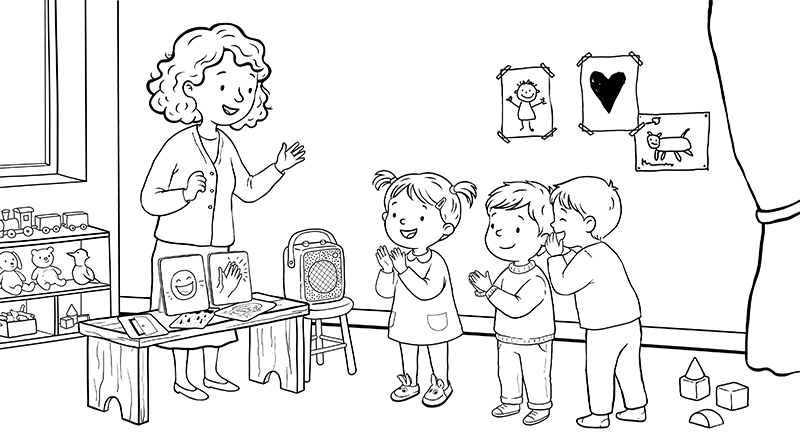
Poslušanje, domišljija in doživljanje skozi zvok
Otroci poslušajo različne zvoke ter si predstavljajo, kaj se dogaja, pri tem pa povezujejo zvok s čustvi.
Otrokom razložite, da bodo pozorno poslušali različne zvoke ter ugibali, kaj bi lahko predstavljali.
Predvajate kratek zvočni posnetek (npr. smeh, dež, škripanje vrat).
Zastavite vprašanja: "Kaj misliš, da se dogaja?" in "Kako se ob tem počutiš?"
Otroke spodbudite, da opišejo prizor ali čustvo, ki ga povezujejo s slišanim zvokom.
Povabite jih, da svoje misli narišejo ali jih izrazijo z gibanjem in mimiko.
Skupaj se pogovorite o različnih interpretacijah ter poudarite, da lahko zvoki pripovedujejo zgodbe tudi brez slik ali besed.
Otroci lahko posnamejo lastne zvoke in ustvarijo »zvočno zgodbo«.
Združite resnične zvoke z izmišljenimi ali zabavnimi ter ugibajte, kateri so resnični (na primer rjovenje pravega leva in posnetek človeka, ki rjove kot lev).
Za ustvarjanje zvokov uporabite glasbila ali predmete (mečkanje papirja, trkanje kock).
Zvoke povežite v kratko »zvočno zaporedje« in otroke povabite, da povedo zgodbo, ki jo slišijo.
Dejavnost otrokom približa izrazno moč zvoka v medijih. S pozornim poslušanjem se učijo povezovati zvoke z dogodki in čustvi ter razvijajo domišljijo in čustveno razumevanje. Zvočne zgodbe krepijo veščine aktivnega poslušanja, ki so pomemben del medijske pismenosti, saj otroke spodbujajo k osredotočenosti, interpretaciji in deljenju idej. Pogovor o doživljanju zvokov bogati besedišče za izražanje čustev in zaznav, ustvarjalno izražanje z risanjem ali gibanjem pa poglablja razumevanje. Dejavnost spodbuja radovednost in zavedanje, kako zvok vpliva na doživljanje zgodb in razpoloženj v medijih.

Financirano s strani Evropske unije. Izražena stališča in mnenja so zgolj stališča in mnenja avtorja(-ev) in ni nujno, da odražajo stališča in mnenja Evropske unije ali Evropske izvajalske agencije za izobraževanje in kulturo (EACEA). Zanje ne moreta biti odgovorna niti Evropska unija niti EACEA.

Vse vsebine, še posebej teksti, slike in grafikoni so avtorsko zaščiteni. V kolikor izrecno ni določeno drugače, so avtorske pravice last media.eduskills.plus pod licenco Creative Commons Attribution - Attribution-ShareAlike 4.0 International. Uporabijo se lahko le v okviru licenčnih pogojev.
© 2020-2026 media.eduskills.plus | Impressum