The Secret of Colourful Patterns
The purpose of the activity is to develop visuospatial relationships through creating simple kaleidoscopes, and to support recognising and naming shapes.
Prepare the space by setting out the planned stimuli: handheld and table lamps, an overhead projector, a light table, transparent materials (foils and fabrics), coloured glass pebbles, transparent PVC geometric shapes, kitchen utensils with holes (such as colanders of different sizes), circular cardboard shapes and/or CDs, coloured cellophane, scissors, glue, mobile phones, and cameras.
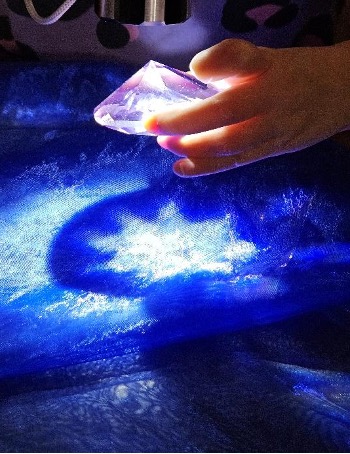
Begin the activity by offering various stimuli that children can manipulate, explore, and combine using light sources. Encourage them to create different light sensations and projections on various surfaces, such as white paper, tables, walls, or projection screens.
As children play and manipulate the materials, observe together how the projected image changes. Ask guiding questions:
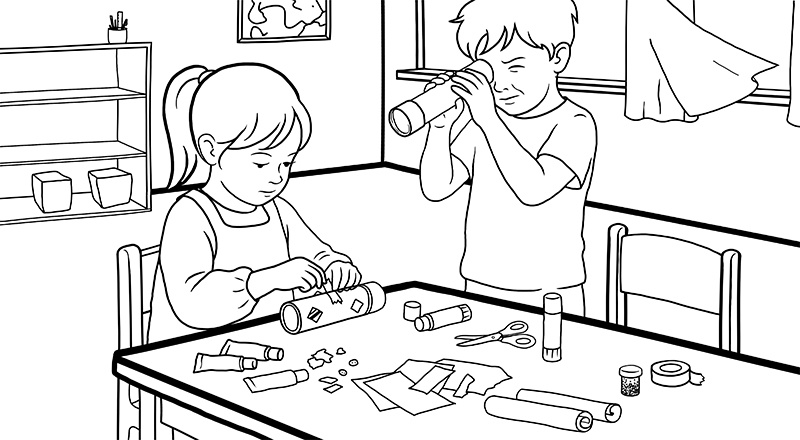
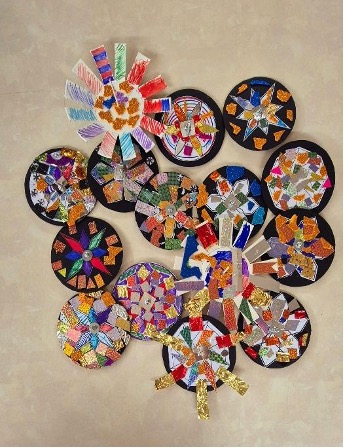
Invite the children to create a simple optical toy, a kaleidoscope.
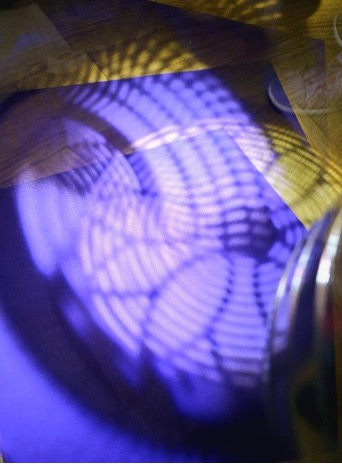
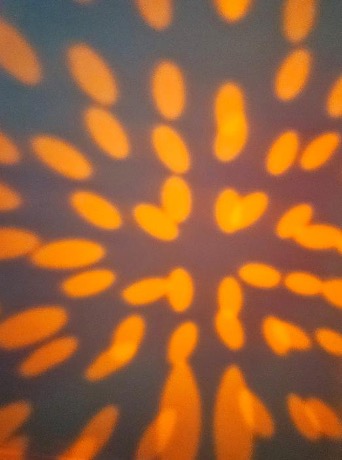
Offer mobile phones with a kaleidoscope application for photographing patterns. Transfer the photographs to a computer, view them together, and discuss what you see. The photographs can also be printed and displayed as an exhibition in the kindergarten or another gallery space. Workshops for children and parents can also be organised.
Creating a kaleidoscope has strong didactical value, as it connects exploratory play, visual art expression, and experiential learning. Through play, children not only create their own optical toy, but also explore optical phenomena such as reflection, symmetry, and changes in patterns caused by movement of objects and light.

Finanțat de Uniunea Europeană. Punctele de vedere și opiniile exprimate aparțin, însă, exclusiv autorului (autorilor) și nu reflectă neapărat punctele de vedere și opiniile Uniunii Europene sau ale Agenției Executive Europene pentru Educație și Cultură (EACEA). Nici Uniunea Europeană și nici EACEA nu pot fi considerate răspunzătoare pentru acestea.

Toate conținuturile, în special textele, imaginile și grafica, sunt protejate de drepturi de autor. Cu excepția cazului în care se specifică altfel, drepturile de autor sunt deținute de media.eduskills.plus și sunt licențiate în conformitate cu Creative Commons Attribution - Attribution-ShareAlike 4.0 International. Acestea pot fi utilizate în condițiile licenței.
© 2020-2026 media.eduskills.plus | Impressum