Otkrivanje poruke pisca skrivene u priči
Djeca uče da svaku priču stvara netko tko ima ideju ili poruku koju želi podijeliti.
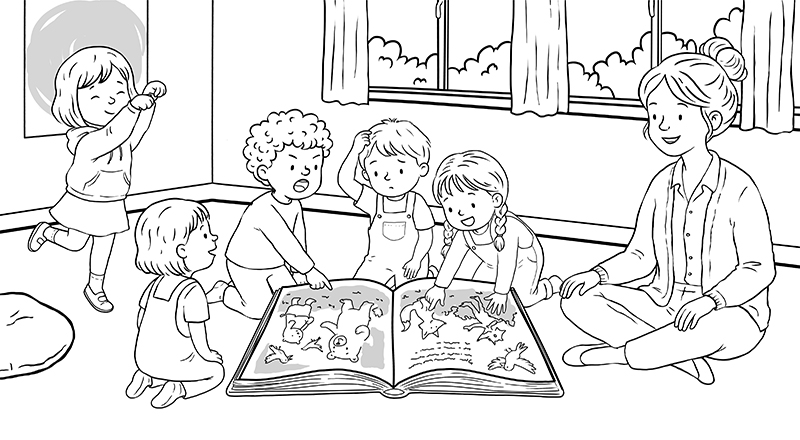
Pročitajte slikovnicu naglas skupini, jasno pokazujući ilustracije.
Nakon čitanja postavite pitanja poput:
Potaknite djecu da razmišljaju o autoru i ilustratoru kao o stvarnim osobama koje odlučuju o tome što se događa u priči.
Predložite djeci da podijele svoje ideje i osjećaje o poruci priče.
Za kraj, neka nacrtaju svoj omiljeni dio ili kako bi promijenili završetak.
Usporedite dvije slikovnice s različitim porukama (npr. jednu o obitelji, a drugu o prijateljstvu).
Predložite djecu da „budu autori” i izmisle vlastitu kratku priču.
Upotrijebite lutke za odglumljivanje priče.
Ova aktivnost potiče rano razumijevanje da medije i priče stvaraju ljudi koji odlučuju kako će prikazati ideje i poruke. Analizom poznatog formata – slikovnice – djeca počinju shvaćati da priče odražavaju namjere i vrijednosti. Postavljanje pitanja o autorstvu, motivaciji i značenju potiče promišljanje i kritički odnos prema medijskim sadržajima. Aktivnost razvija empatiju potičući djecu da razmotre različite perspektive te ih priprema za kritičko preispitivanje drugih medijskih sadržaja s kojima se susreću. Spoj slušanja, rasprave i kreativnog izražavanja podupire kako kognitivno, tako i emocionalno učenje.

Financirano sredstvima Europske unije. Izneseni stavovi i mišljenja su stavovi i mišljenja autora i ne moraju se podudarati sa stavovima i mišljenjima Europske unije ili Europske izvršne agencije za obrazovanje i kulturu (EACEA). Ni Europska unija ni EACEA ne mogu se smatrati odgovornima za njih.

Svi sadržaji, a posebno tekstovi, slike i grafikoni, su zaštićeni autorskim pravima. Vlasnik autorskih prava, ukoliko nije drugačije označeno, je media.eduskills.plus, a autorsko pravo je definirano licencom Creative Commons Attribution - Attribution-ShareAlike 4.0 International. Autorska prava mogu biti definirana uvjetima licence.
© 2020-2026 media.eduskills.plus | Impressum