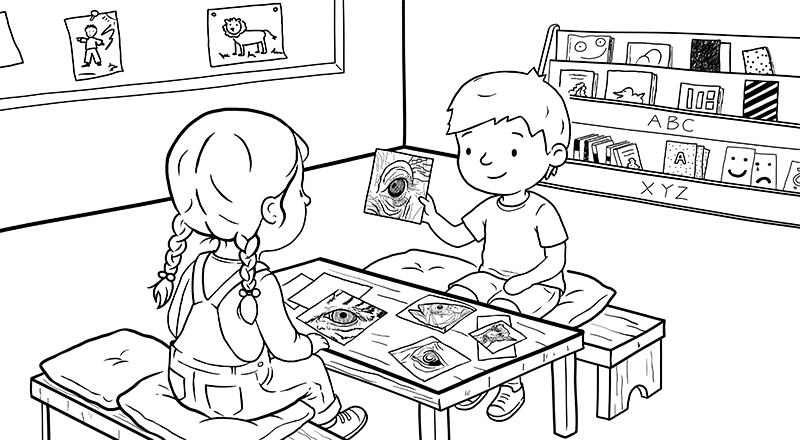
Matching Animal Eyes to Their Owners
Children develop visual discrimination by identifying animal eyes and connecting details to the whole animal.
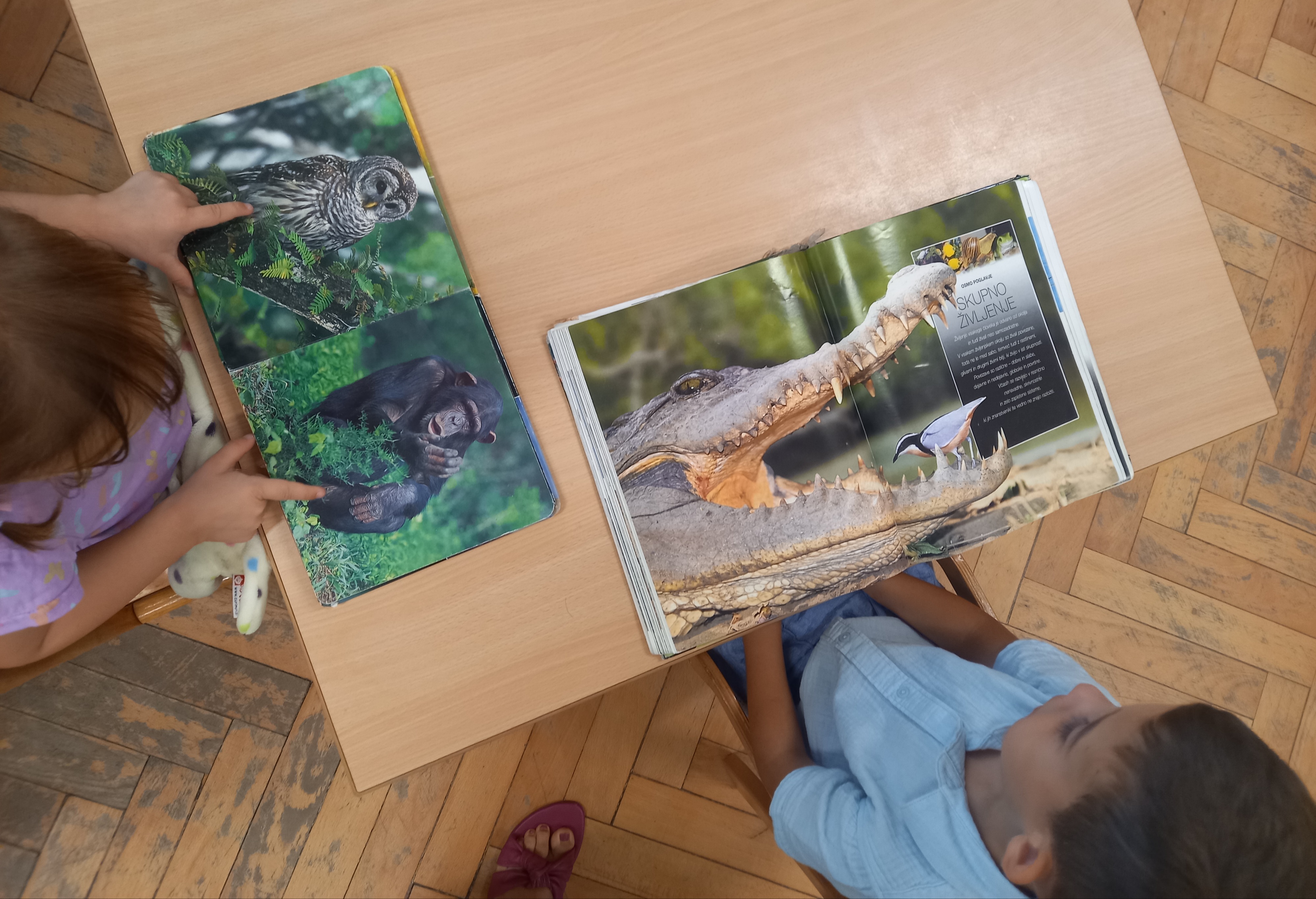
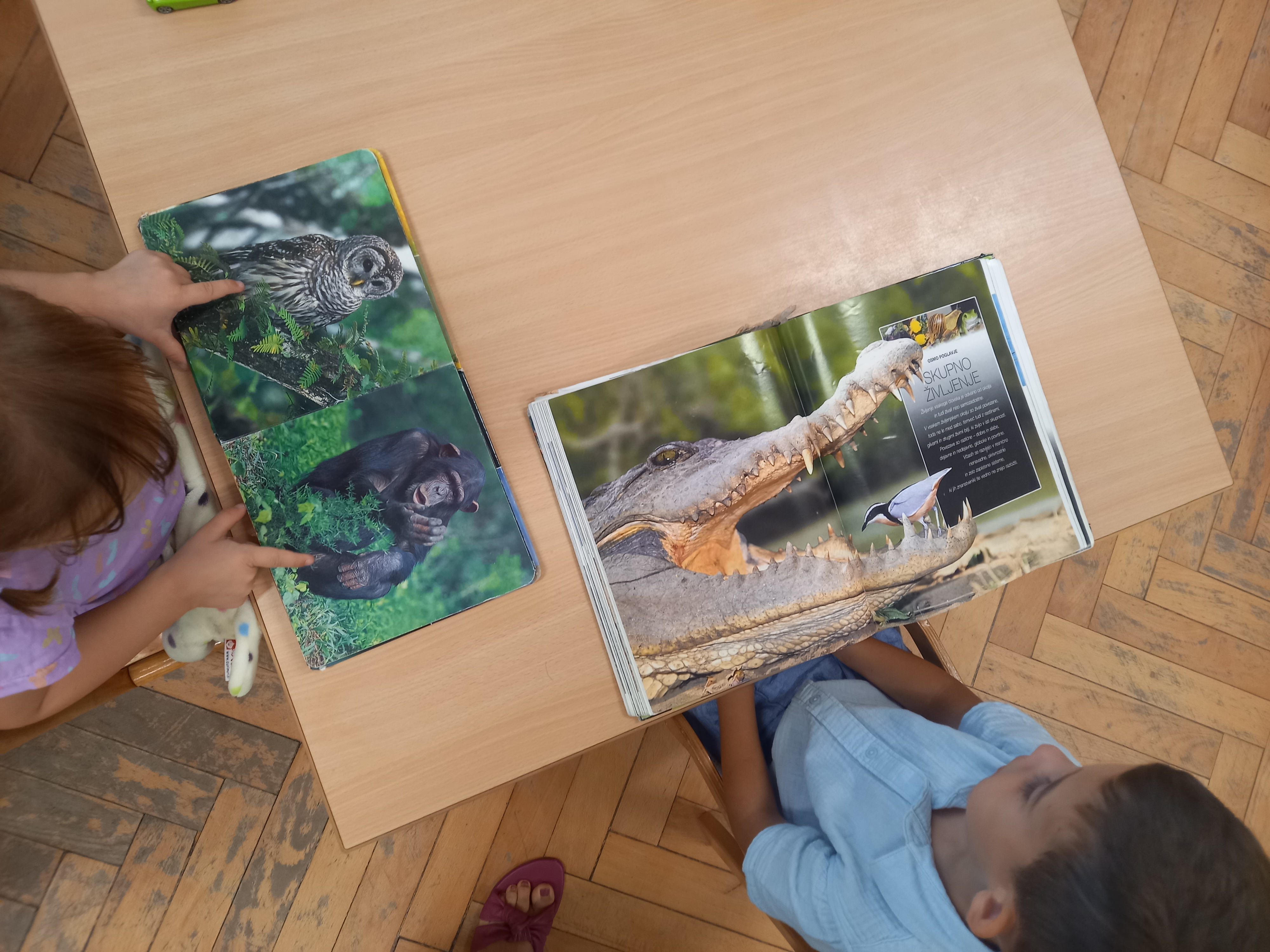
Children look at books with photographs of animals. They name individual animals and their body parts.
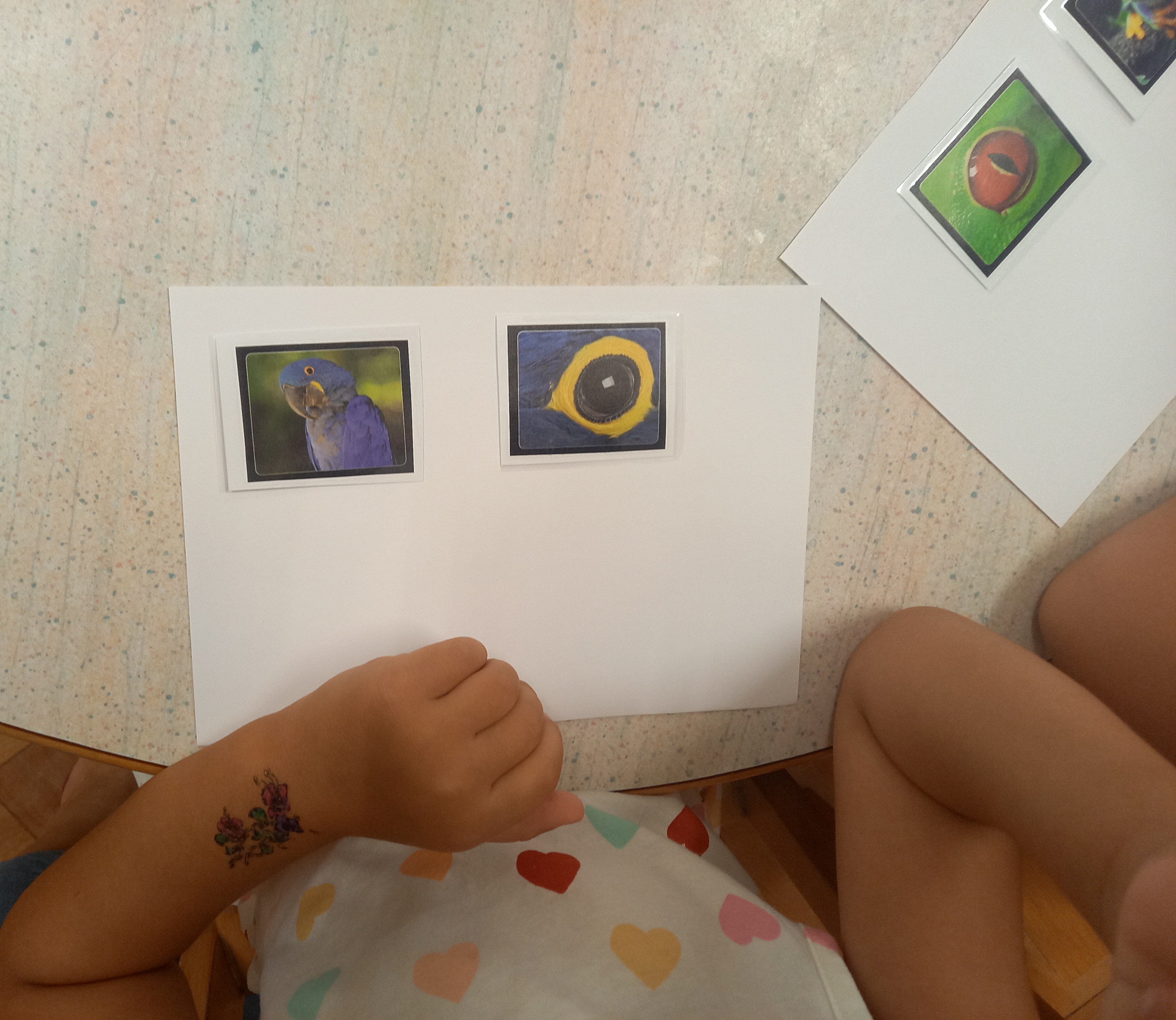
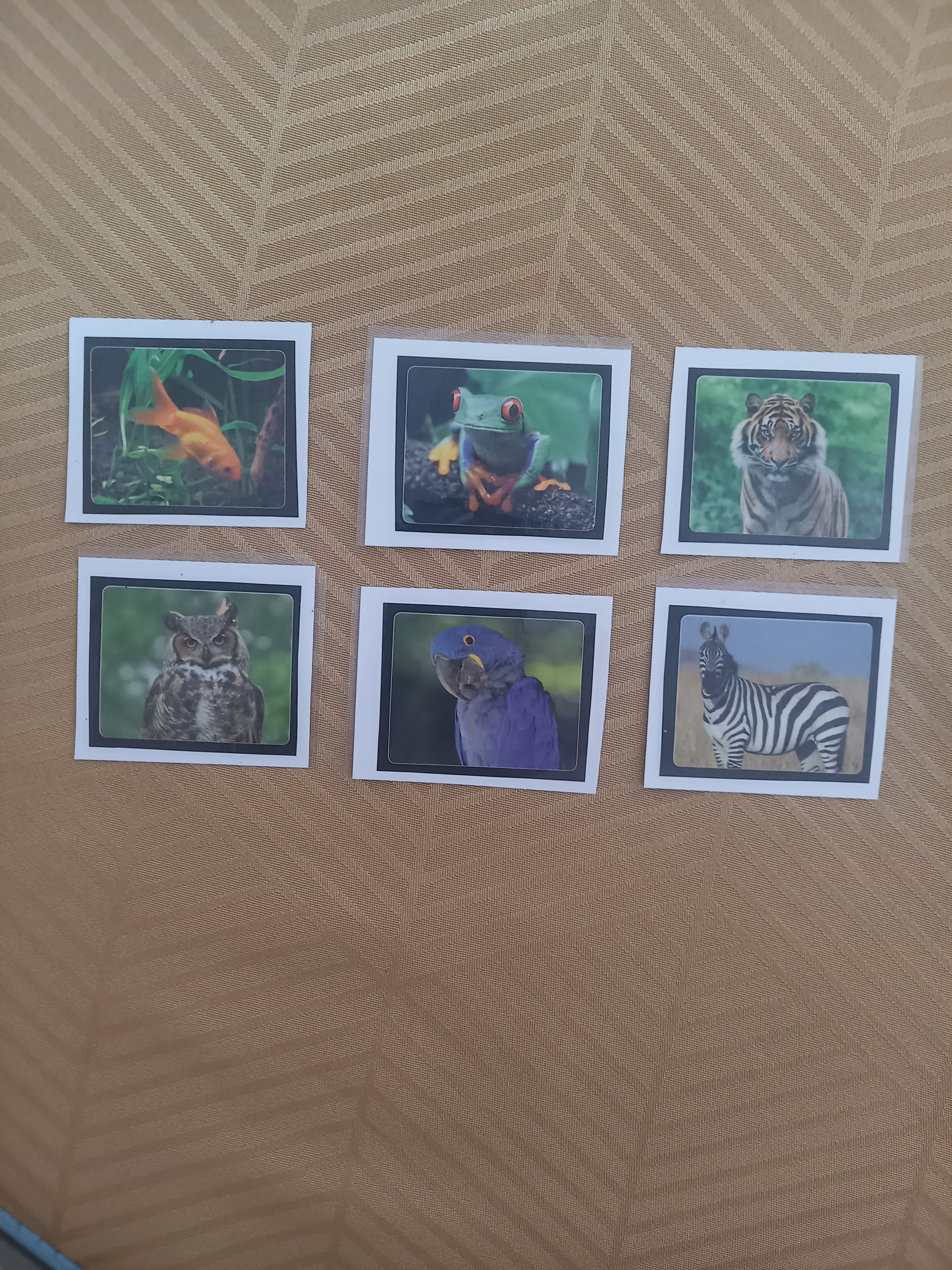
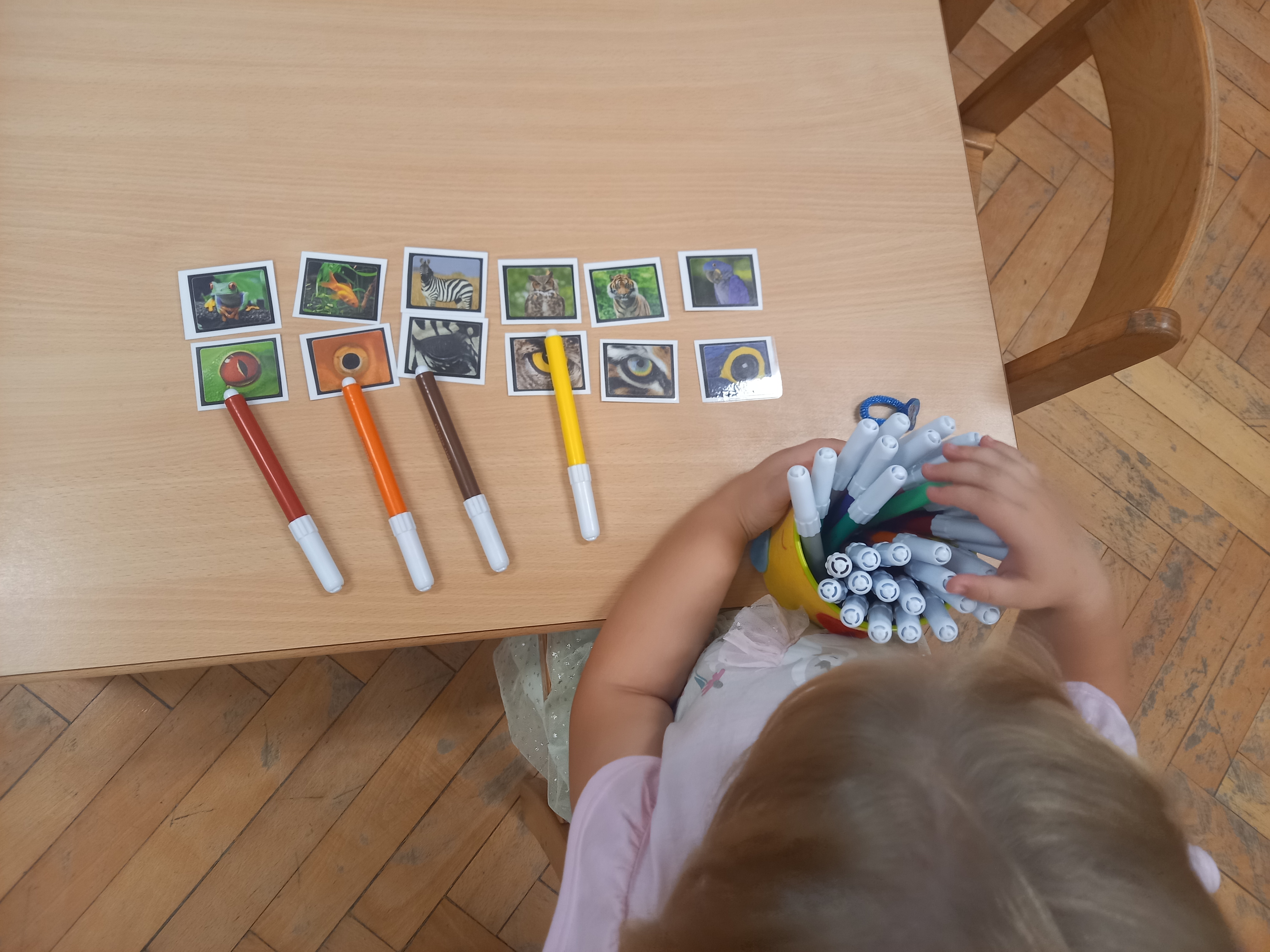
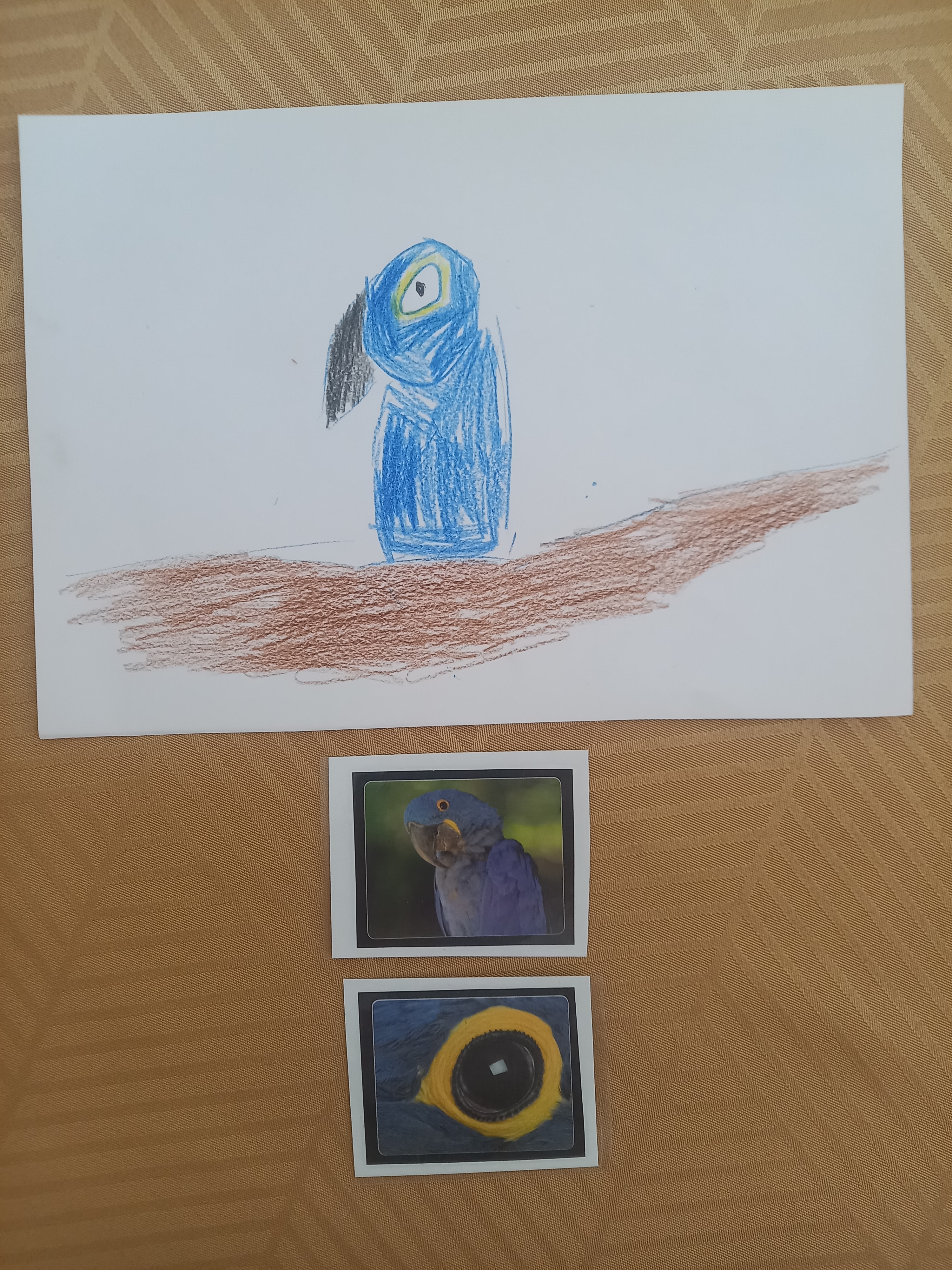
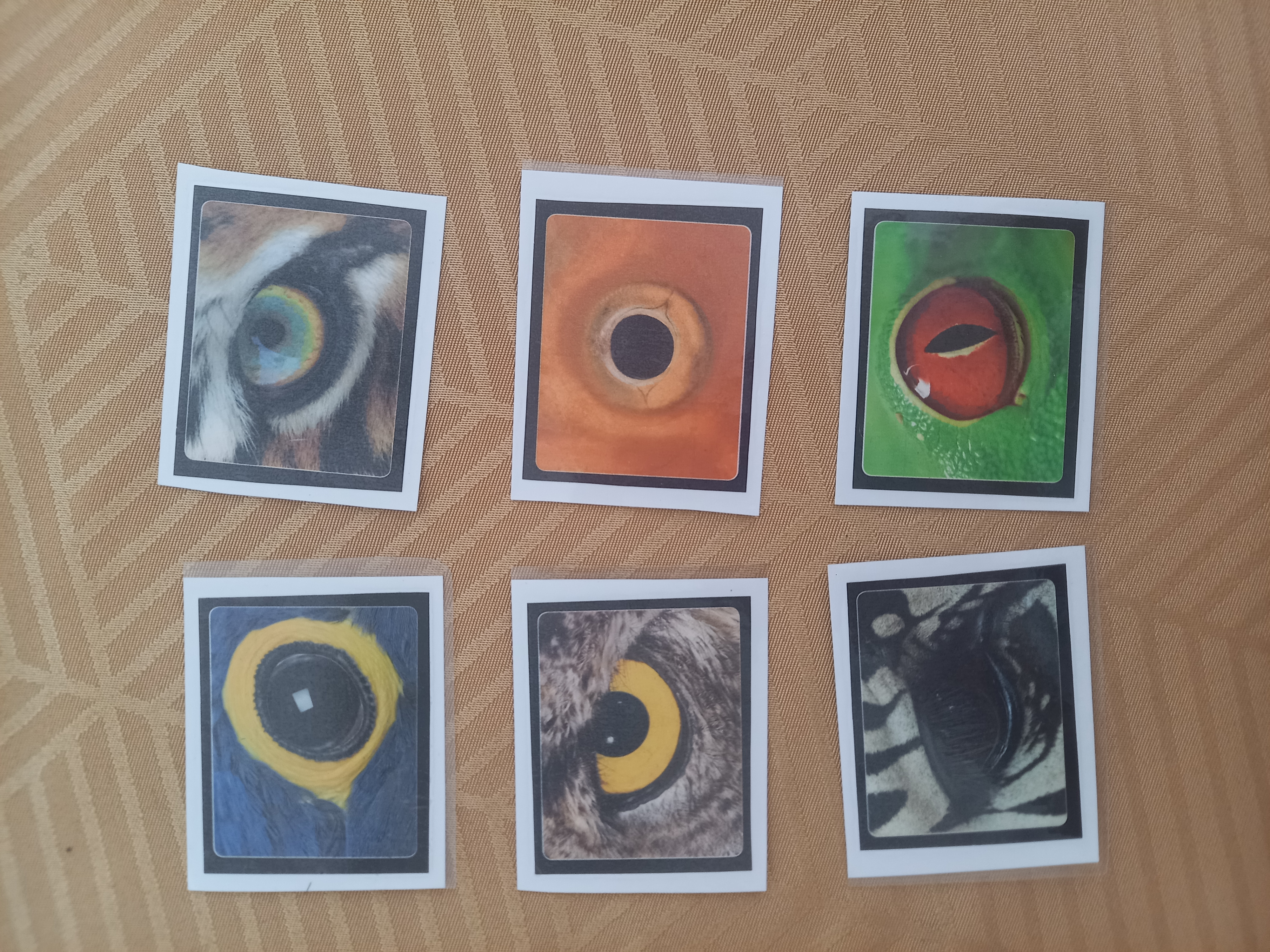
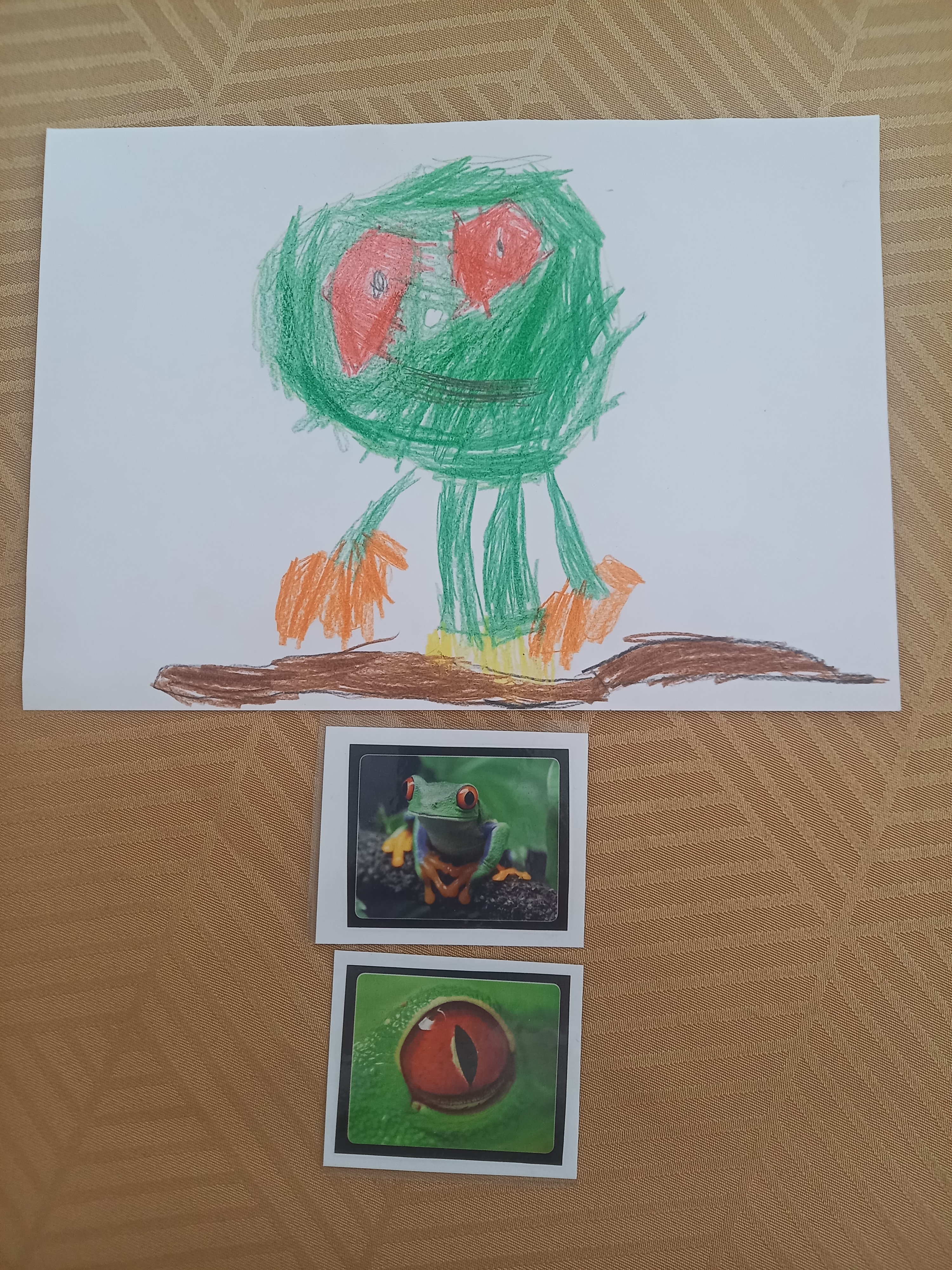
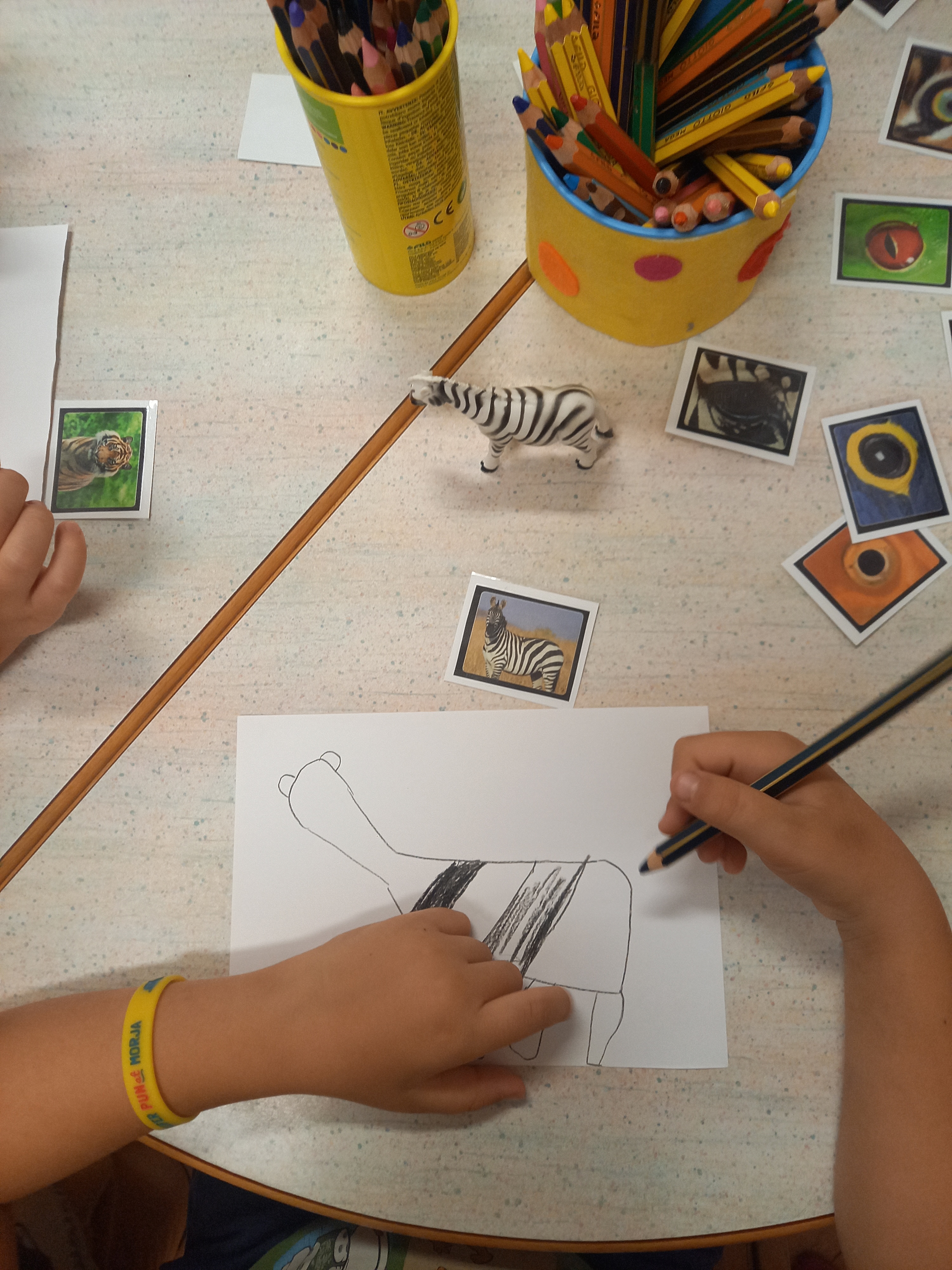
The teacher places photographs of different animals in front of the children, for example a tiger, frog, parrot, fish, owl, and zebra. Children are encouraged to choose one animal photograph.
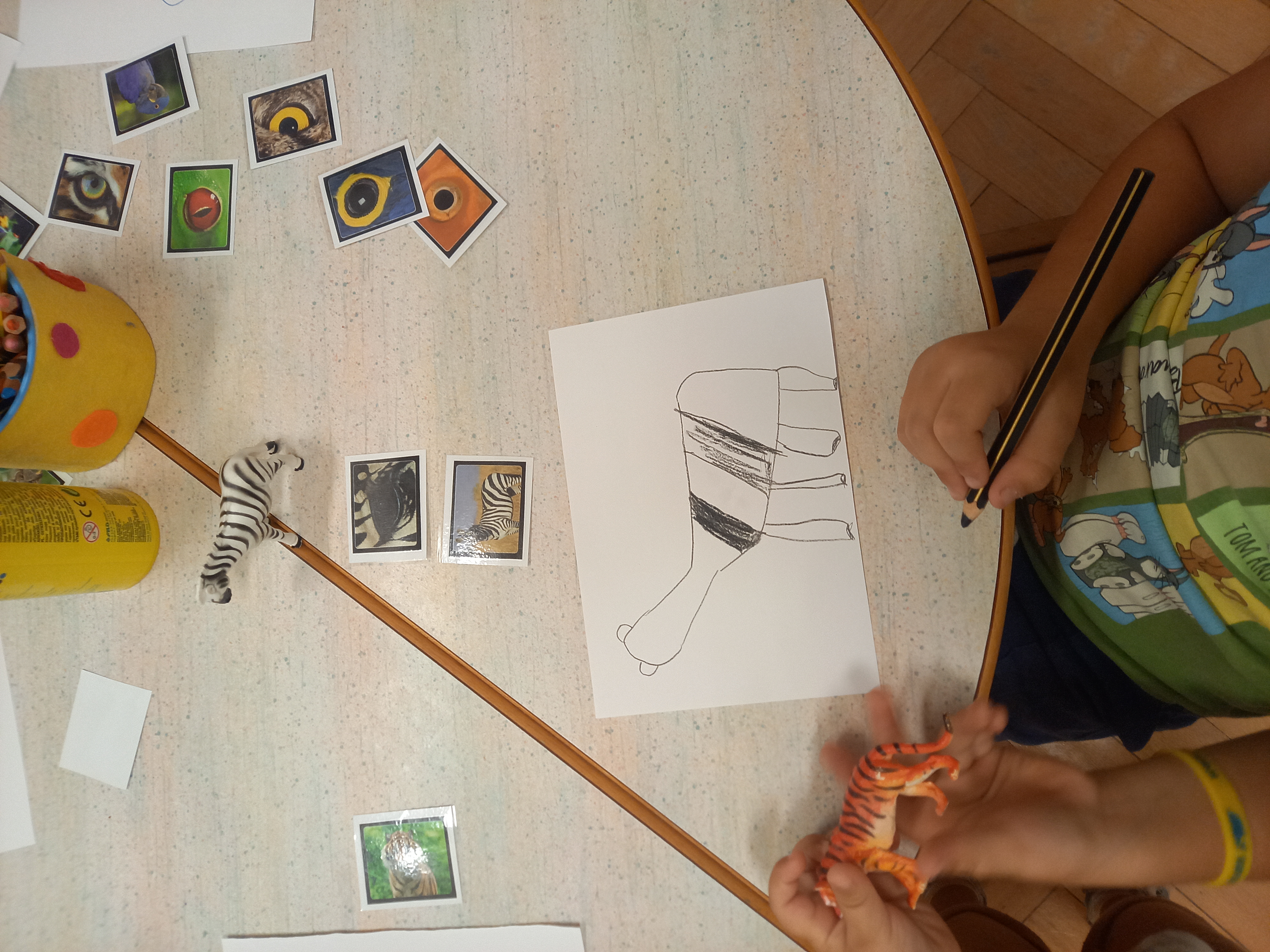
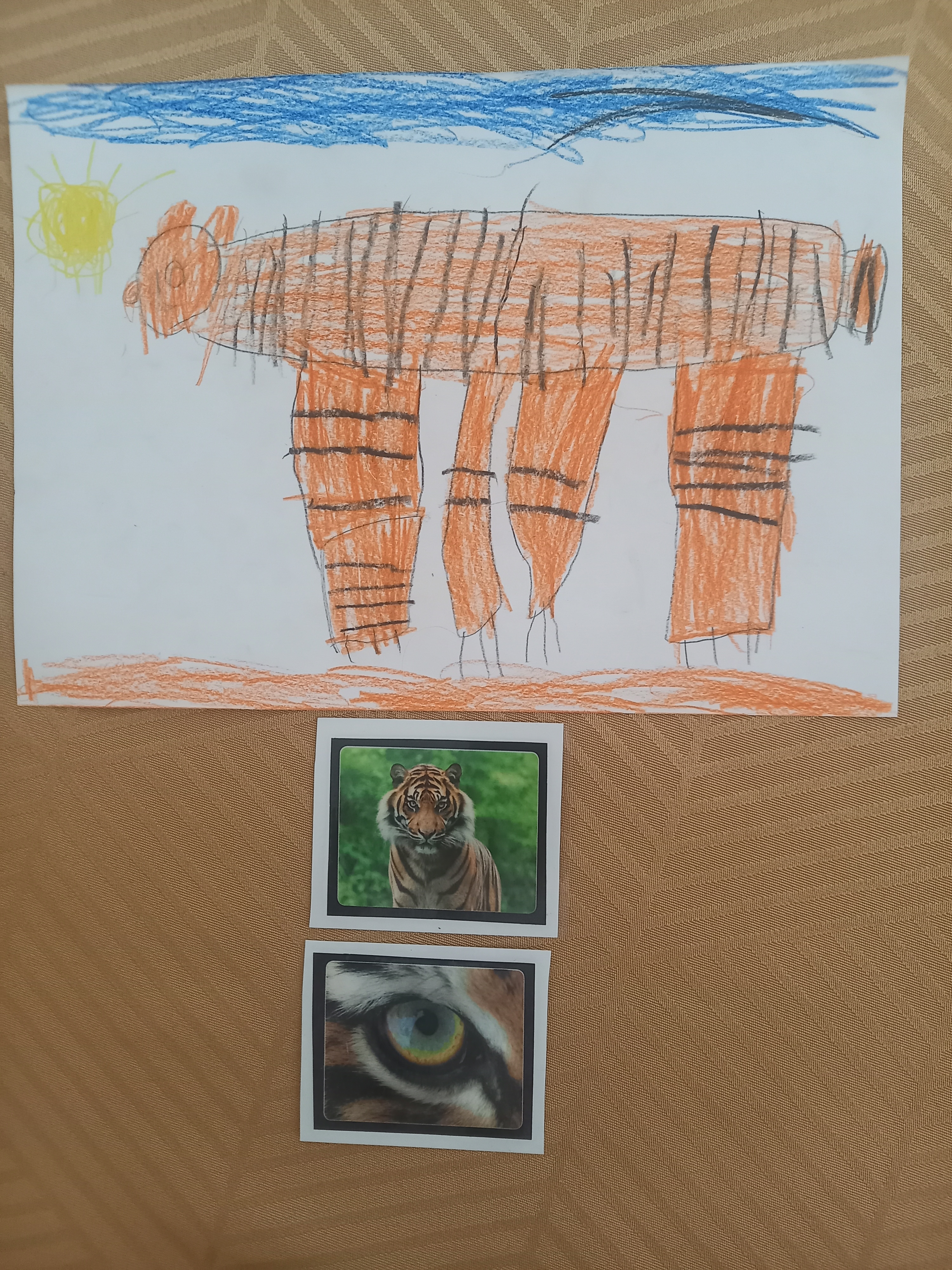
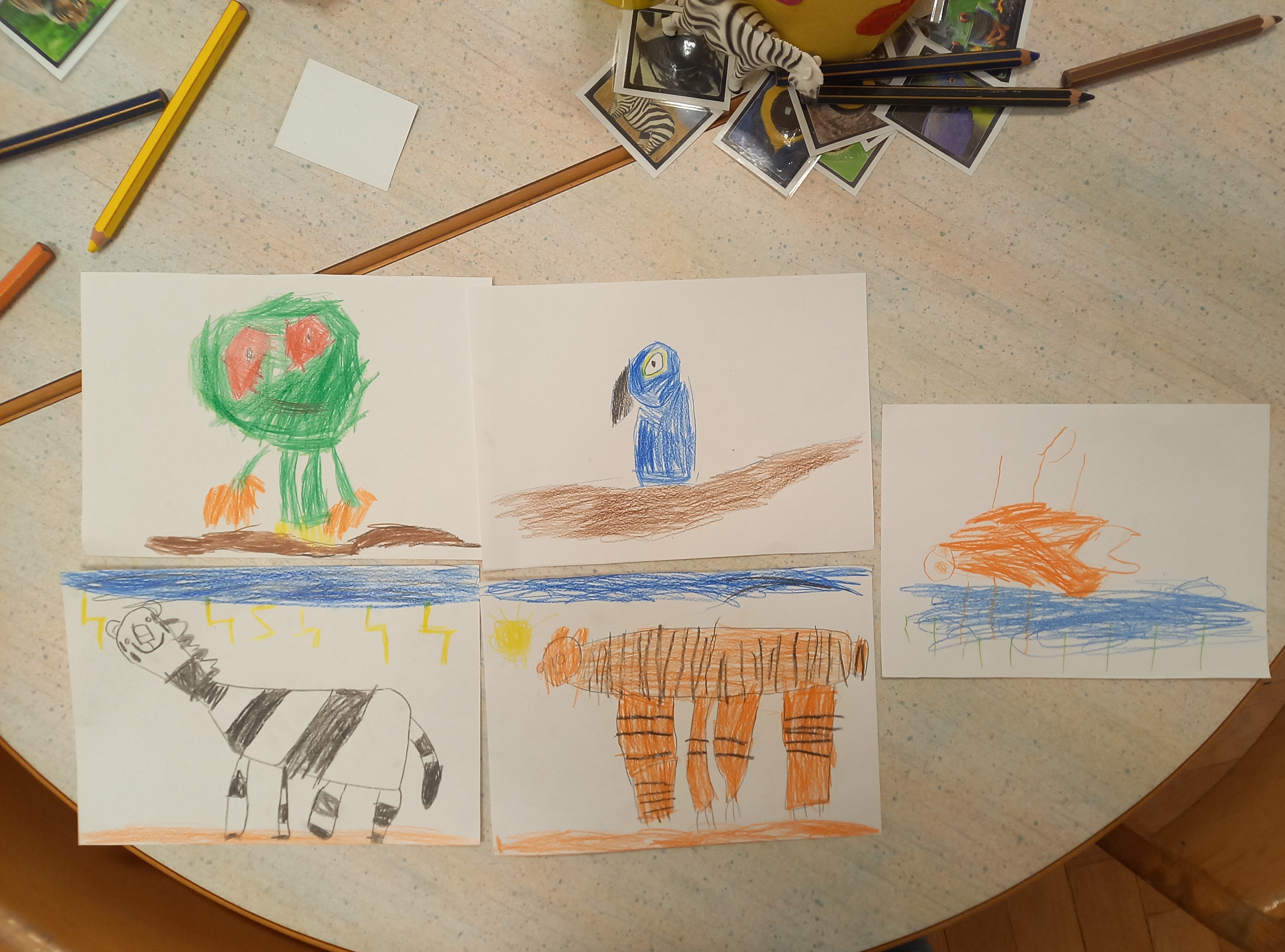
The teacher then places photographs of animal eyes in front of the children. The children try to find the correct eyes for the chosen animal. When a child finds the matching eyes, they draw the selected animal.
The teacher encourages the children to explain how they found the matching eyes and what helped them. Afterwards, children look for plush or plastic animal figures in the playroom and compare them with the animals in the photographs.
Using photographs, children can search for which peer the photographed eyes belong to.
Children can search for the whole using photographs of parts of objects, fruit, clothes, and similar items.
Using animal and eye photographs, a memory or matching game can be created (suitable for older children).
This activity supports visual perception and observation skills by focusing on details and their relationship to the whole. By matching animal eyes to the correct animals, children practise comparison, attention to visual cues, and reasoning. The activity encourages verbal explanation and reflection, helping children articulate how they observe and recognise similarities. It also strengthens curiosity and interest in animals through playful visual exploration.
Children enjoy animals and often choose books that show them. Some children said they used colour and fur or skin patterns to help them guess. Others chose an animal at random.

Funded by the European Union. Views and opinions expressed are however those of the author(s) only and do not necessarily reflect those of the European Union or the European Education and Culture Executive Agency (EACEA). Neither the European Union nor EACEA can be held responsible for them.

All contents, in particular texts, pictures and graphics, are protected by copyright. Unless expressly stated otherwise, copyright is held by media.eduskills.plus and is licensed under Creative Commons Attribution - Attribution-ShareAlike 4.0 International. They may be subject to the terms of the license.
© 2020-2026 media.eduskills.plus | Impressum