
 Method Role-Play: Everyday Media MomentsParents act out common media-related family situations and explore alternative responses |
||
2026 media.eduskills.plus |


Overview
-
Target group:Parents
-
Group size:Small group, Group
-
Duration:30–45 min
-
Materials:
- Scenario cards
Goal
To help parents reflect on their media-related parenting habits and discover constructive ways to respond to challenging situations.
Steps
Introduce the idea of role-play and reassure participants that this is a safe, supportive space.
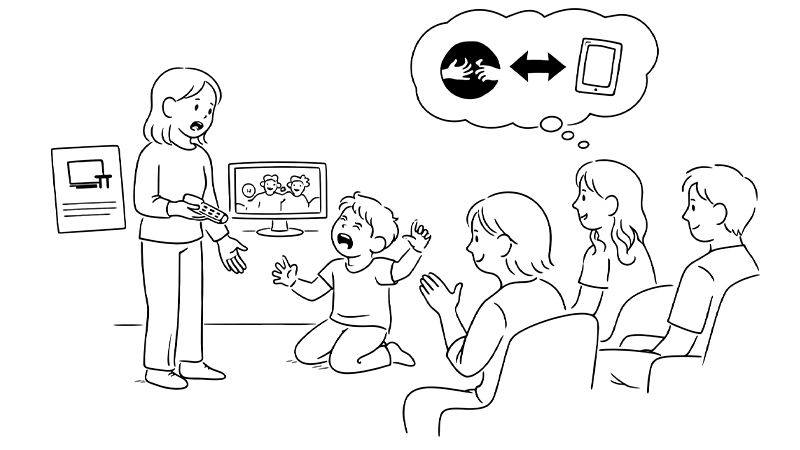
Present a scenario card (e.g. "Parent asks child to turn off the TV to help set the table; child throws a tantrum").
Invite two volunteers to act out the scene, improvising naturally. Alternatively, you and another teacher can act out the first scenario to break the ice.
After the role-play, guide a brief group reflection:
- What happened in the scene?
- How did the parent react?
- Were there other possible responses?
- How did media use influence the situation?
Optionally, repeat the scene ("rewind and replay") to try out different reactions or strategies.
Repeat with several scenarios. Depending on the group size and setting:
- Two parents can act out each scene in front of the group, or
- Each "parent pair" receives their own scenario to act out in smaller spaces.
Encourage parents to switch roles and explore alternative responses.
Tips
Scenario ideas:
- TV vs. Chores - The parent asks the child to turn off the TV and come help set the table. The child refuses and throws a tantrum.
- Screen Time Limits - The child wants to keep playing on the tablet even though their screen time is over. The parent tries to enforce the limit.
- Morning Rush - The child is watching cartoons during breakfast and doesn't want to get dressed or leave for kindergarten. The parent becomes increasingly stressed.
- Background Media - The parent is scrolling on their phone while the child is trying to get their attention. The child starts acting out.
- Public Setting - The family is in a waiting room. The child is bored and loud. The parent gives them a smartphone to calm them down but later feels unsure about this solution.
- Influencer Pressure - The child says they want a new toy because they saw it in a YouTube video. The parent is surprised by the request and unsure how to respond.