
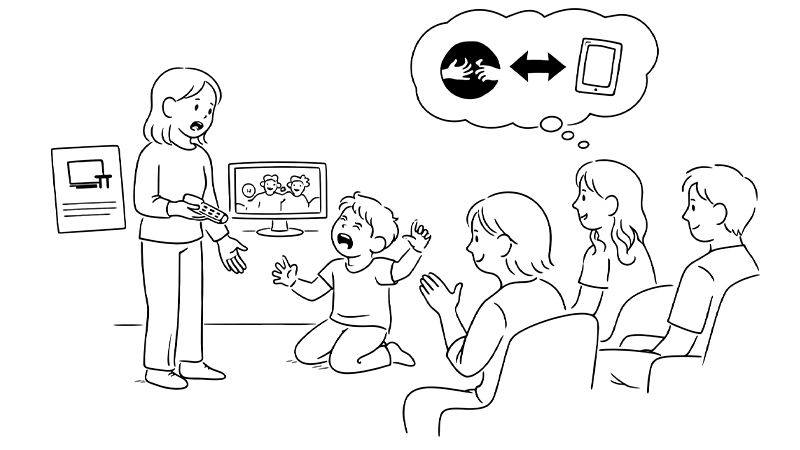
 Metoda Igranje uloga: Svakodnevni medijski trenuciRoditelji glume uobičajene obiteljske situacije povezane s medijima i istražuju alternativne odgovore |
||
2026 media.eduskills.plus |


Pregled
-
Ciljana skupina:Roditelji
-
Veličina grupe:Manja grupa, Grupa
-
Trajanje:30–45 min
-
Materijali:
- Kartice sa scenarijima (situacijama)
Cilj
Pomoći roditeljima da razmisle o svojim roditeljskim navikama povezanim s medijima i otkriju konstruktivne načine reagiranja na izazovne situacije.
Koraci
Predstavite ideju igranja uloga i uvjerite sudionike da je ovo sigurno i podržavajuće mjesto.
Predstavite karticu sa scenarijem (npr. „Roditelj zamoli dijete da isključi televizor kako bi pomoglo postaviti stol; dijete ima ispad bijesa“).
Pozovite dva volontera da odglume scenu, prirodno improvizirajući. Alternativno, vi i drugi učitelj možete odglumiti prvi scenarij kako biste probili led.
Nakon igranja uloga, provedite kratku grupnu refleksiju:
- Što se dogodilo u sceni?
- Kako je roditelj reagirao?
- Jesu li postojali drugi mogući odgovori?
- Kako je korištenje medija utjecalo na situaciju?
Po želji, ponovite scenu ("premotavanje unatrag i ponovno reprodukcija") kako biste isprobali različite reakcije ili strategije.
Ponovite s nekoliko scenarija. Ovisno o veličini grupe i okruženju:
- Dva roditelja mogu odglumiti svaku scenu pred grupom, ili
- Svaki "roditeljski par" dobiva svoj vlastiti scenarij koji će odglumiti u manjim prostorima.
Potaknite roditelje da zamijene uloge i istraže alternativne odgovore.
Savjeti
Ideje za scenarije:
- TV vs. kućanski poslovi - Roditelj zamoli dijete da ugasi televizor i dođe pomoći postaviti stol. Dijete odbija i baca ispad bijesa.
- Ograničenja vremena provedenog pred ekranom - Dijete želi nastaviti igrati se na tabletu iako je njegovo vrijeme provedeno pred ekranom isteklo. Roditelj pokušava provesti ograničenje.
- Jutarnja gužva - Dijete gleda crtiće za vrijeme doručka i ne želi se obući niti krenuti u vrtić. Roditelj je sve više pod stresom.
- Pozadinski mediji – Roditelj pregledava sadržaj na telefonu dok dijete pokušava privući njegovu pažnju. Dijete počinje negodovati ili se neprimjereno ponašati.
- Javni prostor – Obitelj se nalazi u čekaonici. Dijete je nemirno i glasno. Roditelj mu daje pametni telefon kako bi ga smirio, no kasnije nije siguran je li to bilo dobro rješenje.
- Pritisak influencera – Dijete kaže da želi novu igračku jer ju je vidjelo u YouTube videu. Roditelj je iznenađen zahtjevom i nije siguran kako reagirati.