
 Methode Persona – mehr über die Eltern erfahrenMethode, um sich auf die eigene Elterngruppe zu konzentrieren und deren Bedürfnisse besser zu verstehen |
||
2026 media.eduskills.plus |


Überblick
-
Zielgruppe:Erzieher:innen
-
Gruppengröße:Einzeln, Kleingruppe, Gruppe
-
Dauer:1.5–3 Std.
-
Materialien:
- Flipchart
- Papier
- Filzstifte
Ziel
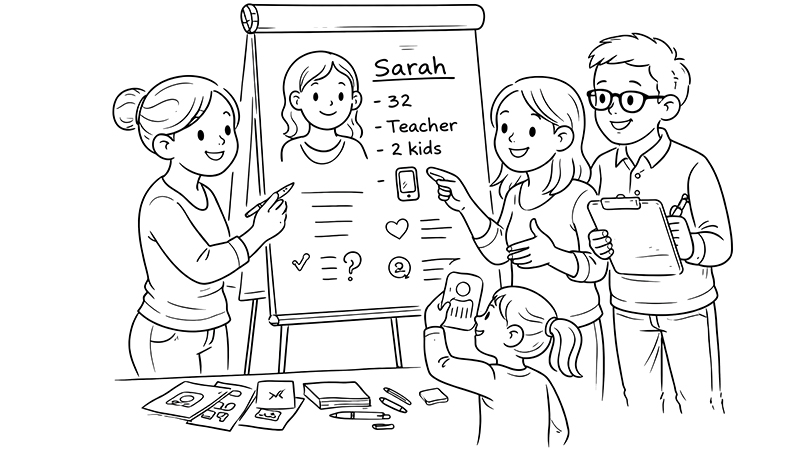
Eltern sind eine sehr heterogene Gruppe und können nicht alle mit demselben Angebot erreicht werden. In der Produktentwicklung, Werbung und im Verkauf werden Personas als gängiges Instrument genutzt, um sicherzustellen, dass die Bedürfnisse einer bestimmten Zielgruppe berücksichtigt werden. Die Idee ist, diese Methode von Werbeexpert*innen zu übernehmen und auf die Arbeit mit Eltern zu übertragen, um sie mit pädagogischen Angeboten besser zu erreichen. Die Methode führt zu einem differenzierteren Verständnis dafür, was die Bedürfnisse von Eltern prägt, wie wichtig Sprache ist und wie unterschiedliche Settings verschiedene Elterntypen ansprechen können.
Schritte
In 2–3er-Gruppen arbeiten oder allein.
Eine fiktive Persona mit folgenden Profilinformationen entwickeln: Name, Alter, Beruf, Anzahl der Kinder, Familiensituation (verheiratet/getrennt, Stresslevel, weitere Aspekte). Was ist X wichtig? Welche Rolle spielen digitale Medien in dieser Familie? Welche Unterstützung würde X sich in Bezug auf Medienerziehung wünschen? Was würde X motivieren, an einer Veranstaltung zur Medienerziehung im Kindergarten teilzunehmen?
Das Profil kann sich an realen Eltern orientieren, sollte aber mit einem Fantasienamen anonymisiert werden.
Das Profil schriftlich festhalten und, wenn gewünscht, ein Bild von X hinzufügen.
In der Gesamtgruppe über die entwickelten Eltern-Personas austauschen und diskutieren, wie man diese Eltern am besten erreichen kann und was für sie wichtig wäre.
Eine positive, einladende und nicht wertende Haltung während der gesamten Übung beibehalten.
Eltern-Personas – Beispiele
Diese Personas wurden auf Grundlage bestehender Forschung zur elterlichen Medienerziehung erstellt. Sie können Ihnen helfen, einzuschätzen, welche Ressourcen und Barrieren berücksichtigt werden sollten, wenn Sie Eltern ansprechen. Seien Sie sich bewusst, dass Personas auf Stereotypen und Verallgemeinerungen basieren, um den Zugang zu unterschiedlichen Perspektiven zu erleichtern und keine individuellen Personen repräsentieren.
Alle vier Personas haben unterschiedliche Ansätze zur Medienerziehung, verschiedene Herausforderungen und somit unterschiedliche Unterstützungsbedarfe.
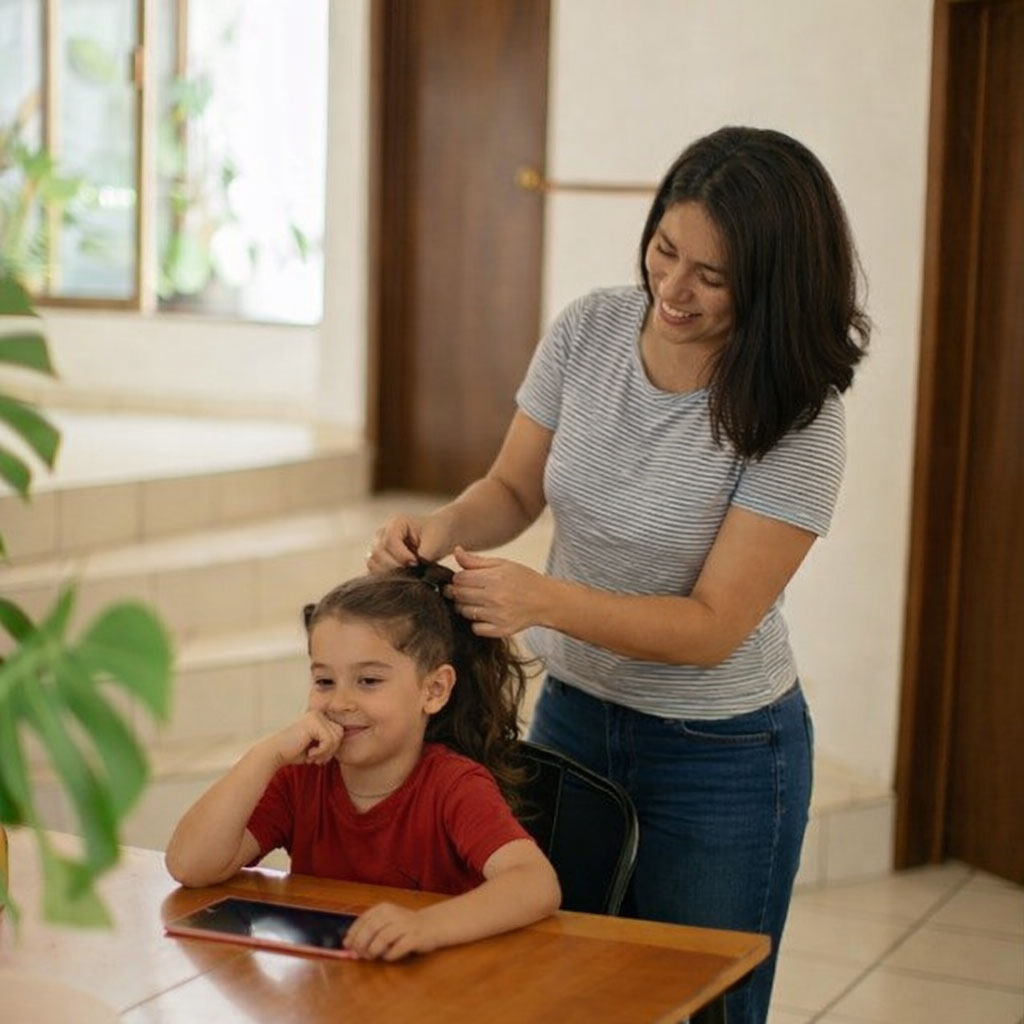
Laura 40 Jahre, getrennt, 2 Kinder, weniger aktive Medienerziehung
“Ich finde, Kinder sollten schon früh lernen, wie man mit digitalen Medien umgeht. Das sollte auch im Kindergarten stattfinden.”
Familiensituation
- Laura hat eine Tochter (3) und einen Sohn (5) aus einer früheren Beziehung.
- Sie arbeitet freiberuflich in Teilzeit im Bereich Marketing.
- Ihr neuer Partner hat einen Sohn (7), und am Wochenende verbringen sie Zeit gemeinsam mit allen drei Kindern.
- Laura lebt in der Stadt und wird unter der Woche von ihren Eltern unterstützt.
Mediennutzung in der Familie
- Die Kinder haben ein Tablet und eine Bluetooth-Box: Sie hören Podcasts, der Sohn darf auf dem Tablet spielen, und manchmal schauen sie Videos auf YouTube, Netflix oder Disney+ usw.
- Bei den Großeltern läuft der Fernseher fast immer.
- Laura nutzt soziale Medien beruflich und entspannt abends mit Instagram.
Einstellung zu digitalen Medien
- Laura hat eine positive und offene Haltung gegenüber digitalen Medien und sieht deren Chancen.
- Sie konzentriert sich weniger auf Risiken, sondern beobachtet die Entwicklung ihrer Kinder und würde eingreifen, wenn sie ein Problem sieht.
- Sie ist überzeugt, dass Kinder aus ihren Fehlern lernen und eigene Erfahrungen (auch mit digitalen Medien) machen sollten.
Herausforderungen
- Laura hat aufgrund von Arbeit und Organisation des Alltags oft wenig Zeit und Energie, um sich intensiv den Bedürfnissen ihrer Kinder zu widmen.
- Sie möchte die Bildung ihrer Kinder fördern, weiß aber nicht, welche kindgerechten Inhalte geeignet sind.
- Laura fürchtet, von anderen Eltern wegen ihres offenen Umgangs mit Medien verurteilt zu werden.
Welche Unterstützung (Veranstaltungen, Settings, Methoden) würde Laura brauchen? Was wäre für sie wichtig?

Feride 34 Jahre, verheiratet, 2 Kinder, schützende Medienerziehung
“Bildung ist für meine Familie sehr wichtig. Ich denke, digitale Medien richten mehr Schaden als Nutzen an, daher versuche ich, sie so weit wie möglich fernzuhalten.”
Familiensituation
- Feride hat zwei Söhne (4) und (6) mit ihrem Ehemann.
- Sie ist ausgebildete Lehrerin, arbeitet derzeit aber nicht.
- Die Familie lebt in einer kleinen Stadt.
- Die Familie ist vor Kurzem aufgrund des Jobs ihres Mannes (Ingenieur, Vollzeit beschäftigt in einem internationalen Unternehmen) eingewandert und hat bisher nur wenige Kontakte zu Einheimischen aufgebaut.
- Die Familiensprache ist Türkisch, und Feride besucht derzeit Sprachkurse.
Mediennutzung in der Familie
- Feride liest den Kindern häufig vor.
- Sie kommuniziert oft per Facetime mit Freunden und Familie in der Heimat.
- Die Kinder haben begrenzte Bildschirmzeit (sie dürfen am Wochenende eine Folge ansehen).
- Ferides Ehemann ist oft wegen der Arbeit am Handy, und sie fordert ihn auf, ein besseres Vorbild für die Kinder zu sein.
Einstellung zu digitalen Medien
- Feride hat eine kritische Haltung gegenüber digitalen Medien und sieht vor allem deren Gefahren.
- Sie möchte, dass ihre Kinder so lange wie möglich ohne digitale Geräte aufwachsen.
- Sie findet, dass der Kindergarten keine digitale Bildung vermitteln sollte, sondern sich lieber auf grundlegende Fähigkeiten wie Lesen und Schreiben, Zahlenlernen usw. konzentrieren sollte.
Herausforderungen
- Feride berücksichtigt nicht die Chancen, die digitale Medien für die Bildung ihrer Kinder haben könnten.
- Ihr Ansatz zum digitalen Lernen ist von der Angst vor Gefahren geprägt, und sie ist nicht offen für das Interesse ihrer Kinder an der digitalen Welt.
- Feride fühlt sich etwas isoliert und unsicher, da sie neu in der Stadt ist und die Sprache noch nicht spricht.
Welche Unterstützung (Veranstaltungen, Settings, Methoden) würde Feride brauchen? Was wäre für sie wichtig?

Lukasz 30 Jahre, verheiratet, ein Kind, aktive Medienerziehung
“Digitale Medien sind Teil unserer Welt, und ich versuche, ein aktives Vorbild zu sein und meiner Tochter beizubringen, wie man diese Technologien sinnvoll im Leben nutzt.”
Familiensituation
- Lukasz hat eine Tochter (5) mit seiner Partnerin.
- Er arbeitet als Grafikdesigner.
- Die Familie lebt in einem Dorf.
- Lukasz und seine Partnerin arbeiten beide in Teilzeit und reisen viel.
Mediennutzung in der Familie
- Lukasz’ Tochter hat eine Lieblingsserie, die sie gemeinsam anschauen.
- Die Familie macht regelmäßig Fotos und Videos, die sie zusammen bearbeitet und anschaut.
- Lukasz spielt gerne Videospiele, und manchmal spielen sie gemeinsam als Familie (altersgerechte Spiele).
- Als Designer nutzt Lukasz Technologie, um kreativ zu sein, zu experimentieren und zu lernen.
Einstellung zu digitalen Medien
- Lukasz hat eine positive Haltung gegenüber digitalen Medien, sieht aber auch die komplexen Herausforderungen, die mit sozialen Medien und Technologien wie KI verbunden sind.
- Er nimmt sich Zeit, sich mit seiner Tochter zu beschäftigen und gemeinsam die Möglichkeiten der Technologie zu erkunden.
- Lukasz hört aufmerksam zu und beobachtet, was seine Tochter kommuniziert, wenn sie gemeinsam Filme oder Serien ansehen.
Herausforderungen
- Lukasz streitet sich manchmal mit seiner Partnerin, weil sie denkt, dass es für ihre Tochter noch zu früh sei, sich mit digitaler Technologie zu beschäftigen.
- Er ist noch ein relativ junger Vater und nicht immer sicher, ob seine erzieherischen Entscheidungen richtig sind – besonders, wenn er alarmierende Artikel über die negativen Auswirkungen der Mediennutzung auf Kinder liest.
Welche Unterstützung (Veranstaltungen, Settings, Methoden) würde Lukasz brauchen? Was wäre für ihn wichtig?

Ruben 37 Jahre, 3 Kinder, weniger aktive Medienerziehung
“Familienleben kann stressig sein. Mit digitalen Geräten können die Kinder ein bisschen Spaß haben, und für uns Eltern bedeutet das eine wohlverdiente Pause.”
Familiensituation
- Ruben hat drei Kinder – zwei Söhne (3) und (5) und eine Tochter (5) – mit seiner Frau.
- Er ist gelernter Elektriker und arbeitet Vollzeit.
- Die Familie lebt in einem Dorf.
- Rubens Frau Lidia leidet an einer chronischen Krankheit.
Mediennutzung in der Familie
- Der Fernseher läuft die meiste Zeit, weil die Eltern es so gewohnt sind.
- Die Kinder nutzen ein Tablet, um zu spielen, Videos anzuschauen oder Geschichten zu hören.
- Die Eltern lesen nicht gerne.
- Die Familie macht am Wochenende gerne Fotos, wenn sie gemeinsam Zeit verbringt.
Einstellung zu digitalen Medien
- Ruben hat eine pragmatische Haltung zu digitalen Medien und sieht vor allem deren Vorteile.
- Er möchte, dass seine Kinder Spaß haben und spielen.
- Als Kind hat Ruben selbst gerne Computerspiele gespielt und durfte fernsehen – er hat positive Erinnerungen daran.
Herausforderungen
- Ruben nimmt sich keine Zeit und hat nur begrenzte Ressourcen, um sich mit der Mediennutzung seiner Kinder auseinanderzusetzen.
- Seine Frau kann aufgrund ihrer Krankheit nicht gut mit Stress umgehen, ist aber der Meinung, dass sie ihren Kindern mehr altersgerechte Inhalte bieten könnten.
- Ruben und seine Frau nutzen digitale Medien hauptsächlich als "Babysitter", um den Alltag zu bewältigen.
Welche Unterstützung (Veranstaltungen, Settings, Methoden) würde Ruben brauchen? Was wäre für ihn wichtig?