
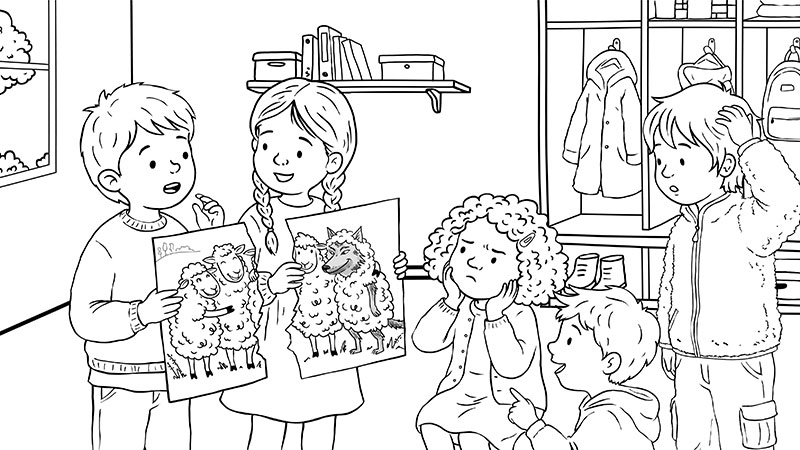
What Do You See?
One Image, Many Interpretations
 Finanțat de Uniunea Europeană. Punctele de vedere și opiniile exprimate aparțin, însă, exclusiv autorului (autorilor) și nu reflectă neapărat punctele de vedere și opiniile Uniunii Europene sau ale Agenției Executive Europene pentru Educație și Cultură (EACEA). Nici Uniunea Europeană și nici EACEA nu pot fi considerate răspunzătoare pentru acestea. |
 Toate conținuturile, în special textele, imaginile și grafica, sunt protejate de drepturi de autor. Cu excepția cazului în care se specifică altfel, drepturile de autor sunt deținute de media.eduskills.plus și sunt licențiate în conformitate cu Creative Commons Attribution - Necomercial - Distribuție în aceleași condiții 4.0 Licență internațională. Acestea pot fi utilizate în condițiile licenței. |
2026 media.eduskills.plus
Rezultatele învățării
Competențe
|
|
|
Grupul țintă |
|
Materiale necesare
|
Descrierea activității (pas cu pas)
Pregătire:
Select one or more photographs that show everyday situations but do not have a single obvious meaning. Images with people, emotions, or interactions work especially well.
You can also use photographs from the Photo Library. Choose images that allow different interpretations and invite discussion.
Implementare:
Show one image to the children.
First, invite them to observe carefully and describe what they see.
- What do you see in this picture?
- What can you notice?
Encourage children to focus on visible details without interpreting yet.
In the next step, invite children to share what they think is happening in the image.
- What is happening here?
- Why do you think that?
Collect different answers and allow multiple interpretations.
Highlight that different children may see different things in the same image.
You can also show only a small part of the image (for example, a cropped detail). Ask the children what they think they are seeing. Then reveal the full image. Discuss what changed and what new information became visible.
Reflecţie:
Talk together about the experience.
- Did everyone see the same thing?
- Were there different ideas about what was happening?
- Why can one image be understood in different ways?
You can explain that images do not always tell a single story. People may understand them differently depending on what they notice and what they think.
Variații și idei suplimentare
Children can draw their own version of the story they see in the image.
You can compare interpretations with parents by asking families what they see in the same picture.
Use several images and compare how interpretations change from one image to another.
Informații generale și perspectivă didactică
This activity introduces children to the idea that images can be interpreted in different ways. It supports early media literacy by encouraging observation, discussion, and reflection. Children learn that meaning is not fixed, but can depend on perspective, attention, and prior experiences.
By working with open images and sharing different interpretations, children develop language skills, empathy, and the ability to consider multiple viewpoints. The activity also introduces a basic understanding of how media represent reality and how meaning is constructed.