
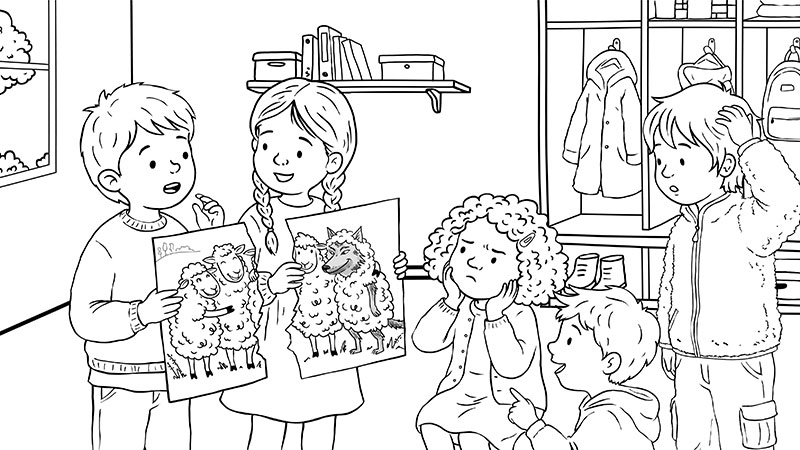
Was siehst du?
Ein Bild, viele Deutungen
 Von der Europäischen Union finanziert. Die geäußerten Ansichten und Meinungen entsprechen jedoch ausschließlich denen des Autors bzw. der Autoren und spiegeln nicht zwingend die der Europäischen Union oder der Europäischen Exekutivagentur für Bildung und Kultur (EACEA) wider. Weder die Europäische Union noch die EACEA können dafür verantwortlich gemacht werden. |
 Alle Inhalte, insbesondere Texte, Bilder und Grafiken sind urheberrechtlich geschützt. Soweit es nicht ausdrücklich anders gekennzeichnet ist, liegen die Urheberrechte bei media.eduskills.plus und stehen unter der Creative Commons Namensnennung -Nicht kommerziell -Keine Bearbeitungen 4.0 International (CC BY-NC-ND 4.0) Lizenz. Sie dürfen im Rahmen der Lizenzbedingungen verwendet werden. |
2026 media.eduskills.plus
Lernergebnisse
Kompetenzen
|
|
|
Zielgruppe |
|
Benötigte Materialien
|
Anleitung zur Aktivität (Schritt für Schritt)
Vorbereitung:
Die Kita-Fachkraft wählt ein oder mehrere Fotos aus, die Alltagssituationen zeigen, aber keine eindeutige Bedeutung haben. Bilder mit Menschen, Emotionen oder Interaktionen eignen sich besonders gut.
Die Kita-Fachkraft kann auch Fotos aus der Bildersammlung verwenden. Es sollten Bilder gewählt werden, die unterschiedliche Deutungen zulassen und zum Austausch anregen.
Durchführung:
Die Kita-Fachkraft zeigt den Kindern ein Bild.
Zunächst werden die Kinder eingeladen, genau zu beobachten und zu beschreiben, was sie sehen.
- Was siehst du auf diesem Bild?
- Was kannst du erkennen?
Die Kita-Fachkraft ermutigt die Kinder, sich zunächst auf sichtbare Details zu konzentrieren, ohne diese gleich zu deuten.
Im nächsten Schritt lädt die Kita-Fachkraft die Kinder ein, zu erzählen, was ihrer Meinung nach auf dem Bild passiert.
- Was passiert hier?
- Warum denkst du das?
Unterschiedliche Antworten werden gesammelt und verschiedene Deutungen zugelassen.
Die Kita-Fachkraft hebt hervor, dass verschiedene Kinder im selben Bild unterschiedliche Dinge sehen können.
Die Kita-Fachkraft kann auch nur einen kleinen Ausschnitt des Bildes zeigen (zum Beispiel ein Detail). Die Kinder werden gefragt, was sie zu sehen glauben. Anschließend wird das vollständige Bild gezeigt. Gemeinsam wird besprochen, was sich verändert hat und welche neuen Informationen sichtbar geworden sind.
Überlegung:
Die Kita-Fachkraft spricht gemeinsam mit den Kindern über die Erfahrung.
- Haben alle dasselbe gesehen?
- Gab es unterschiedliche Vorstellungen darüber, was passiert?
- Warum kann ein Bild unterschiedlich verstanden werden?
Die Kita-Fachkraft kann erklären, dass Bilder nicht immer nur eine einzige Geschichte erzählen. Menschen können sie unterschiedlich verstehen – je nachdem, worauf sie achten und was sie denken.
Abwandlungen und zusätzliche Ideen
Die Kinder können ihre eigene Version der Geschichte, die sie im Bild sehen, zeichnen.
Die Kita-Fachkraft kann die Deutungen auch mit Eltern vergleichen, indem Familien gefragt werden, was sie in demselben Bild sehen.
Mehrere Bilder können verwendet werden, um zu vergleichen, wie sich Deutungen von einem Bild zum anderen verändern.
Hintergrundinformationen und didaktische Perspektiven
Diese Aktivität führt Kinder an die Idee heran, dass Bilder unterschiedlich interpretiert werden können. Sie unterstützt frühe Medienkompetenz, indem sie Beobachtung, Austausch und Reflexion anregt. Kinder lernen, dass Bedeutung nicht festgelegt ist, sondern von Perspektive, Aufmerksamkeit und Vorerfahrungen abhängen kann.
Durch die Arbeit mit offenen Bildern und das Teilen unterschiedlicher Deutungen entwickeln Kinder Sprachfähigkeiten, Empathie und die Fähigkeit, verschiedene Sichtweisen zu berücksichtigen. Die Aktivität vermittelt zudem ein grundlegendes Verständnis dafür, wie Medien Wirklichkeit darstellen und wie Bedeutung konstruiert wird.