Televizija ABC
Nastopanje na vrtčevski televiziji
 Financirano s strani Evropske unije. Izražena stališča in mnenja so zgolj stališča in mnenja avtorja(-ev) in ni nujno, da odražajo stališča in mnenja Evropske unije ali Evropske izvajalske agencije za izobraževanje in kulturo (EACEA). Zanje ne moreta biti odgovorna niti Evropska unija niti EACEA. |
 Vse vsebine, še posebej teksti, slike in grafikoni so avtorsko zaščiteni. V kolikor izrecno ni določeno drugače, so avtorske pravice last media.eduskills.plus pod licenco Priznanje avtorstva - nekomercialna raba - brez predelav 4.0 mednarodna (CC BY - NC - ND 4.0 ). Uporabijo se lahko le v okviru licenčnih pogojev. |
2026 media.eduskills.plus
Učni izidi
Kompetence
|
|
|
Ciljna skupina 5 let in več
|
|
Potrebni pripomočki
|
Opis aktivnosti (po korakih)
Predpriprava
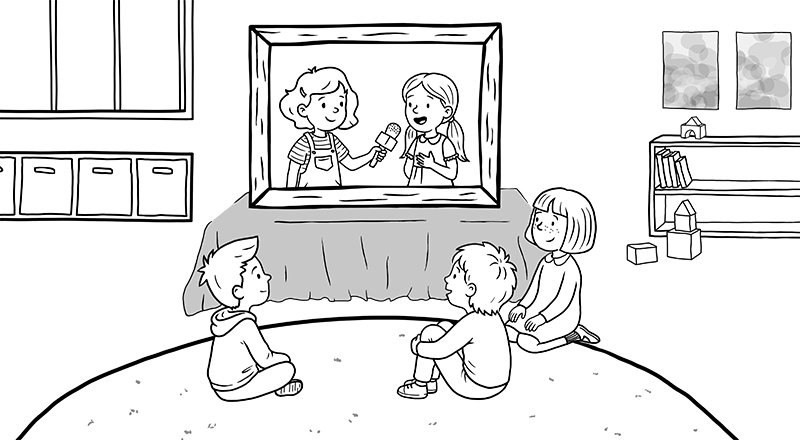
Otroke vprašajte, kaj radi gledajo po televiziji. Otroci podajajo odgovore: npr. risanke, filme, pesmi, otroške oddaje. Otroke vprašajte ali kdaj gledajo poročila. Potem si skupaj oglejte posnetek poročil za otroke.
Implementacija
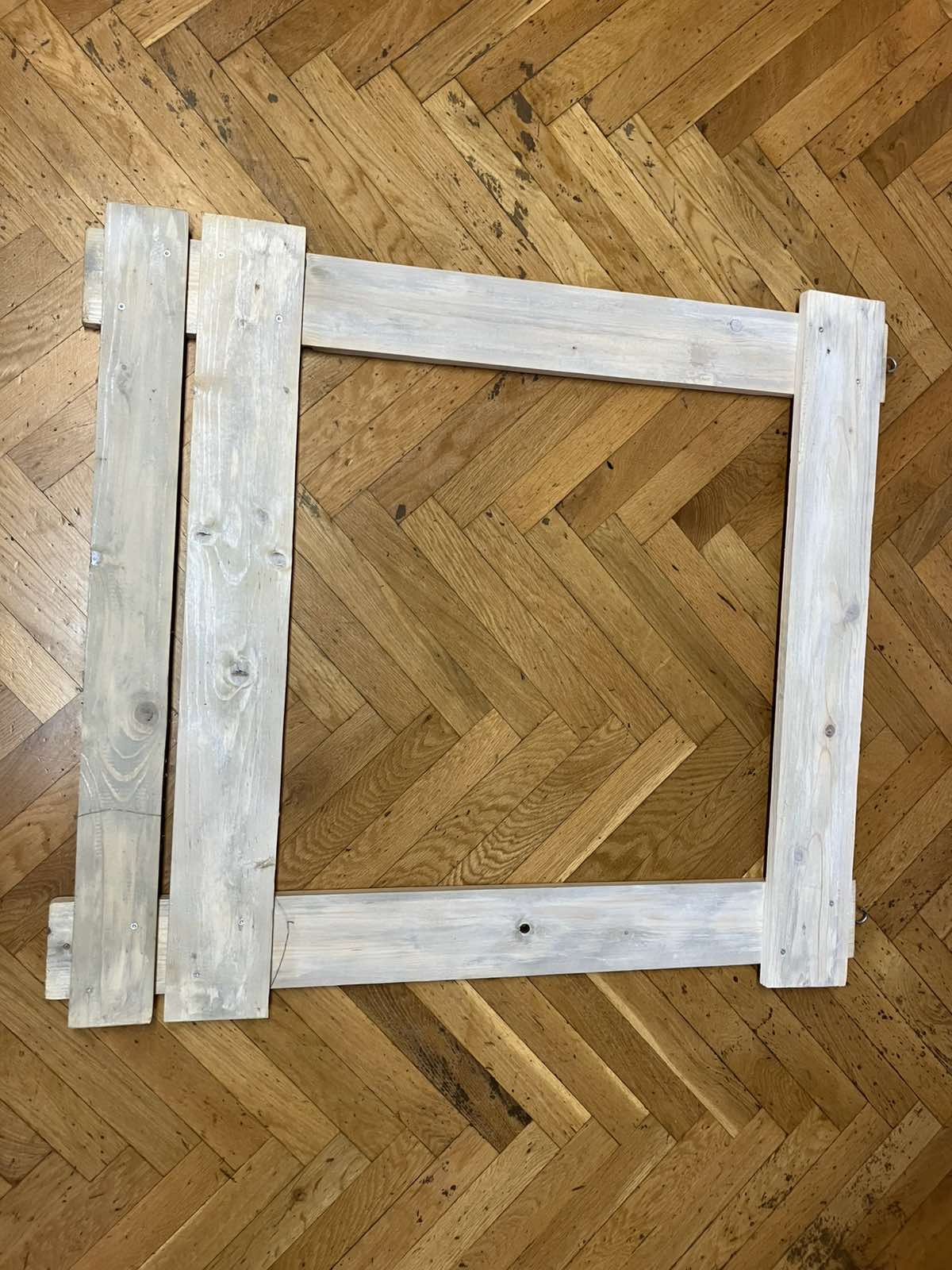
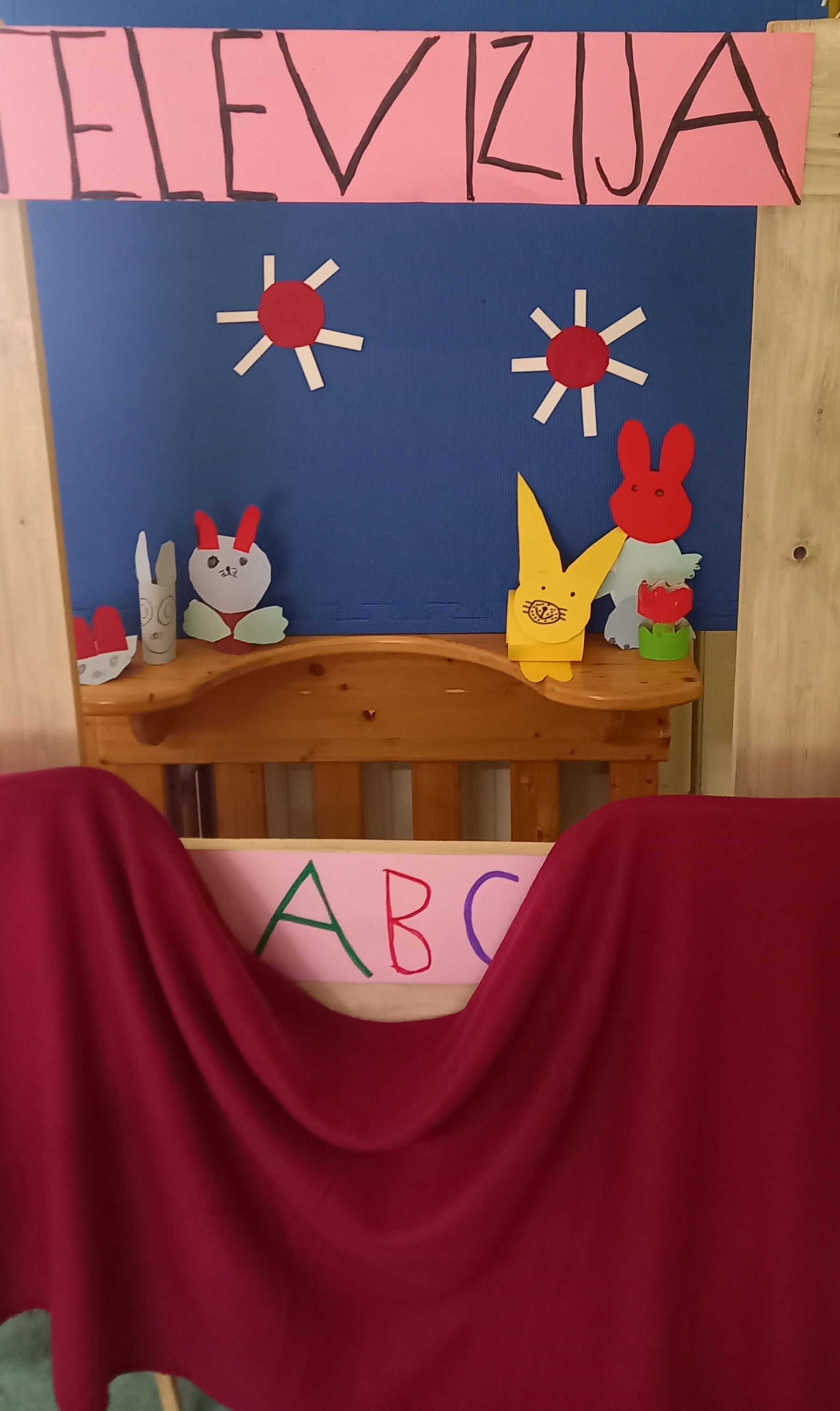
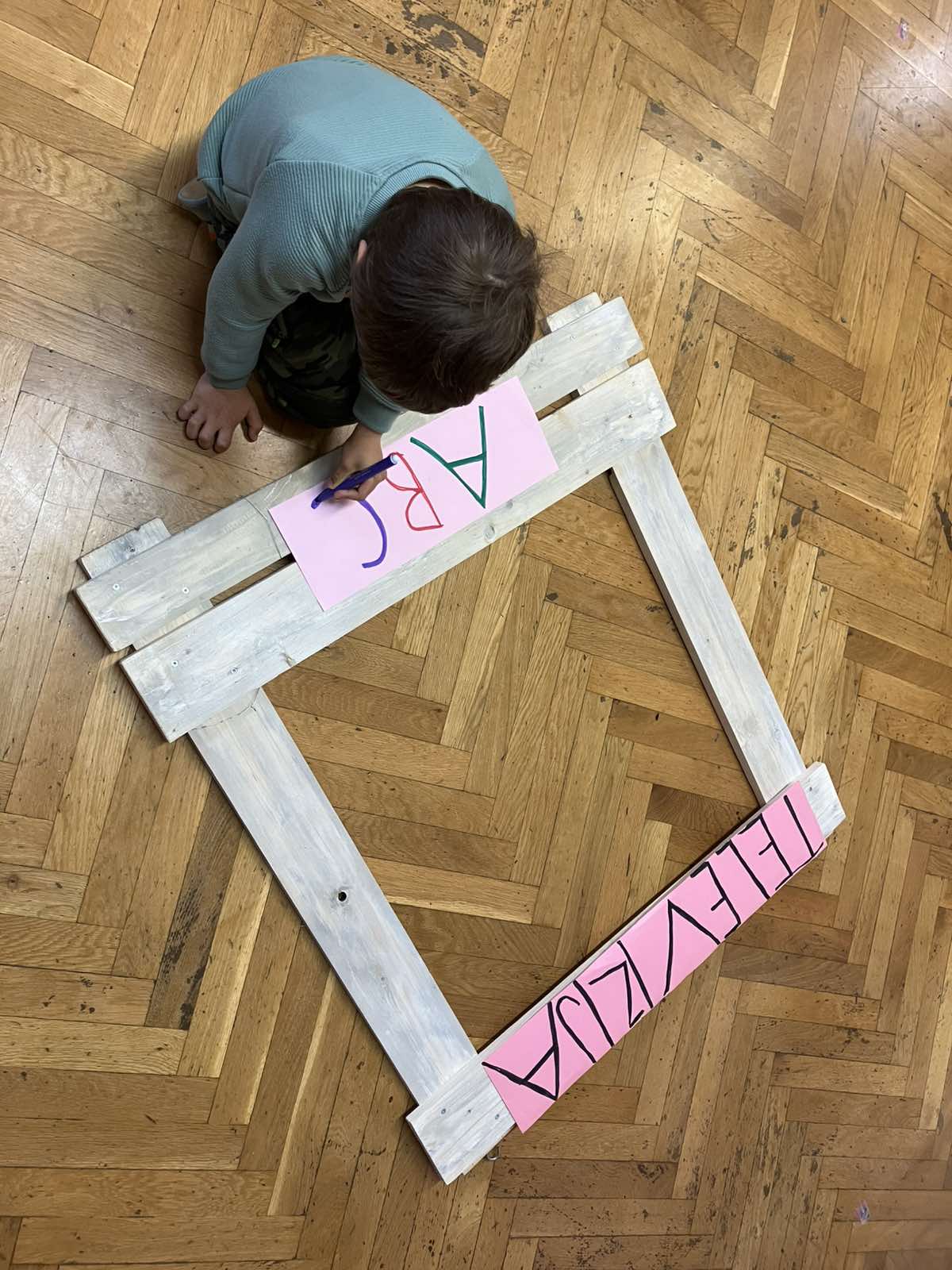
Otroke spodbudite, da pripovedujejo, kako bi si izdelali svojo televizijo, iz katerega materiala bi bila, kako bi jo naredili, kam bi jo postavili ipd. Otroci podajajo ideje za izdelavo televizije. Predloge si zapišite. Nato skupaj razmišljajte o možnostih za izdelavo televizije. S pomočjo hišnika in ostankov lesa v garaži izdelajte svojo televizijo.
Povabite otroke, da si izmislijo ime televizije oziroma programa. Otroci predlagajo imena in nato z dvigom rok izberejo ime, ki je dobilo največ glasov.
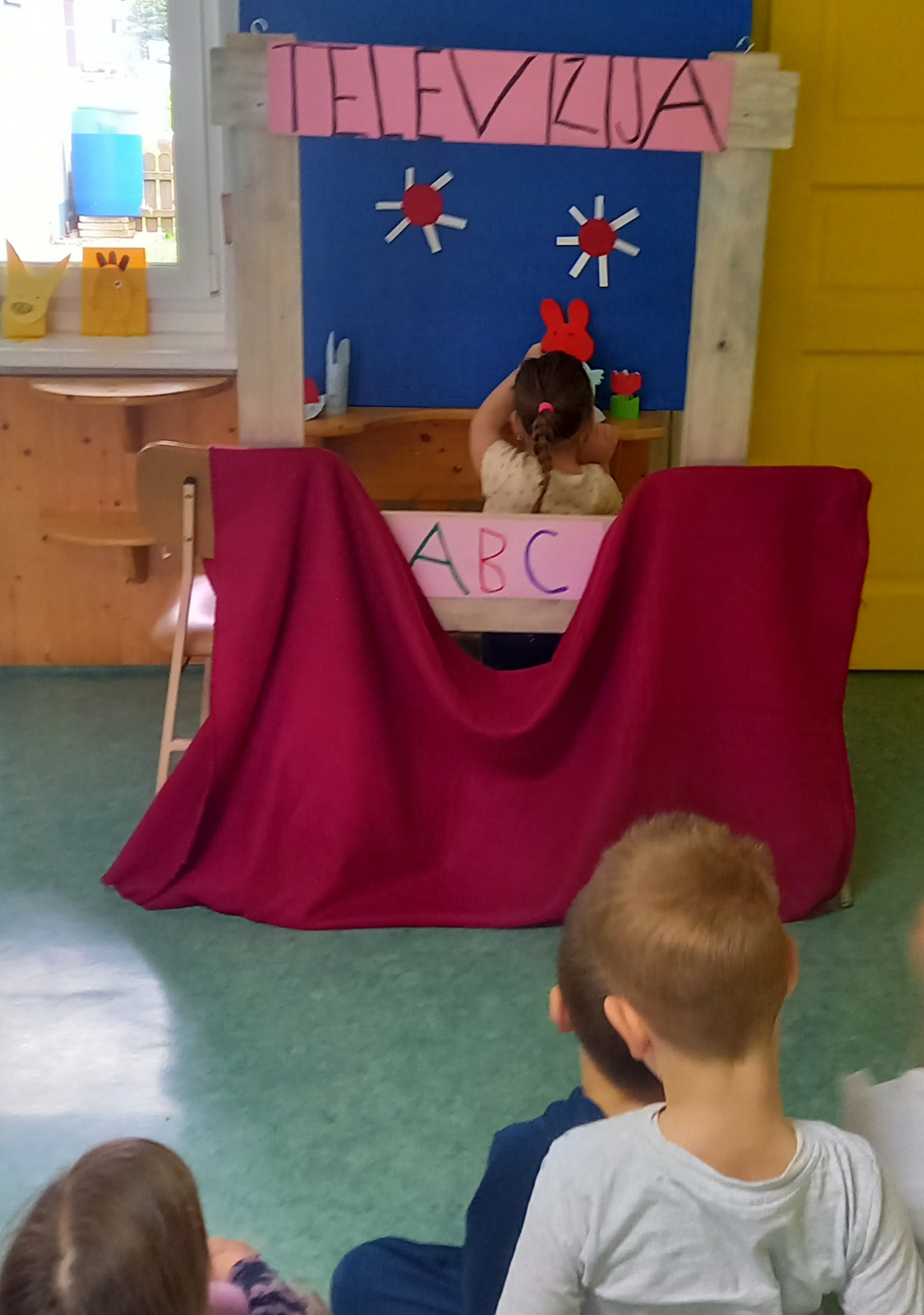
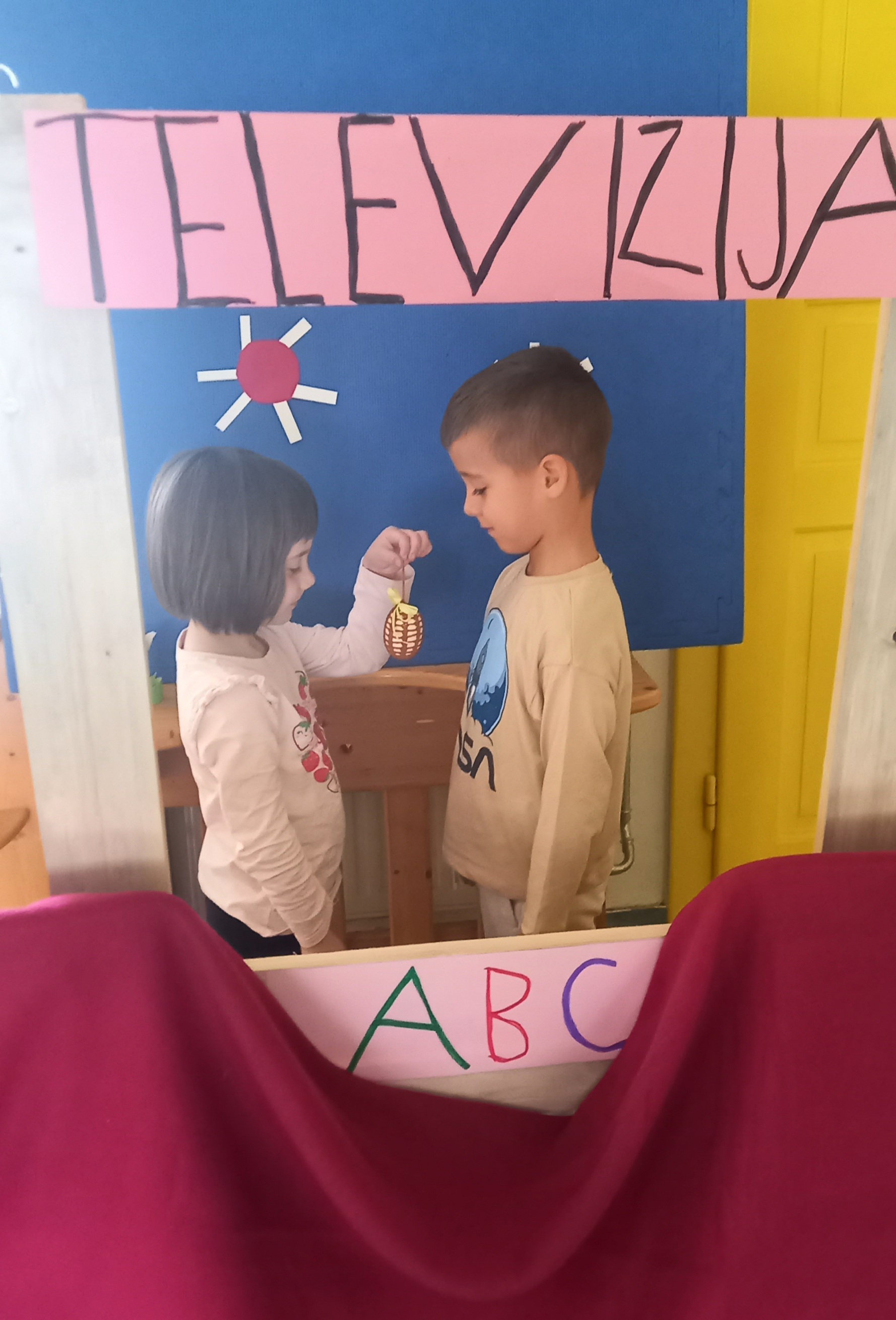
Ko je televizija pripravljena, se preizkusijo v vlogi novinarja, napovedovalca in komentatorja. Za temo uporabijo slikovni material, ki je nalepljen na steni (na primer zvrsti plesa). Otroke posnamite. Potem tudi vi odigrajte vlogo napovedovalca, otroci pa snemajo.
Refleksija
Otroci si ogledajo svoje posnetke. Spodbudite jih k refleksiji:
- Kako so se počutili ob nastopanju na televiziji?
- Kaj jim je bilo težko?
- Kaj jim je bilo všeč?
- Kaj bi lahko posneli na televiziji naslednjič?
Različice in dodatne ideje
Mogoče je uporabiti okvir iz različnih materialov: kartona, palic.
Oblika dela je lahko poljubna. Otroci lahko imajo na televiziji različne oddaje, z različnimi tematikami.
Osnovne informacije in didaktična perspektiva
Dejavnost otrokom na igriv način približa osnovne medijske vloge. Z ustvarjanjem lastne televizije in nastopanjem pred kamero razvijajo samozavest, komunikacijske spretnosti in razumevanje nastajanja televizijskih vsebin. Ogled posnetkov in pogovor o izkušnji podpirata izražanje in postopno premagovanje treme.
Izkušnje iz vrtcev
Celotna dejavnost je trajala več dni, saj je bilo potrebno zbrati sredstva za izdelavo televizije in jo izdelati. Plesno tematiko sem izbrala, ker so si otroci po plesni dejavnosti z zanimanjem ogledovali fotografije različnih plesov na steni igralnice. Posamezniki so veliko vedeli o plesu in to delili s prijatelji. Vsak od otrok je brez težav nastopil na naši televiziji in povedal nekaj ob fotografijah. Večina otrok se je smejala svojemu posnetku oddaje in posnetkom vrstnikov. Otroci so povedali, da jim je bila igra napovedovalcev všeč in so želeli snemanje ponoviti.
Fotografije aktivnosti