
Zvučna priča: Što čuješ?
Slušanje, zamišljanje i doživljavanje putem zvuka
 Financirano sredstvima Europske unije. Izneseni stavovi i mišljenja su stavovi i mišljenja autora i ne moraju se podudarati sa stavovima i mišljenjima Europske unije ili Europske izvršne agencije za obrazovanje i kulturu (EACEA). Ni Europska unija ni EACEA ne mogu se smatrati odgovornima za njih. |
 Svi sadržaji, a posebno tekstovi, slike i grafikoni, su zaštićeni autorskim pravima. Vlasnik autorskih prava, ukoliko nije drugačije označeno, je media.eduskills.plus, a autorsko pravo je definirano licencom Creative Commons Imenovanje-Nekomercijalno-Dijeli pod istim uvjetima 4.0 Međunarodna. Autorska prava mogu biti definirana uvjetima licence. |
2026 media.eduskills.plus
Ishodi učenja
Kompetencije
|
|
|
Ciljna skupina 4 godina i više
|
|
Potrebni materijali
|
|
| Materijali |
Opis aktivnosti (korak po korak)
Priprema:
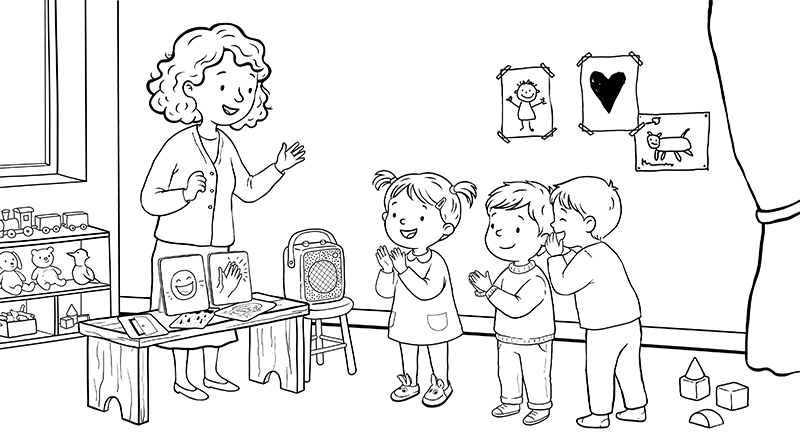
Okupite djecu u krug i objasnite im da će pozorno slušati različite zvukove te pogađati što se možda događa.
Primjena:
Pustite jedan kratki zvučni isječak (npr. smijeh, kiša, škripanje vrata).
Pitajte: „Što misliš da se događa?” i „Kako se zbog toga osjećaš?”
Potaknite djecu da opišu prizor ili emociju povezanu sa zvukom.
Pozovite ih da nacrtaju ono što su zamislili ili da to odglume pokretima i izrazima lica.
Refleksija:
Raspravite o različitim tumačenjima i istaknite da zvukovi mogu pripovijedati priče čak i bez slika ili riječi.
Varijacije i dodatne ideje
Potaknite djecu da snime vlastite zvukove i stvore „zvučnu priču”.
Pomiješajte stvarne zvukove s izmišljenima ili smiješnima pa neka djeca pogađaju koji su stvarni.
Koristite glazbene instrumente ili predmete (tresenje papira, kucanje drvenim blokovima) kako biste reproducirali zvukove.
Spojite zvukove u kratak „zvučni niz” i zamolite djecu da ispričaju priču koju čuju.
Osnovne informacije i didaktička perspektiva
Ova aktivnost upoznaje djecu s ekspresivnom moći zvuka u medijima. Pažljivim slušanjem uče povezivati zvukove s osjećajima i događajima, razvijajući maštu i emocionalno razumijevanje. Zvučne priče pomažu u izgradnji aktivnih vještina slušanja, ključnog dijela medijske pismenosti, potičući djecu da se usredotoče, interpretiraju i dijele ideje. Rasprava o njihovim reakcijama jača vokabular za emocije i senzorna iskustva, dok kreativno izražavanje kroz crtanje ili glumu poboljšava razumijevanje. Aktivnost potiče znatiželju i svijest o tome kako zvuk utječe na način na koji percipiramo priče i raspoloženja u medijima.