
Igra razvrstavanja medija
Učenje prepoznavanja i razvrstavanja različitih vrsta medija
 Financirano sredstvima Europske unije. Izneseni stavovi i mišljenja su stavovi i mišljenja autora i ne moraju se podudarati sa stavovima i mišljenjima Europske unije ili Europske izvršne agencije za obrazovanje i kulturu (EACEA). Ni Europska unija ni EACEA ne mogu se smatrati odgovornima za njih. |
 Svi sadržaji, a posebno tekstovi, slike i grafikoni, su zaštićeni autorskim pravima. Vlasnik autorskih prava, ukoliko nije drugačije označeno, je media.eduskills.plus, a autorsko pravo je definirano licencom Creative Commons Imenovanje-Nekomercijalno-Dijeli pod istim uvjetima 4.0 Međunarodna. Autorska prava mogu biti definirana uvjetima licence. |
2026 media.eduskills.plus
Ishodi učenja
Kompetencije
|
|
|
Ciljna skupina 3 godina i više
|
|
Potrebni materijali
|
|
Materijali
|
Opis aktivnosti (korak po korak)
Priprema:
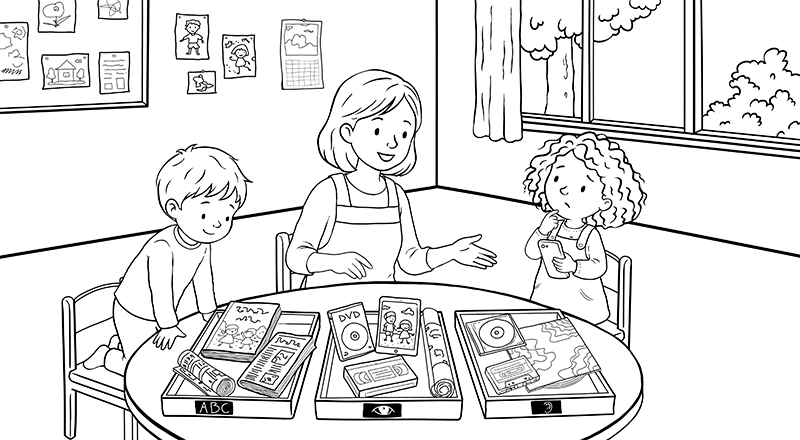
Okupite djecu u krug i pokažite im različite predmete ili slike medija.
Kratko porazgovarajte o svakom predmetu ili slici: „Što možemo učiniti s ovim? Možemo li to pročitati, pogledati ili poslušati?”
Pokažite djeci kutije ili podloge za razvrstavanje označene trima kategorijama.
Primjena:
Predložite djeci da naizmjence biraju predmet i stavljaju ga u odgovarajuću kategoriju.
Nakon razvrstavanja, zajedno pregledajte i raspravite: „Može li se telefon koristiti za gledanje ili slušanje? A knjige?”
Naglasite da mediji mogu imati različite svrhe te da ih koristimo na razne načine.
Varijacije i dodatne ideje
Odigrajte igru pogađanja: opišite predmet i pustite djecu da pogode u koju kutiju pripada.
Osnovne informacije i didaktička perspektiva
Ova aktivnost pomaže djeci da shvate raznolikost medija i njihove različite namjene. Razvija temeljne vještine medijske pismenosti poticanjem sposobnosti razlikovanja medijskih formata i prepoznavanja njihove svrhe (informiranje, zabava ili edukacija). Kroz razvrstavanje i razgovor djeca vježbaju zapažanje i kategorizaciju, čime se potiče rani razvoj kritičkog mišljenja. Aktivnost također uvodi vokabular povezan s medijima (knjiga, fotografija, videozapis, zvuk) i potiče razgovor o tome kako mediji utječu na našu svakodnevicu.