What Is a Picture Made Of?
Exploring Pixels
 Funded by the European Union. Views and opinions expressed are however those of the author(s) only and do not necessarily reflect those of the European Union or the European Education and Culture Executive Agency (EACEA). Neither the European Union nor EACEA can be held responsible for them. |
 All contents, in particular texts, pictures and graphics, are protected by copyright. Unless expressly stated otherwise, copyright is held by media.eduskills.plus and is licensed under Creative Commons Attribution - Non-commercial - Distribution under the same conditions 4.0 International license. They may be subject to the terms of the license. |
2026 media.eduskills.plus
Learning outcomes
Competencies
|
|
|
Target group 4 years and up |
|
Required materials
|
|
Materials
|
Description of the activity (step by step)
Preparation:
Children encounter images every day, in books, on screens, and in their surroundings. At first glance, these images appear continuous and realistic. This activity invites children to look more closely and discover that pictures are made up of many small parts.
By exploring pixelated images and creating their own grid-based pictures, children develop an early understanding that media images are constructed. They observe, experiment, and experience how small elements come together to form a whole.
Implementation:
The activity begins by observing images.
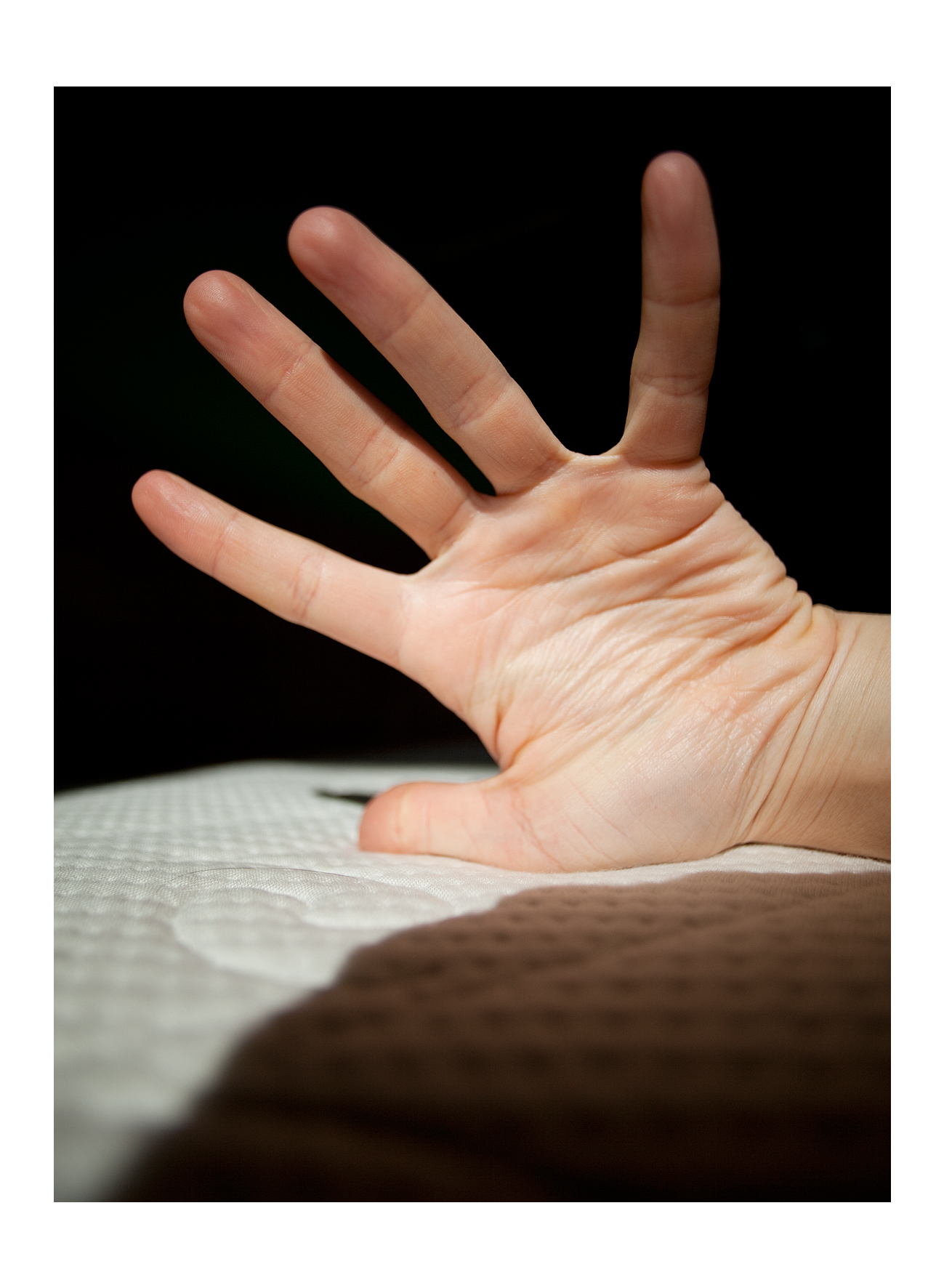
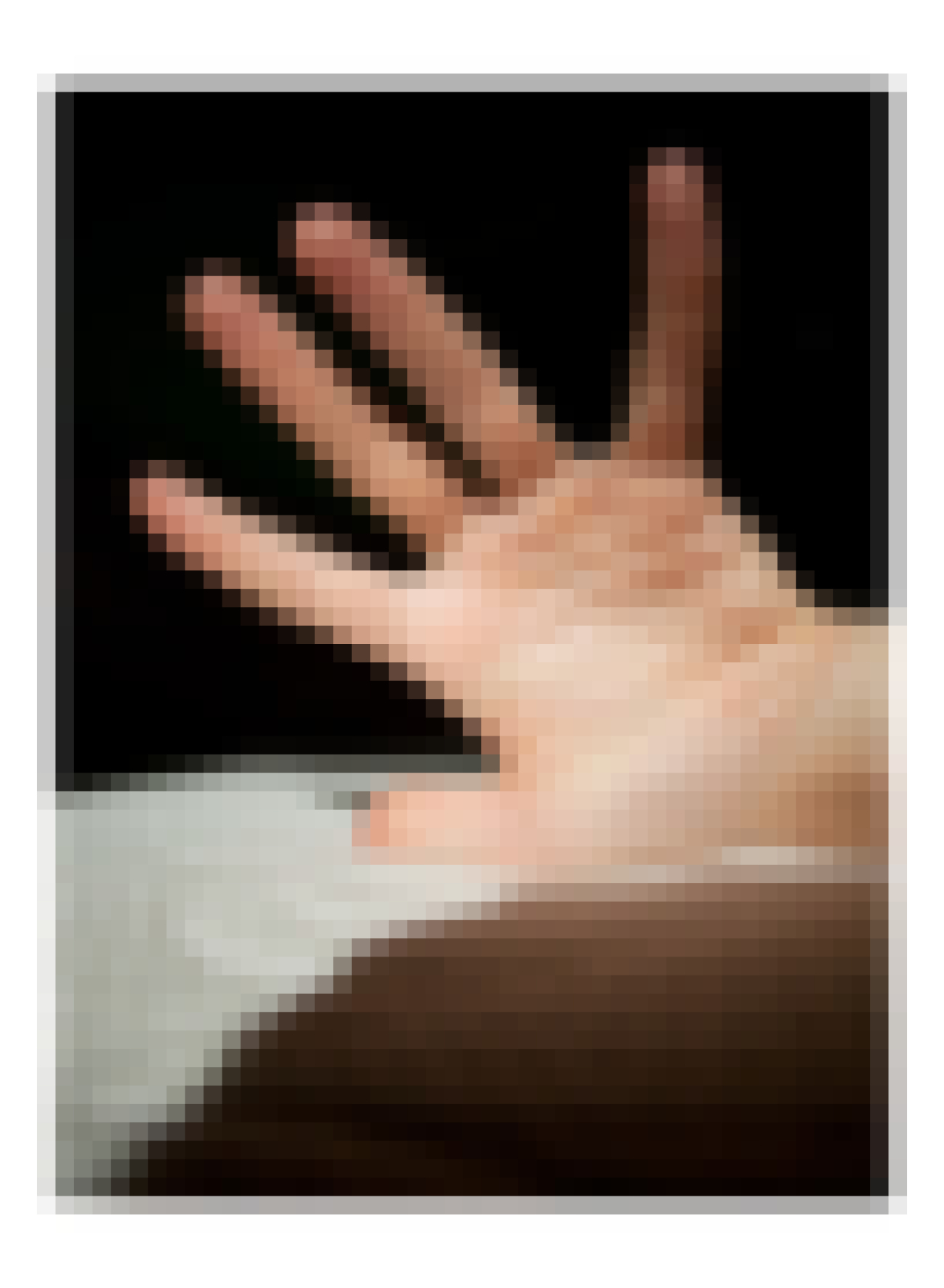
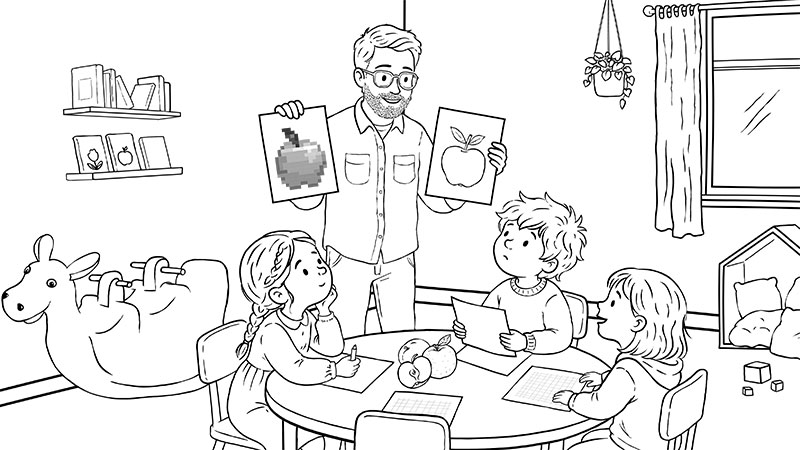
Show the children a picture in its normal form and then a pixelated version of the same image. Invite them to describe what they see. What has changed? Can they still recognise the image?
Encourage the children to look closely at the pixelated version. Help them notice that the image is made up of many small squares.
In the next step, children create their own "pixel picture".
Provide a simple grid on paper. Children can either create their own image by colouring individual squares or follow a prepared grid with symbols to reveal a hidden picture. Alternatively, you can offer pre-cut colored squares and invite children to build their images by placing and arranging them on the grid.
As they work, children begin to understand that each small square contributes to the overall image.
Once the images are finished, invite the children to look at them from different distances. Up close, they see individual squares. From further away, the picture becomes clearer.
Reflection:
Talk together about the experience.
- What did the children notice when they looked closely at the images?
- What changed when they stepped further away?
- How did their own picture look from near and from far?
You can also connect the activity to everyday media experiences. Explain that many images on screens are made in a similar way, from many small parts that we usually do not see.
This activity helps children understand that images are constructed and encourages careful observation and curiosity about how media works.
Variations and additional ideas
You can turn the activity into a guessing game. Show a strongly pixelated image and ask the children what they think it could be. Then gradually reveal more of the image by showing clearer versions or by "zooming out." With each step, children can refine their guesses and notice new details.
Background information and didactical perspective
Digital images are composed of many small units, commonly called pixels. These are usually not visible to the eye, but they become noticeable when an image is enlarged or reduced in quality. Helping children recognise that images are constructed supports early media literacy and visual awareness.
In this activity, children explore images by observing, describing, and creating their own grid-based pictures. The combination of looking closely, working with simple structures, and changing perspective (near and far) allows them to experience how individual elements form a whole.
Empty Grid (6×6)
Empty Grid (8×8)
Pixel Pattern: Heart
Fill 1 = colour, 0 = leave empty
| 0 | 1 | 0 | 0 | 0 | 0 | 1 | 0 |
| 1 | 1 | 1 | 0 | 0 | 1 | 1 | 1 |
| 1 | 1 | 1 | 1 | 1 | 1 | 1 | 1 |
| 0 | 1 | 1 | 1 | 1 | 1 | 1 | 0 |
| 0 | 0 | 1 | 1 | 1 | 1 | 0 | 0 |
| 0 | 0 | 0 | 1 | 1 | 0 | 0 | 0 |
| 0 | 0 | 0 | 0 | 0 | 0 | 0 | 0 |
| 0 | 0 | 0 | 0 | 0 | 0 | 0 | 0 |
Pixel Pattern: Smiley
Fill 1 = colour, 0 = leave empty
| 0 | 1 | 1 | 1 | 1 | 1 | 1 | 0 |
| 1 | 0 | 0 | 0 | 0 | 0 | 0 | 1 |
| 1 | 0 | 1 | 0 | 0 | 1 | 0 | 1 |
| 1 | 0 | 0 | 0 | 0 | 0 | 0 | 1 |
| 1 | 0 | 1 | 0 | 0 | 1 | 0 | 1 |
| 1 | 0 | 0 | 1 | 1 | 0 | 0 | 1 |
| 0 | 1 | 0 | 0 | 0 | 0 | 1 | 0 |
| 0 | 0 | 1 | 1 | 1 | 1 | 0 | 0 |
Photos of the activity