Slikanica o medijih
Medijska pismenost za najmlajše
 Financirano s strani Evropske unije. Izražena stališča in mnenja so zgolj stališča in mnenja avtorja(-ev) in ni nujno, da odražajo stališča in mnenja Evropske unije ali Evropske izvajalske agencije za izobraževanje in kulturo (EACEA). Zanje ne moreta biti odgovorna niti Evropska unija niti EACEA. |
 Vse vsebine, še posebej teksti, slike in grafikoni so avtorsko zaščiteni. V kolikor izrecno ni določeno drugače, so avtorske pravice last media.eduskills.plus pod licenco Priznanje avtorstva - nekomercialna raba - brez predelav 4.0 mednarodna (CC BY - NC - ND 4.0 ). Uporabijo se lahko le v okviru licenčnih pogojev. |
2026 media.eduskills.plus
Učni izidi
Kompetence
|
|
|
Ciljna skupina 5 let in več
|
|
Potrebni pripomočki
|
Opis aktivnosti (po korakih)
Predpriprava
Pripravite slikanico o medijih in materiale za likovne dejavnosti.
Implementacija
Dejavnost začnite s pogovorom in vprašanji:
- Kaj so mediji?
- Katere medije poznate?
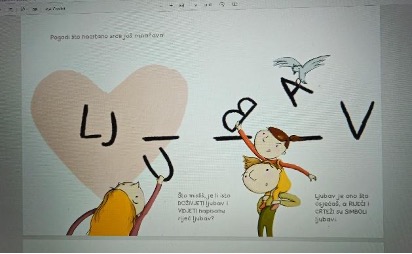
Otrokom predstavite slikanico o medijih in jih spodbudite k pogovoru. Z interaktivnimi vprašanji opozarjajte na razliko med svetom medijev in resničnim svetom, na primer:
- Dotaknite se nosu. Kakšen je na otip? Ga čutite?
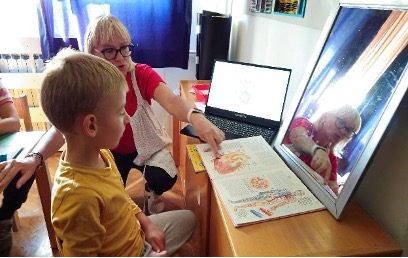
Uporabite ogledalo, da se otroci lahko opazujejo in vidijo svoj odsev.
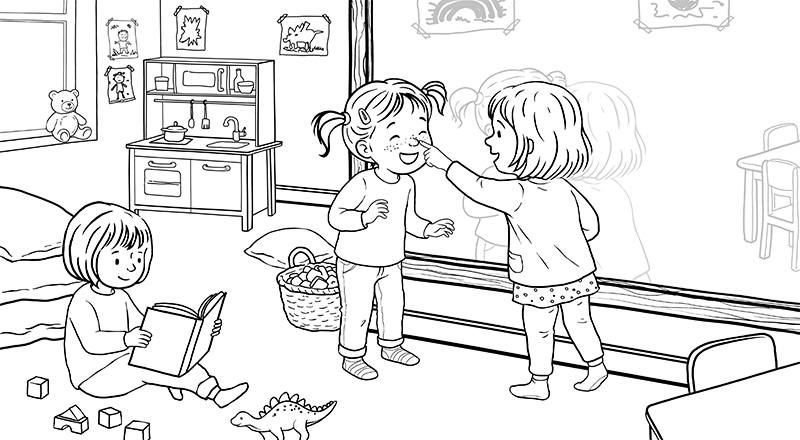
Ponudite mobilne telefone, da se otroci med seboj portretirajo. Nato jih spodbudite, da se dotaknejo nosu na zaslonu in svojega nosu ter primerjajo razliko med podobo v mediju in resničnim telesom.
Pogovor nadaljujte s simboli:
- Kaj so simboli?
- Ali poznate kakšne simbole?
- Kaj predstavljajo?
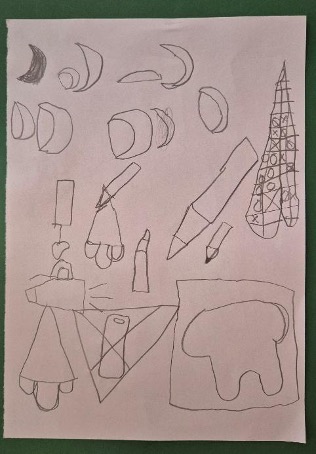
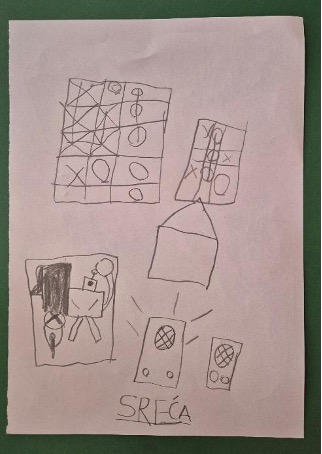
Ponudite likovne materiale, da otroci izdelajo svoje simbole, jih izrežejo in nalepijo na plakat. Plakat postavite v prostor in ga postopoma dopolnjujte.
Osnovne informacije in didaktična perspektiva
Dejavnost je usmerjena v razvijanje otrokove sposobnosti kritičnega razmišljanja o medijskih vsebinah, s katerimi se vsakodnevno srečujejo (animirani filmi, oglasi, videoigre), ter v njihovo primerjanje z resničnimi življenjskimi situacijami. Skozi igro, pogovor in primerjanje ter uporabo konkretnih vizualnih primerov otroci ozaveščajo razliko med resničnim in namišljenim svetom.
Dejavnost vključuje tudi čustveno komponento, saj otroci medijske vsebine pogosto povezujejo z občutki zabave, varnosti in vznemirjenja. To odpira prostor za pogovor o tem, kaj jim je všeč in zakaj, ter za razvijanje zavedanja, da vsega, kar vidijo v medijih, ni treba razumeti kot resnično.
Izkušnje iz vrtcev
L. P. opazuje svoj odsev v ogledalu, hkrati se dotika svojega nosu in nosu v ogledalu ter komentira: »Moj nos je mehak in topel. Ta v ogledalu je hladen in trd.«
Dotakne se ust: »Usta v ogledalu so hladna, ta, ki jih tipam s prsti, pa topla. Pravi jaz je ta, ki ga lahko primem. Tistega v ogledalu ne morem.«
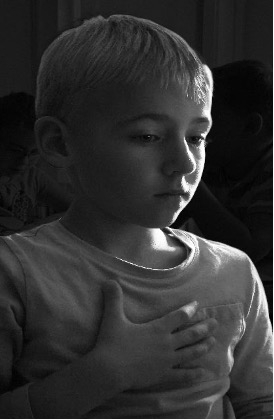
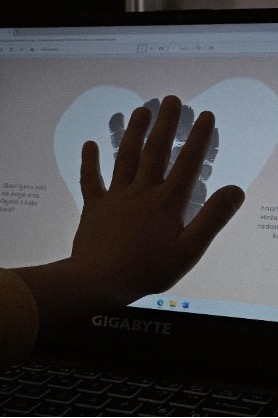
F. G. se dotakne simbola srca na zaslonu in hkrati položi roko na svoje srce. Zaključi: »Moje srce hitro bije. To čutim z roko. Srce na računalniku se ne sliši.«
Ob listanju digitalne slikanice E. P. pove, da simbol srca pomeni ljubezen. F. G. se spomni simbola prečrtanega mobilnega telefona, ki ga je videl v kinu, in razloži: »Telefon je prečrtan, ker ga v kinu ne smeš uporabljati. Lahko ga imaš pri sebi, ampak ga ne smeš uporabljati med filmom.«
Na vprašanje, ali poznajo še kakšne simbole, L. P. odgovori: »Smeško pomeni, da je vse v redu.«
B. T. doda, da dvignjena dlan pomeni STOP.
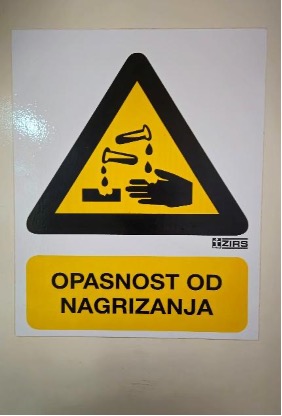
Skupaj se pogovarjamo, zakaj sploh uporabljamo simbole. Otroci ugotovijo, da je znake lažje prepoznati kot brati besedilo, še posebej za tiste, ki še ne znajo brati. Opažajo tudi znake v vrtcu, ki to potrjujejo (na primer znak za prepoved uporabe kemikalij z napisom).
Fotografije aktivnosti