Overhead Projector Exploration
A Story Told Through Light
 Rahastatud Euroopa Liidu poolt. Avaldatud seisukohad ja arvamused on ainult autori(te) omad ega pruugi kajastada Euroopa Liidu või Euroopa Hariduse ja Kultuuri Rakendusameti (EACEA) seisukohti ja arvamusi. Euroopa Liit ega EACEA nende eest ei vastuta. |
 Kogu sisu, eelkõige tekstid, pildid ja graafika, on kaitstud autoriõigusega. Kui ei ole sõnaselgelt teisiti märgitud, kuuluvad autoriõigused media.eduskills.plus ja on litsentseeritud Creative Commons Attribution - Attribution-ShareAlike 4.0 International. Nende suhtes võivad kehtida litsentsitingimused. |
2026 media.eduskills.plus
Õpitulemused
tulemused
|
|
|
Sihtgrupp 4 aastat ja rohkem
|
|
Nõutavad materjalid
|
Tegevuse kirjeldus (samm-sammult)
Ettevalmistus:
Prepare the room by setting out the planned materials and the overhead projector. Also prepare a familiar story that the children already know.
Tegevuse läbiviimine:
At the beginning of the activity, carry out one or two drama games with the children (for example Spider and Fly or Find a Pair) to help them relax and form groups.
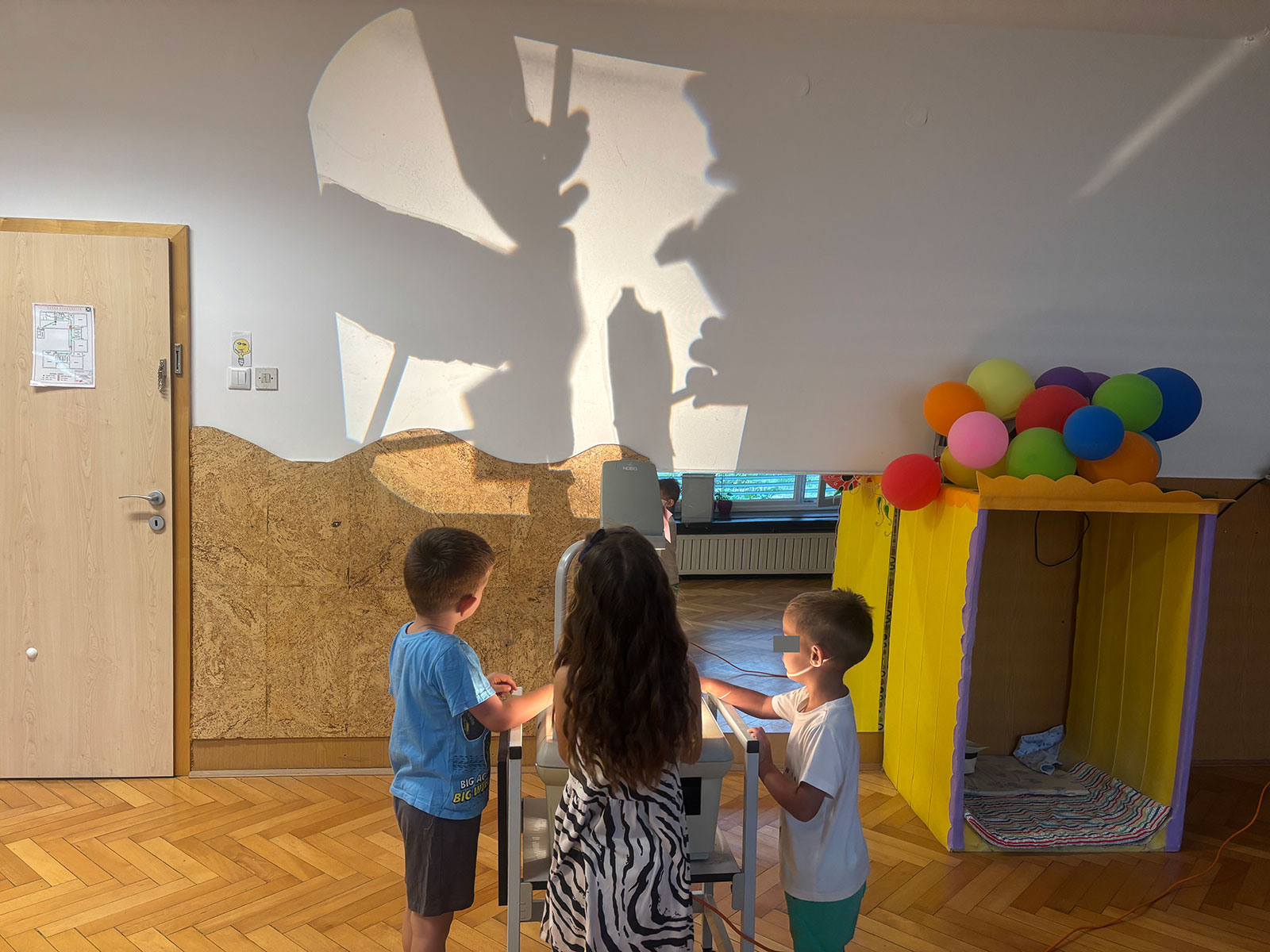
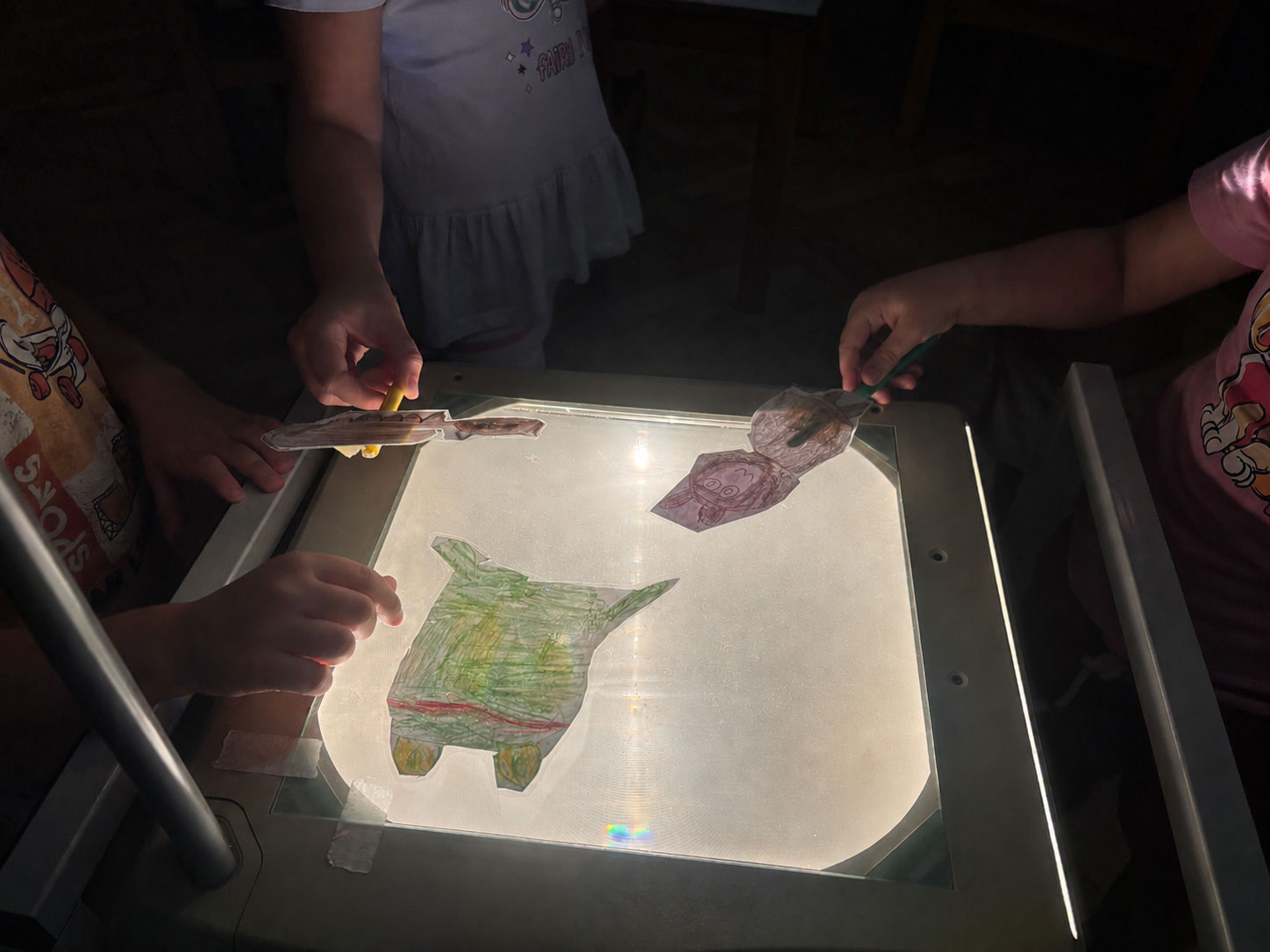
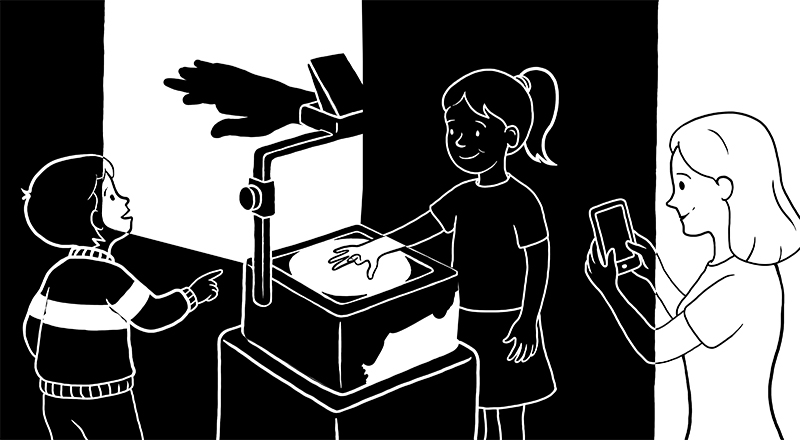
Then show the children how the overhead projector works and demonstrate the effects that can be created using the offered materials. Encourage the children to manipulate the materials and explore freely.
Gather the children in a circle and retell a familiar story. Afterwards, the children dramatise the story in groups using the overhead projector and the available materials.
Refleksioon
Record the dramatization process, transfer the video to a computer, and watch the projection together with the children. Talk with them about their impressions of the created content.
Variatsioonid ja lisaideed
The same workshop can be carried out with children and parents as a form of shared activity and socialising.
Taustteave ja didaktiline perspektiiv
Through play, children explore the relationships between light, materials, and space, developing creativity and imagination. In this way, they connect aesthetic expression with observation. Through free exploratory play with light and shadow, children spontaneously develop performative practices, as their actions, movements, and creations in space become forms of expression and communication.
The overhead projector is not only a projection tool, but a medium that introduces children to stage experience and visual creation. Children take on the roles of both researchers and performers. They decide which materials to place on the projector surface, how to move objects and their own bodies, and what kind of impression they create on the projection screen. This approach encourages aesthetic sensitivity, creativity, and cooperation, and helps children understand that art can emerge through play, exploration, and shared action.
lasteaedade kogemused
The children were unable to name the overhead projector and said they had never seen one before. They watched with interest as shadows, colours and shapes appeared on the wall. All the children participated in the puppet performance using the puppets they had made. At first, not all of them understood how to position the puppets so that their images would appear on the wall. The younger children simply moved the puppets, while the older children also brought them to life by providing voices.
Tegevuste pildid