Optične igrače
Izdelava fenakistoskopov (vrtavk)
 Financirano s strani Evropske unije. Izražena stališča in mnenja so zgolj stališča in mnenja avtorja(-ev) in ni nujno, da odražajo stališča in mnenja Evropske unije ali Evropske izvajalske agencije za izobraževanje in kulturo (EACEA). Zanje ne moreta biti odgovorna niti Evropska unija niti EACEA. |
 Vse vsebine, še posebej teksti, slike in grafikoni so avtorsko zaščiteni. V kolikor izrecno ni določeno drugače, so avtorske pravice last media.eduskills.plus pod licenco Priznanje avtorstva - nekomercialna raba - brez predelav 4.0 mednarodna (CC BY - NC - ND 4.0 ). Uporabijo se lahko le v okviru licenčnih pogojev. |
2026 media.eduskills.plus
Učni izidi
Kompetence
|
|
|
Ciljna skupina 2 let in več
|
|
Potrebni pripomočki
|
Opis aktivnosti (po korakih)
Predpriprava
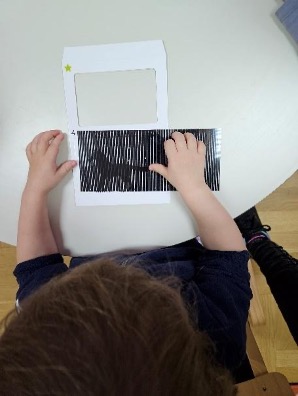
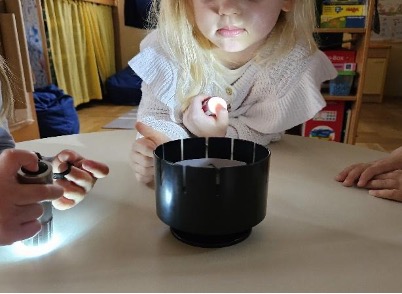
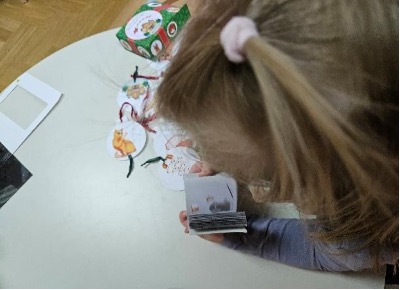
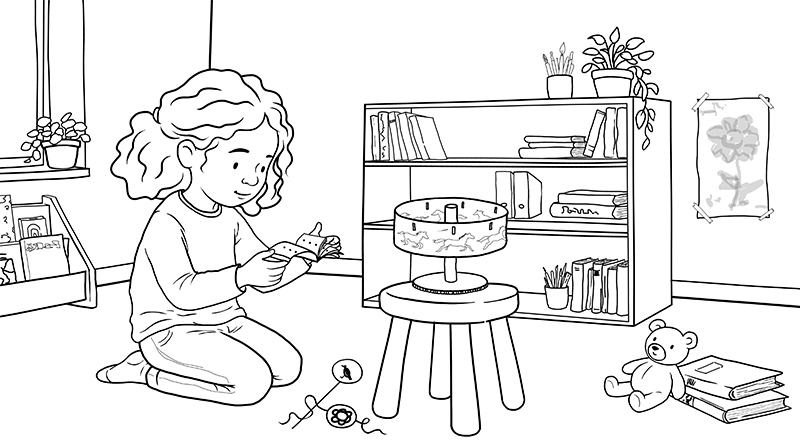
Otrokom ponudite različne optične igrače: zootrope, taumotrope, knjige listanja in fenakistoskope.
Spodbujajte otroke k raziskovanju, manipulaciji in prosti igri z optičnimi igračami.
Implementacija
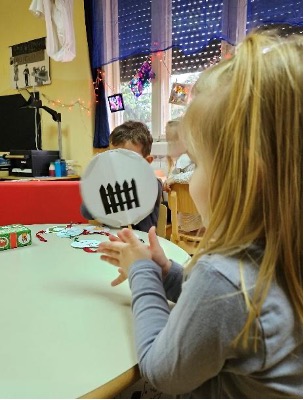
Na začetku dejavnosti otrokom omogočite dovolj časa, da vsako igračo samostojno raziščejo. Nato jim pokažite delovanje in možnosti posamezne optične igrače.
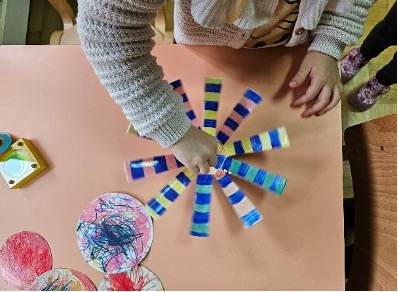
Ponudite vnaprej izrezane kartonske kroge (premera 10–15 cm) z luknjico na sredini, flomastre, vatirane palčke in lepilni trak. Spodbudite otroke, da kartone okrasijo s flomastri.
Nato otroku pomagajte vstaviti vatirano palčko v luknjico in jo pritrditi z lepilnim trakom. Po potrebi pomagajte.
Povabite otroka, da zavrti izdelano igračo, in ga usmerjajte k opazovanju sprememb, ki nastanejo z gibanjem in manipulacijo.
Različice in dodatne ideje
Kot dodatne likovne spodbude lahko ponudite kolaž papir, fluorescentne akrilne barve (svetijo v temi), vnaprej izrezane kartone drugih oblik, manjše barvne cofke in lepilo. Organizirate lahko tudi delavnico optičnih igrač za otroke in starše.
Osnovne informacije in didaktična perspektiva
Dejavnost temelji na raziskovalnem in izkustvenem učenju skozi igro z optičnimi igračami, ki ustvarjajo vizualne učinke in iluzijo gibanja. Z manipulacijo otroci raziskujejo vzročno-posledične povezave ter razvijajo vizualno diskriminacijo z razlikovanjem barv, oblik, gibanja in ustvarjenih vizualnih učinkov. Dejavnost spodbuja tudi divergentno mišljenje in ustvarjalnost.
Izkušnje iz vrtcev
M. J.: »Vrtela sem palčko s krogom, na katerem je bil na eni strani piščanček, na drugi pa jajce. Ko sem zelo hitro vrtela, je piščanček prišel iz jajca.«
L. P.: »Ampak piščanček v resnici ne pride iz jajca. Tako se samo zdi, ker hitro vrtimo. Jaz sem hitro vrtel igračo z ograjo in ptičkom. Ptiček je pristal na ograji, ampak to ni resnično.«
K. P.: »Meni je bila zelo zabavna igrača, v katero smo dali list z žirafami. Ko sem jo zavrtela, so žirafe hodile in tekle. Gledala sem skozi majhne luknjice in to sem videla.«
F. G.: »Vrtel sem vrtavko z narisanimi ljudmi in pikami. Ko sem zelo hitro vrtel, sem videl samo kroge. Kot da bi bil portal.«
L. P.: »Kot da te odpelje v svet dinozavrov ali celo mamutov.«
Fotografije aktivnosti