Optical Toys
Making a Phenakistoscope (Spinners)
 Rahastatud Euroopa Liidu poolt. Avaldatud seisukohad ja arvamused on ainult autori(te) omad ega pruugi kajastada Euroopa Liidu või Euroopa Hariduse ja Kultuuri Rakendusameti (EACEA) seisukohti ja arvamusi. Euroopa Liit ega EACEA nende eest ei vastuta. |
 Kogu sisu, eelkõige tekstid, pildid ja graafika, on kaitstud autoriõigusega. Kui ei ole sõnaselgelt teisiti märgitud, kuuluvad autoriõigused media.eduskills.plus ja on litsentseeritud Litsents: "Creative Commons Autorile viitamine – mittekaubanduslik - jagamine samadel tingimustel 4.0 Rahvusvaheline". Nende suhtes võivad kehtida litsentsitingimused. |
2026 media.eduskills.plus
Õpitulemused
tulemused
|
|
|
Sihtgrupp 2 aastat ja rohkem
|
|
Nõutavad materjalid
|
Tegevuse kirjeldus (samm-sammult)
Ettevalmistus:
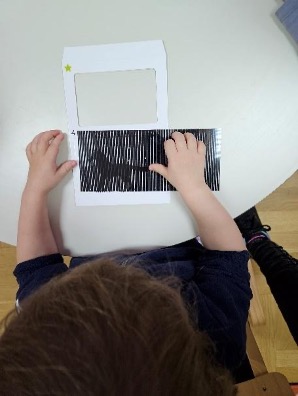
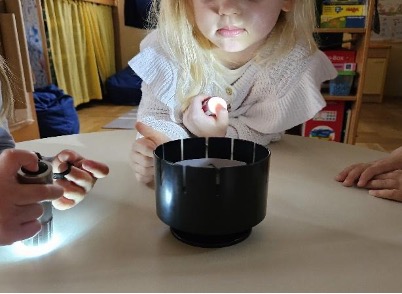
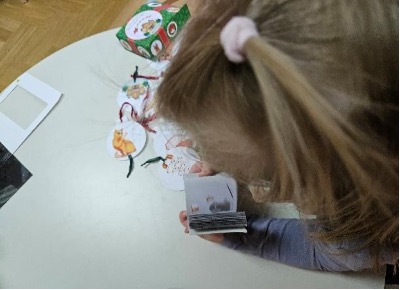
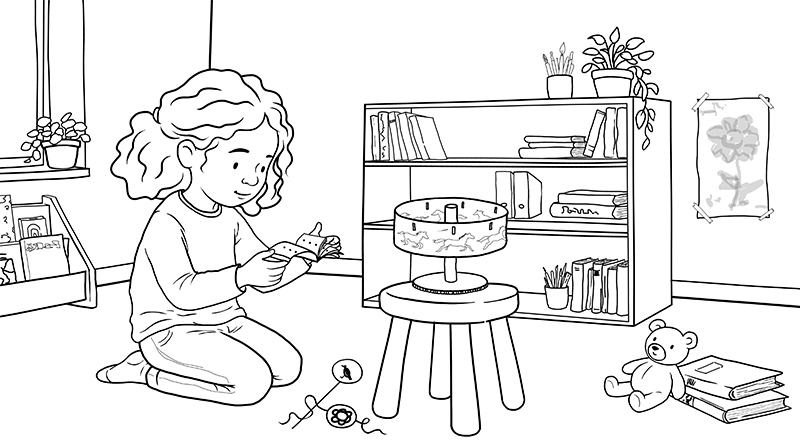
Offer children a selection of optical toys: zoetropes, thaumatropes, flipbooks, and phenakistoscopes.
Encourage children to explore, manipulate, and play freely with the optical toys.
Tegevuse läbiviimine:
At the beginning of the activity, allow time for children to explore each toy independently. Then demonstrate how each optical toy works and explain its basic functions.
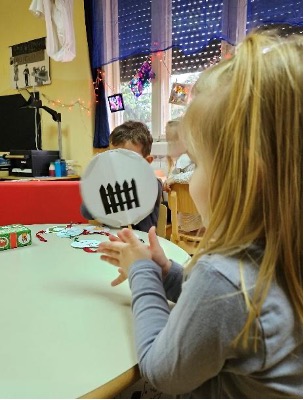
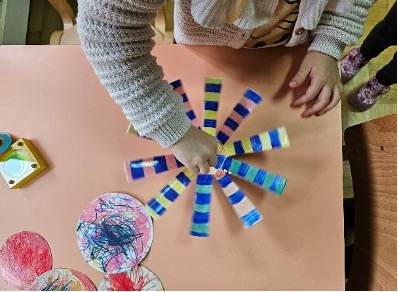
Provide pre-cut circular cardboard discs (10–15 cm in diameter) with a small hole in the centre, markers, cotton buds, and adhesive tape. Invite children to decorate the cardboard discs with markers.
Then guide the child to insert a cotton bud into the hole and secure it with tape. Assist if needed.
Invite the child to spin the finished toy and guide them to observe the visual changes created through movement and manipulation.
Variatsioonid ja lisaideed
As an additional art stimulus, offer collage paper, fluorescent acrylic paints (glow-in-the-dark), pre-cut cardboard in other shapes, small coloured pompoms, glue, and similar materials. You can also organise an optical toy workshop for children and parents.
Taustteave ja didaktiline perspektiiv
This activity supports exploratory and experiential learning through play with optical toys that create visual effects and motion illusions. By manipulating the toys, children observe cause-and-effect relationships and develop visual discrimination by distinguishing colours, shapes, movement, and visual effects. The activity also supports divergent thinking and creativity through hands-on experimentation.
lasteaedade kogemused
M. J.: "I spun the stick with a circle that had a chick on one side and an egg on the other. When I rubbed it really fast, the chick came out of the egg."
L. P.: "But chicks don't really come out of eggs. It just looks like that because we spin it fast. I spun the one with the fence and the bird. When I spun it fast, the bird landed on the fence, but it's a trick."
K. P.: "I really liked the toy where we put in the paper with giraffes. When I spun it, the giraffes walked and ran. I looked through the little holes and saw it. They were drawn on paper and can't walk unless you spin it."
F. G.: "I spun the spinner with little people and dots. When I spun it really fast, I only saw circles. Like a portal."
L. P.: "Like it takes you to a world with dinosaurs or even mammoths."
Tegevuste pildid