
Passing Messages
How Messages Travel and Change
 Rahastatud Euroopa Liidu poolt. Avaldatud seisukohad ja arvamused on ainult autori(te) omad ega pruugi kajastada Euroopa Liidu või Euroopa Hariduse ja Kultuuri Rakendusameti (EACEA) seisukohti ja arvamusi. Euroopa Liit ega EACEA nende eest ei vastuta. |
 Kogu sisu, eelkõige tekstid, pildid ja graafika, on kaitstud autoriõigusega. Kui ei ole sõnaselgelt teisiti märgitud, kuuluvad autoriõigused media.eduskills.plus ja on litsentseeritud Litsents: "Creative Commons Autorile viitamine – mittekaubanduslik - jagamine samadel tingimustel 4.0 Rahvusvaheline". Nende suhtes võivad kehtida litsentsitingimused. |
2026 media.eduskills.plus
Õpitulemused
tulemused
|
|
|
Sihtgrupp 5 aastat ja rohkem
|
|
Nõutavad materjalid
|
Tegevuse kirjeldus (samm-sammult)
Ettevalmistus:
Begin with a simple whisper game (telephone game).
Tell a short sentence to one child (for example: "The red cat is jumping on the table"). The child whispers it to the next child, and so on, until the last child says the sentence out loud.
Compare the first and the final version of the message.
Explain that messages often change when they are passed from one person to another. This can also happen when messages travel through different media.
Tegevuse läbiviimine:
Talk with the children about how messages can travel:
- From person to person
- Through different media (for example: talking, photos, videos, television)
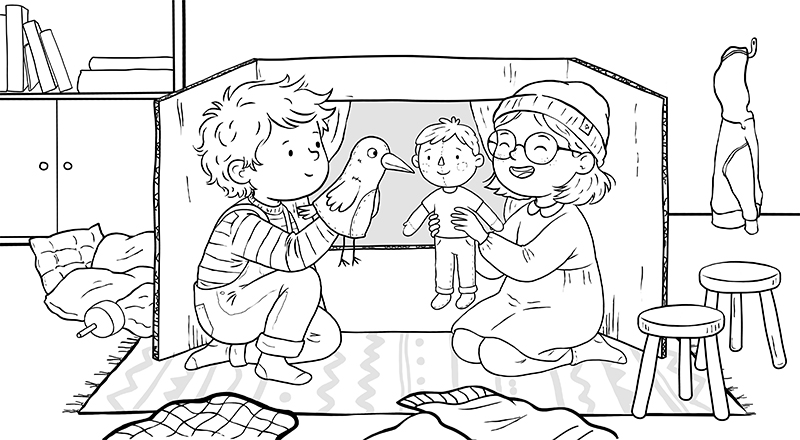
Invite the children to create simple puppets representing different characters.
In small groups, children invent their own short "message journey". For example:
- A child tells something to a friend
- The friend tells it to someone else
- The story appears in another form (for example as a drawing, a video, or a performance)
The children then create and perform a short puppet show showing how the message travels and changes.
Refleksioon
Invite the children to reflect on the activity:
- What happened to the message in the whisper game?
- Did it stay the same or did it change?
- What happened in your puppet story?
- Why do messages sometimes change?
You can also ask:
- What happens when a story is told in a different way (for example, spoken vs. shown in a picture)?
Variatsioonid ja lisaideed
Turn the story into a sequence of drawings or a comic strip.
Combine the puppet show and collage: record the performance and include selected photographs in the collage.
Create a "message journey map" showing how one story appears in different media (spoken, written, recorded).
Taustteave ja didaktiline perspektiiv
This activity helps children understand how stories and messages are transmitted through different forms of media and across generations. It encourages creative storytelling while also showing how messages can change depending on who tells them and through which medium they are shared. The puppet show supports the development of sequencing skills, communication, and empathy. Through play and creativity, children develop an understanding of the dynamic nature of media and the shared human experience of storytelling.