Izmislimo si zgodbo
Pripovedovanje zgodb ob kamišibaj gledališču
 Financirano s strani Evropske unije. Izražena stališča in mnenja so zgolj stališča in mnenja avtorja(-ev) in ni nujno, da odražajo stališča in mnenja Evropske unije ali Evropske izvajalske agencije za izobraževanje in kulturo (EACEA). Zanje ne moreta biti odgovorna niti Evropska unija niti EACEA. |
 Vse vsebine, še posebej teksti, slike in grafikoni so avtorsko zaščiteni. V kolikor izrecno ni določeno drugače, so avtorske pravice last media.eduskills.plus pod licenco Priznanje avtorstva - nekomercialna raba - brez predelav 4.0 mednarodna (CC BY - NC - ND 4.0 ). Uporabijo se lahko le v okviru licenčnih pogojev. |
2026 media.eduskills.plus
Učni izidi
Kompetence
|
|
|
Ciljna skupina 5 let in več
|
|
Potrebni pripomočki
|
|
Pripomočki
|
Opis aktivnosti (po korakih)
Predpriprava
Otroku ponudite slikovni material, sličice z narisanim različnimi predmeti (npr. živali, zelenjava, rastline, vozila, domovanja, …). Otroka spodbudite, da si izbere pet slik in si ob njih izmisli lastno zgodbo.
Implementacija
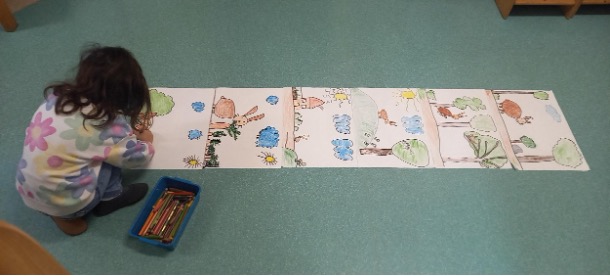
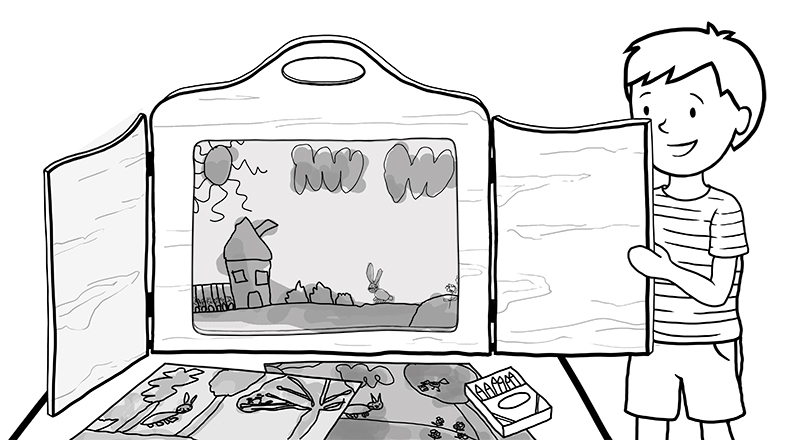
Z vašo pomočjo si otrok ob posamezni sliki izmisli dogajanje. Smiselno tvori povedi v zgodbo. Dogajanje zgodbe nariše po petih zaporednih dogodkih. Ilustracije vstavi v kamišibaj gledališče po ustreznem vrstnem redu. Ob narisanih ilustracijah otrok pripoveduje svojo izmišljeno zgodbo. Vzgojitelj pripovedovanje posname.
Refleksija
Otrok si pogleda svoj posnetek pripovedovanja. Otroka spodbudite k refleksiji:
- Kako si se počutil/a ob pripovedovanju?
- Ali ti je bilo težko?
- Kaj ti je bilo všeč?
Nato sledi povratna informacija vzgojitelja:
- Ali je bil govor dovolj glasen in razločen?
- Ali so bili stavki jasni in razumljivi?
- Ali bi lahko še kaj dodal oziroma spremenil?
Različice in dodatne ideje
Mogoče je uporabiti že poznana literarna dela, če imajo otroci težave z izmišljanjem svoje zgodbe.
Likovni materiali za ustvarjanje ilustracij so lahko raznoliki, prav tako tehnike.
Oblika dela je lahko v paru ali skupini.
Osnovne informacije in didaktična perspektiva
Dejavnost spodbuja pripovedovanje, ustvarjalnost in jezikovni razvoj z uporabo slikovnih spodbud in strukturiranega pripovedovanja. Z izbiro slik in oblikovanjem zaporedja dogodkov otroci urijo organizacijo idej, tvorjenje stavkov ter povezovanje vsebine v smiselno zgodbo. Kamišibaj gledališče nudi jasen vizualni okvir, ki otrokom pomaga pri osredotočenosti in samozavestnem nastopanju.
Izkušnje iz vrtcev
Dejavnost je potekala dalj časa (10 dni). Otroci so potrebovali individualno pomoč pri izmišljanju smiselne zgodbe s postavljanjem vprašanj. Prav tako so potrebovali pomoč pri ilustriranju vsebine, da na listu ni bilo preveč podrobnosti, ampak samo bistveni predmeti. Pri snemanju niso imeli težav, saj se pogosto posnamejo, se pogledajo in reflektirajo posnetek.
Fotografije aktivnosti