Inventing a Story
Storytelling with Kamishibai Theatre
 Finanțat de Uniunea Europeană. Punctele de vedere și opiniile exprimate aparțin, însă, exclusiv autorului (autorilor) și nu reflectă neapărat punctele de vedere și opiniile Uniunii Europene sau ale Agenției Executive Europene pentru Educație și Cultură (EACEA). Nici Uniunea Europeană și nici EACEA nu pot fi considerate răspunzătoare pentru acestea. |
 Toate conținuturile, în special textele, imaginile și grafica, sunt protejate de drepturi de autor. Cu excepția cazului în care se specifică altfel, drepturile de autor sunt deținute de media.eduskills.plus și sunt licențiate în conformitate cu Creative Commons Attribution - Necomercial - Distribuție în aceleași condiții 4.0 Licență internațională. Acestea pot fi utilizate în condițiile licenței. |
2026 media.eduskills.plus
Rezultatele învățării
Competențe
|
|
|
Grupul țintă 5 an și peste5 ani și mai în vârstă
|
|
Materiale necesare
|
|
Materiale
|
Descrierea activității (pas cu pas)
Pregătire:
The teacher offers the child visual materials, picture cards with different objects drawn on them (for example animals, vegetables, plants, vehicles, homes). The child is encouraged to choose five pictures and invent their own story based on them.
Implementare:
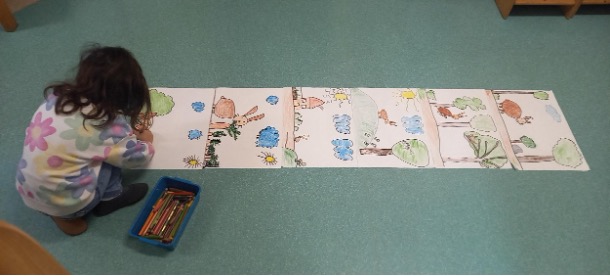
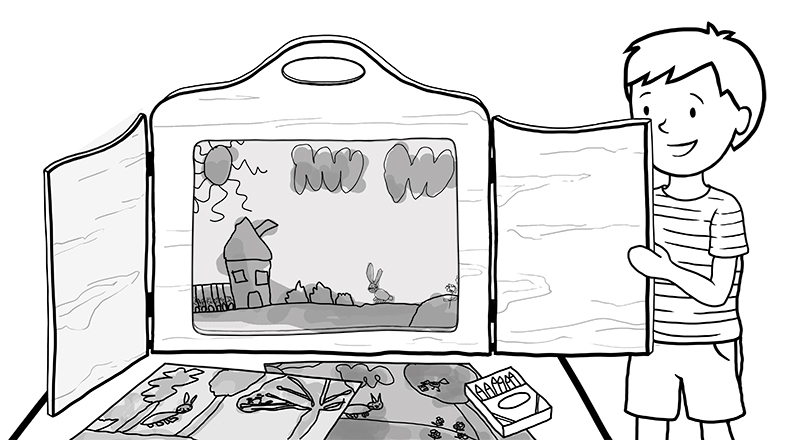
With the guidance of the teacher, the child invents events for each picture. The child forms meaningful sentences and connects them into a story. The story is illustrated through five consecutive events. The illustrations are placed into the Kamishibai theatre in the correct order. Using the illustrations, the child tells their invented story. The teacher records the storytelling.
Reflecţie:
The child watches their own storytelling recording. The teacher encourages reflection by asking:
- How did you feel while telling the story?
- Was it difficult?
- What did you like?
This is followed by feedback from the teacher:
- Was the speech loud and clear?
- How were the sentences formed?
- What could be added or changed?
Variații și idei suplimentare
Well-known literary stories can be used if children find it difficult to invent their own story.
Art materials and illustration techniques can vary.
The activity can also be carried out in pairs or small groups.
Informații generale și perspectivă didactică
This activity supports storytelling, creativity, and language development through visual prompts and structured narration. By choosing images and inventing a story sequence, children practise organising ideas, forming sentences, and connecting events into a coherent narrative. The Kamishibai theatre provides a clear visual framework that supports focus and confidence during storytelling.
Experience from kindergartens
The activity took place over a longer period of time (10 days). Children needed individual support in inventing a coherent story, mainly through guiding questions. They also needed support with illustrating the content, so that the drawings did not include too many details but focused on the essential elements. During recording, children had no difficulties, as they are used to recording themselves, watching the recordings, and reflecting on them.
Fotografiile activității