Eine Geschichte erfinden
Geschichten erzählen mit Kamishibai-Theater
 Von der Europäischen Union finanziert. Die geäußerten Ansichten und Meinungen entsprechen jedoch ausschließlich denen des Autors bzw. der Autoren und spiegeln nicht zwingend die der Europäischen Union oder der Europäischen Exekutivagentur für Bildung und Kultur (EACEA) wider. Weder die Europäische Union noch die EACEA können dafür verantwortlich gemacht werden. |
 Alle Inhalte, insbesondere Texte, Bilder und Grafiken sind urheberrechtlich geschützt. Soweit es nicht ausdrücklich anders gekennzeichnet ist, liegen die Urheberrechte bei media.eduskills.plus und stehen unter der Creative Commons Namensnennung -Nicht kommerziell -Keine Bearbeitungen 4.0 International (CC BY-NC-ND 4.0) Lizenz. Sie dürfen im Rahmen der Lizenzbedingungen verwendet werden. |
2026 media.eduskills.plus
Lernergebnisse
Kompetenzen
|
|
|
Zielgruppe 5 Jahre und älter
|
|
Benötigte Materialien
|
|
Materialien
|
Anleitung zur Aktivität (Schritt für Schritt)
Vorbereitung:
Die Kita-Fachkraft bietet dem Kind visuelle Materialien an, Bildkarten mit darauf gezeichneten verschiedenen Objekten (zum Beispiel Tiere, Gemüse, Pflanzen, Fahrzeuge, Häuser). Jedes Kind wird ermutigt, fünf Bilder auszuwählen und auf deren Grundlage eine eigene Geschichte zu erfinden.
Durchführung:
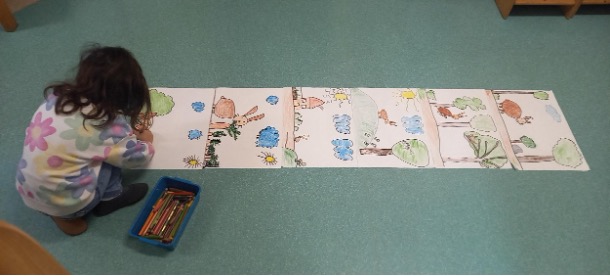
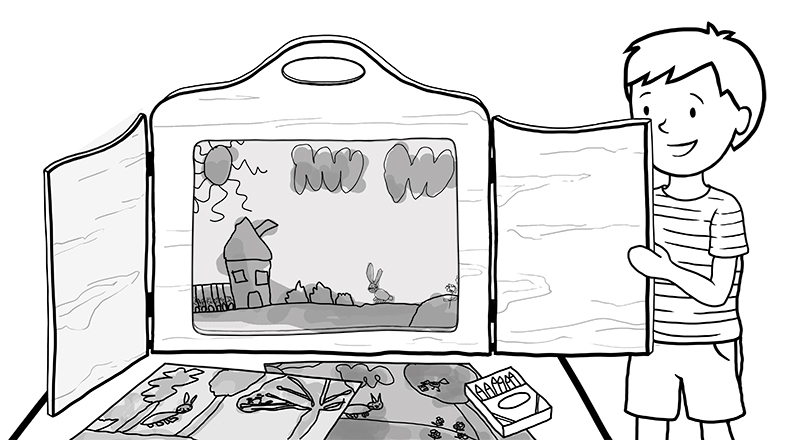
Mit Unterstützung der Kita-Fachkraft erfindet das Kind Ereignisse zu jedem Bild. Das Kind bildet sinnvolle Sätze und verbindet diese zu einer Geschichte. Die Geschichte wird durch fünf aufeinanderfolgende Ereignisse illustriert. Die Illustrationen werden in der richtigen Reihenfolge in das Kamishibai-Theater eingelegt. Mithilfe der Illustrationen erzählt das Kind seine erfundene Geschichte. Die Kita-Fachkraft zeichnet das Storytelling auf.
Überlegung:
Das Kind schaut sich die eigene Storytelling-Aufnahme an. Die Kita-Fachkraft regt zur Reflexion an, indem sie fragt:
- Wie hast du dich beim Erzählen gefühlt?
- War es schwierig?
- Was hat dir gefallen?
Anschließend gibt die Kita-Fachkraft Feedback:
- War die Sprache laut und deutlich?
- Wie waren die Sätze gebildet?
- Was könnte ergänzt oder verändert werden?
Abwandlungen und zusätzliche Ideen
Bekannte literarische Geschichten können verwendet werden, wenn es Kindern schwer fällt, eine eigene Geschichte zu erfinden.
Kunstmaterialien und Illustrationstechniken können variieren.
Die Aktivität kann auch in Paaren oder in Kleingruppen durchgeführt werden.
Hintergrundinformationen und didaktische Perspektiven
Diese Aktivität fördert Storytelling, Kreativität und Sprachentwicklung durch visuelle Impulse und eine strukturierte Erzählweise. Durch die Auswahl von Bildern und das Erfinden einer Abfolge von Ereignissen üben Kinder, Ideen zu ordnen, Sätze zu bilden und Ereignisse zu einer zusammenhängenden Erzählung zu verknüpfen. Das Kamishibai-Theater bietet einen klaren visuellen Rahmen, der Fokus und Selbstvertrauen beim Erzählen unterstützt.
Erfahrungen aus Kindergärten
Die Aktivität fand über einen längeren Zeitraum (10 Tage) statt. Die Kinder benötigten individuelle Unterstützung beim Erfinden einer zusammenhängenden Geschichte, vor allem durch leitende Fragen. Außerdem brauchten sie Unterstützung bei der Illustration der Inhalte, damit die Zeichnungen nicht zu viele Details enthielten, sondern sich auf die wesentlichen Elemente konzentrierten. Während der Aufnahme hatten die Kinder keine Schwierigkeiten, da sie es gewohnt sind, sich selbst aufzunehmen, die Aufnahmen anzusehen und darüber zu reflektieren.
Fotos der Aktivität