Kalejdoskop
Skrivnost pisanih vzorcev
 Financirano s strani Evropske unije. Izražena stališča in mnenja so zgolj stališča in mnenja avtorja(-ev) in ni nujno, da odražajo stališča in mnenja Evropske unije ali Evropske izvajalske agencije za izobraževanje in kulturo (EACEA). Zanje ne moreta biti odgovorna niti Evropska unija niti EACEA. |
 Vse vsebine, še posebej teksti, slike in grafikoni so avtorsko zaščiteni. V kolikor izrecno ni določeno drugače, so avtorske pravice last media.eduskills.plus pod licenco Priznanje avtorstva - nekomercialna raba - brez predelav 4.0 mednarodna (CC BY - NC - ND 4.0 ). Uporabijo se lahko le v okviru licenčnih pogojev. |
2026 media.eduskills.plus
Učni izidi
Kompetence
|
|
|
Ciljna skupina 3 let in več
|
|
Potrebni pripomočki
|
Opis aktivnosti (po korakih)
Predpriprava
Pripravite prostor in razporedite pripomočke: ročne in namizne svetilke, grafoskop, svetlečo mizo, transparentne materiale (folije in tkanine), barvne steklene kamenčke, prozorne geometrijske oblike, kuhinjske pripomočke z luknjicami, kartone krožne oblike in/ali CD-je, barvni celofan, škarje, lepilo ter mobilne telefone in fotoaparate.
Implementacija
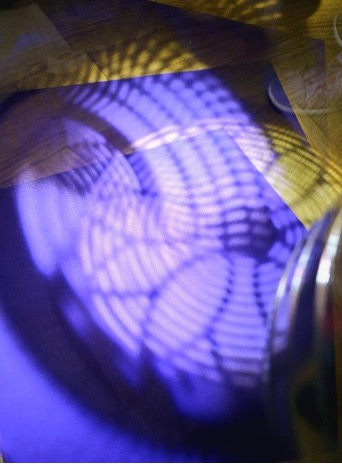
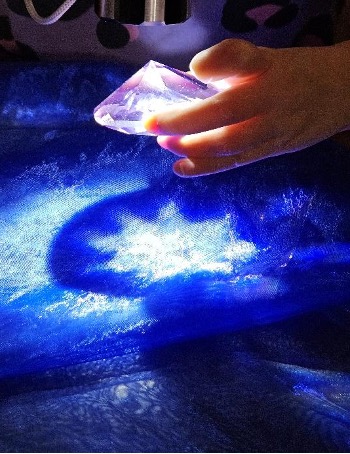
Kot uvod ponudite otrokom različne materiale, s katerimi lahko samostjno delajo, jih raziskujejo in povezujejo s pomočjo virov svetlobe. Spodbujajte jih, da ustvarjajo različne svetlobne zaznave, ki jih projicirajo na različne površine (bel papir, mizo, steno, projekcijsko platno ipd.).
Med igro skupaj opazujte, kako se projicirana slika spreminja. Zastavljajte vprašanja:
- Kaj vidite?
- Katere oblike opazite?
- Ali vas to na kaj spominja?
- Se oblike spreminjajo ali ostajajo enake?
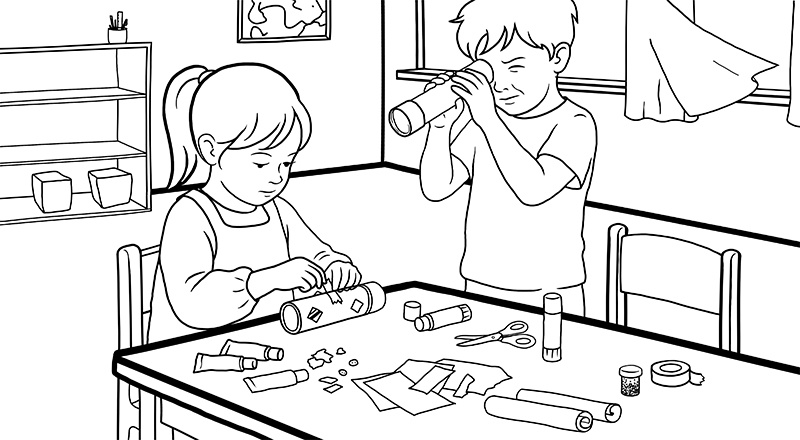
Nato otroke povabite k izdelavi optične igrače, kalejdoskopa.
Različice in dodatne ideje
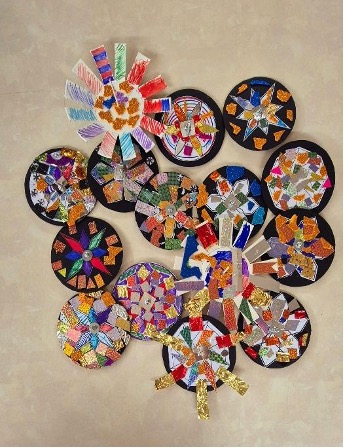
Ponudite lahko tudi mobilne telefone z nameščeno aplikacijo "Kaleidoscope" za fotografiranje vzorcev. Fotografije prenesite na računalnik, si jih skupaj oglejte in se o njih pogovorite. Fotografije kalejdoskopov lahko tudi natisnete in pripravite razstavo v vrtcu ali drugem galerijskem prostoru. Organizirate lahko tudi delavnico za otroke in starše.
Osnovne informacije in didaktična perspektiva
Izdelava kalejdoskopa ima veliko didaktično vrednost, saj povezuje raziskovalno igro, likovno izražanje in izkustveno učenje. Otroci skozi igro ne ustvarjajo le lastne optične igrače, temveč raziskujejo tudi optične pojave, kot so refleksija, simetrija ter spreminjanje vzorcev ob gibanju predmetov in svetlobe.
Fotografije aktivnosti