Kaleidoskopi
Tajna šarenih uzoraka
 Financirano sredstvima Europske unije. Izneseni stavovi i mišljenja su stavovi i mišljenja autora i ne moraju se podudarati sa stavovima i mišljenjima Europske unije ili Europske izvršne agencije za obrazovanje i kulturu (EACEA). Ni Europska unija ni EACEA ne mogu se smatrati odgovornima za njih. |
 Svi sadržaji, a posebno tekstovi, slike i grafikoni, su zaštićeni autorskim pravima. Vlasnik autorskih prava, ukoliko nije drugačije označeno, je media.eduskills.plus, a autorsko pravo je definirano licencom Creative Commons Imenovanje-Nekomercijalno-Dijeli pod istim uvjetima 4.0 Međunarodna. Autorska prava mogu biti definirana uvjetima licence. |
2026 media.eduskills.plus
Ishodi učenja
Kompetencije
|
|
|
Ciljna skupina 3 godina i više
|
|
Potrebni materijali
|
Opis aktivnosti (korak po korak)
Priprema:
Pripremite prostor postavljanjem planiranih poticaja: ručne i stolne svjetiljke, grafoskop, svjetlosni stol, prozirni materijali (folije i tkanine), obojeni stakleni kamenčići, prozirni geometrijski oblici od PVC-a, kuhinjski pribor s rupama (poput cjediljki različitih veličina), okrugli kartonski oblici i/ili CD-i, obojeni celofan, škare, ljepilo, mobiteli i fotoaparati.
Primjena:
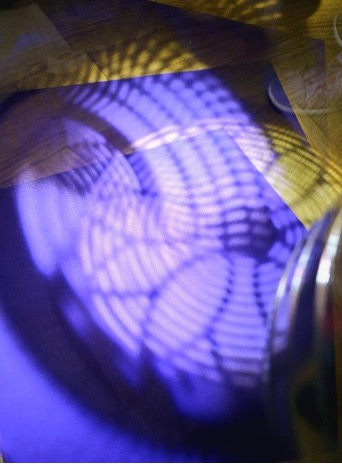
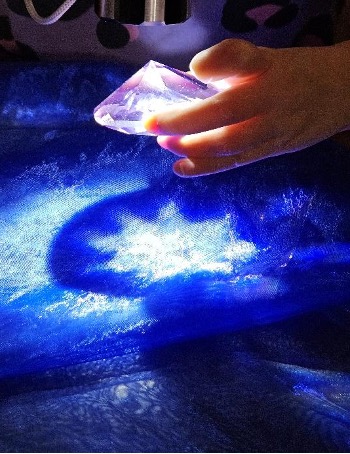
Započnite aktivnost nudeći razne poticaje kojma djeca mogu manipulirati, istraživati i kombinirati ih koristeći različite izvore svjetlosti. Potaknite ih da stvore različite svjetlosne senzacije i projekcije na različitim površinama, poput bijelog papira, stolova, zidova ili projekcijskih platna.
Dok se djeca igraju i manipuliraju materijalima, zajedno promatrajte kako se projicirana slika mijenja. Postavite usmjeravajuća pitanja:
- Što vidiš?
- Koje oblike primjećuješ?
- Podsjeća li te ovo na nešto?
- Mijenjaju li se oblici ili ostaju isti?
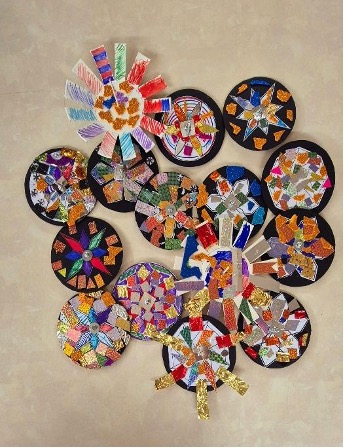
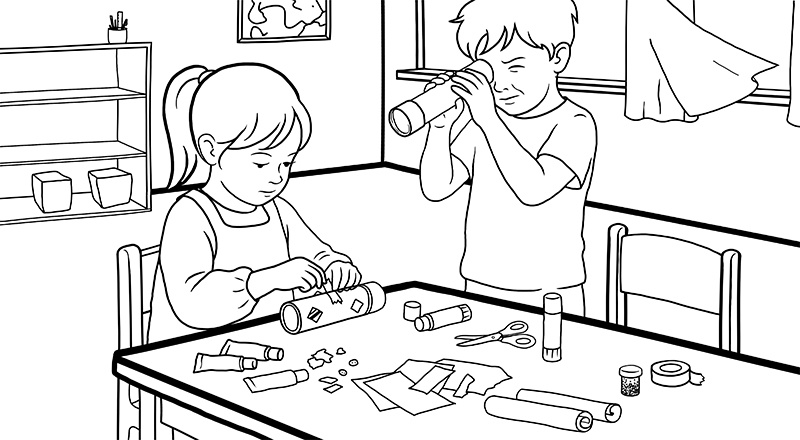
Predložite djeci da izrade jednostavnu optičku igračku – kaleidoskop.
Varijacije i dodatne ideje
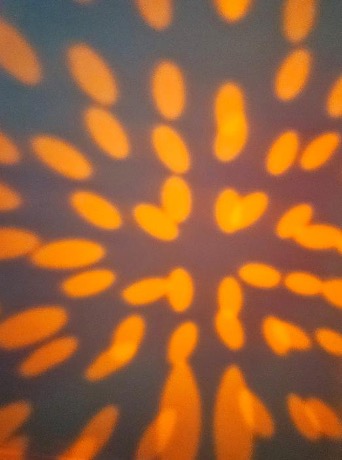
Ponudite mobilne telefone s aplikacijom za efekt kaleidoskopa za fotografiranje uzoraka. Prebacite fotografije na računalo, zajedno ih pogledajte i razgovarajte o onome što vidite. Fotografije se također mogu ispisati i izložiti u vrtiću ili drugom izložbenom prostoru. Mogu se organizirati i radionice za djecu i roditelje.
Osnovne informacije i didaktička perspektiva
Izrada kaleidoskopa ima veliku didaktičku vrijednost jer povezuje istraživačku igru, vizualno-umjetničko izražavanje i iskustveno učenje. Kroz igru djeca ne samo da stvaraju vlastitu optičku igračku, već i istražuju optičke pojave poput refleksije, simetrije i promjena uzoraka uzrokovanih kretanjem predmeta i svjetlosti.
Fotografije aktivnosti