Kaleidoskop
Das Geheimnis bunter Muster
 Von der Europäischen Union finanziert. Die geäußerten Ansichten und Meinungen entsprechen jedoch ausschließlich denen des Autors bzw. der Autoren und spiegeln nicht zwingend die der Europäischen Union oder der Europäischen Exekutivagentur für Bildung und Kultur (EACEA) wider. Weder die Europäische Union noch die EACEA können dafür verantwortlich gemacht werden. |
 Alle Inhalte, insbesondere Texte, Bilder und Grafiken sind urheberrechtlich geschützt. Soweit es nicht ausdrücklich anders gekennzeichnet ist, liegen die Urheberrechte bei media.eduskills.plus und stehen unter der Creative Commons Namensnennung -Nicht kommerziell -Keine Bearbeitungen 4.0 International (CC BY-NC-ND 4.0) Lizenz. Sie dürfen im Rahmen der Lizenzbedingungen verwendet werden. |
2026 media.eduskills.plus
Lernergebnisse
Kompetenzen
|
|
|
Zielgruppe 3 Jahre und älter
|
|
Benötigte Materialien
|
Anleitung zur Aktivität (Schritt für Schritt)
Vorbereitung:
Der Raum wird vorbereitet, indem die geplanten Reize bereitgestellt werden: Hand- und Tischlampen, ein Overheadprojektor, ein Leuchttisch, transparente Materialien (Folien und Stoffe), farbige Glassteine, transparente PVC-Geometrieformen, Küchenutensilien mit Löchern (z. B. Siebe in unterschiedlichen Größen), runde Kartonformen und/oder CDs, farbiges Cellophan, Schere, Kleber, Mobiltelefone und Kameras.
Durchführung:
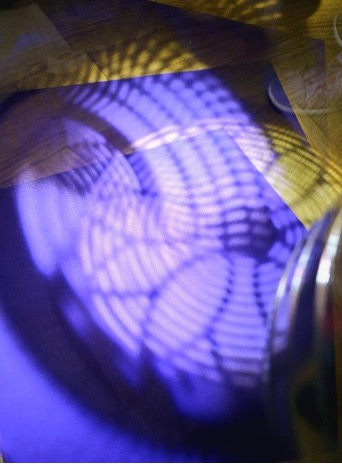
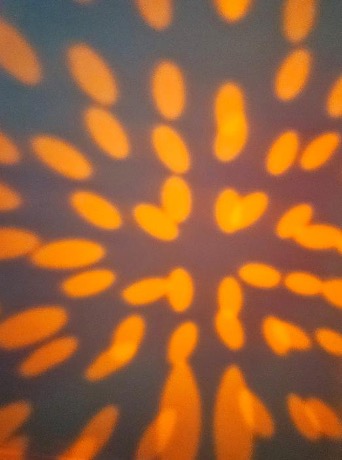
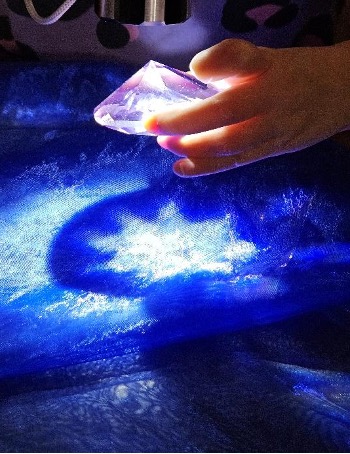
Die Aktivität beginnt mit dem Anbieten verschiedener Reize, die die Kinder mithilfe von Lichtquellen manipulieren, erkunden und kombinieren können. Sie werden ermutigt, unterschiedliche Lichtwirkungen und Projektionen auf verschiedenen Oberflächen zu erzeugen, zum Beispiel auf weißem Papier, Tischen, Wänden oder Projektionsflächen.
Während die Kinder spielen und mit den Materialien experimentieren, wird gemeinsam beobachtet, wie sich das projizierte Bild verändert. Die Kita-Fachkraft stellt leitende Fragen:
- Was siehst du?
- Welche Formen erkennst du?
- Erinnert dich das an etwas?
- Verändern sich die Formen oder bleiben sie gleich?
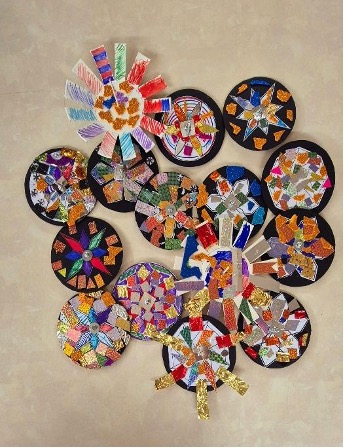
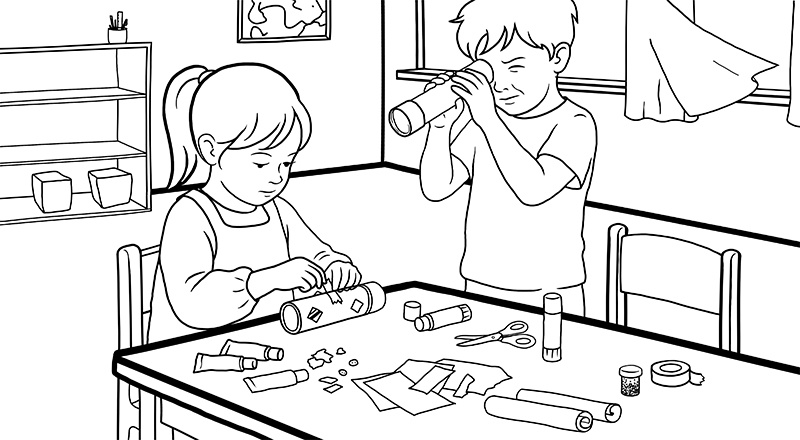
Anschließend werden die Kinder eingeladen, ein einfaches optisches Spielzeug zu gestalten: ein Kaleidoskop.
Abwandlungen und zusätzliche Ideen
Mobiltelefone mit einer Kaleidoskop-App können zum Fotografieren der Muster angeboten werden. Die Fotos können auf einen Computer übertragen, gemeinsam betrachtet und besprochen werden. Die Fotografien können außerdem ausgedruckt und als Ausstellung im Kindergarten oder in einem anderen Ausstellungsraum präsentiert werden. Workshops für Kinder und Eltern können ebenfalls organisiert werden.
Hintergrundinformationen und didaktische Perspektiven
Das Gestalten eines Kaleidoskops hat einen hohen didaktischen Wert, da es entdeckendes Spiel, bildnerischen Ausdruck und erfahrungsbasiertes Lernen miteinander verbindet. Durch das Spiel gestalten die Kinder nicht nur ihr eigenes optisches Spielzeug, sondern erforschen auch optische Phänomene wie Spiegelung, Symmetrie und Musterveränderungen, die durch die Bewegung von Objekten und Licht entstehen.
Fotos der Aktivität