Whose Eyes Are These?
Matching Animal Eyes to Their Owners
 Finanțat de Uniunea Europeană. Punctele de vedere și opiniile exprimate aparțin, însă, exclusiv autorului (autorilor) și nu reflectă neapărat punctele de vedere și opiniile Uniunii Europene sau ale Agenției Executive Europene pentru Educație și Cultură (EACEA). Nici Uniunea Europeană și nici EACEA nu pot fi considerate răspunzătoare pentru acestea. |
 Toate conținuturile, în special textele, imaginile și grafica, sunt protejate de drepturi de autor. Cu excepția cazului în care se specifică altfel, drepturile de autor sunt deținute de media.eduskills.plus și sunt licențiate în conformitate cu Creative Commons Attribution - Necomercial - Distribuție în aceleași condiții 4.0 Licență internațională. Acestea pot fi utilizate în condițiile licenței. |
2026 media.eduskills.plus
Rezultatele învățării
Competențe
|
|
|
Grupul țintă 3 an și peste3 ani și mai în vârstă
|
|
Materiale necesare
|
Descrierea activității (pas cu pas)
Pregătire:
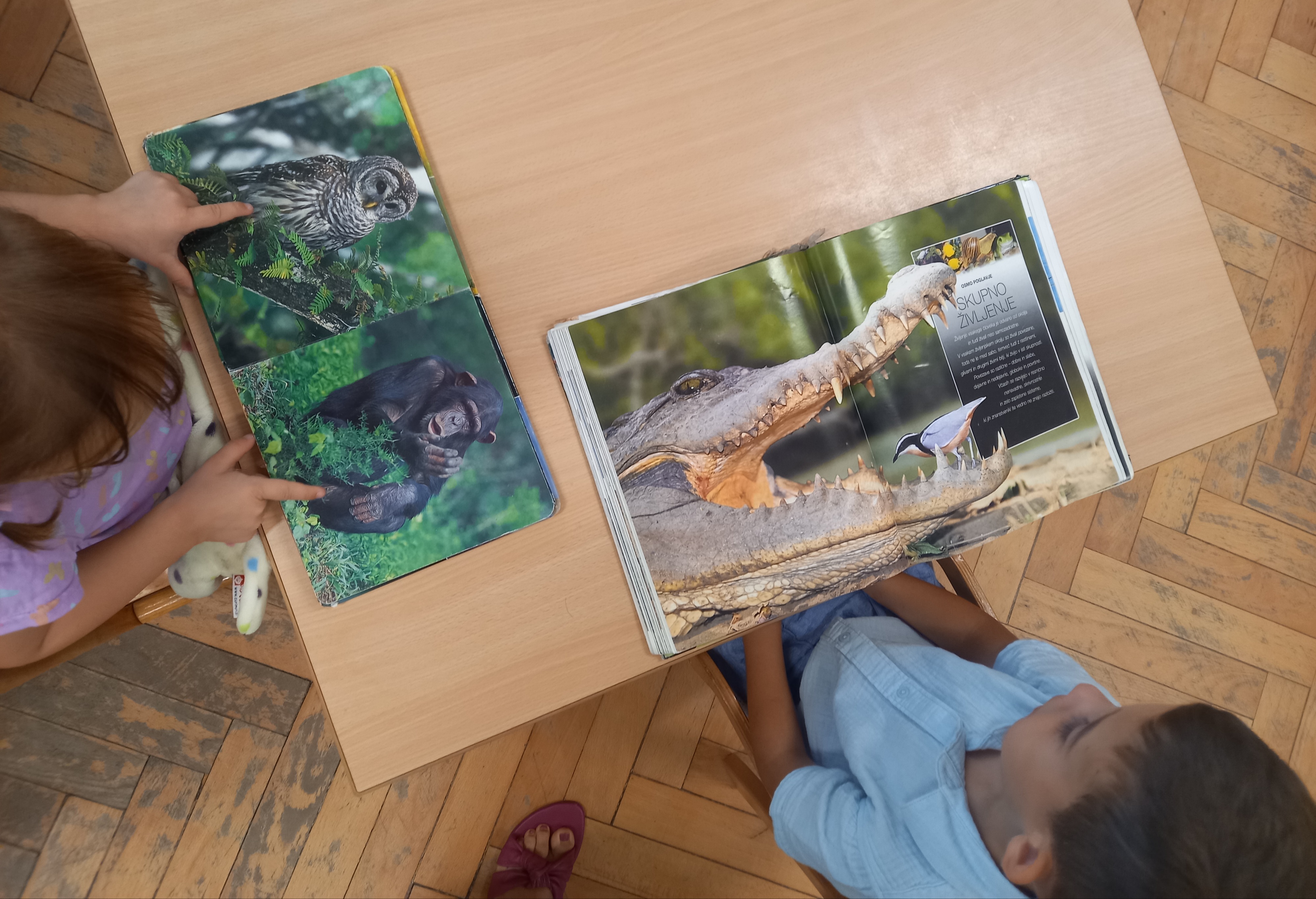
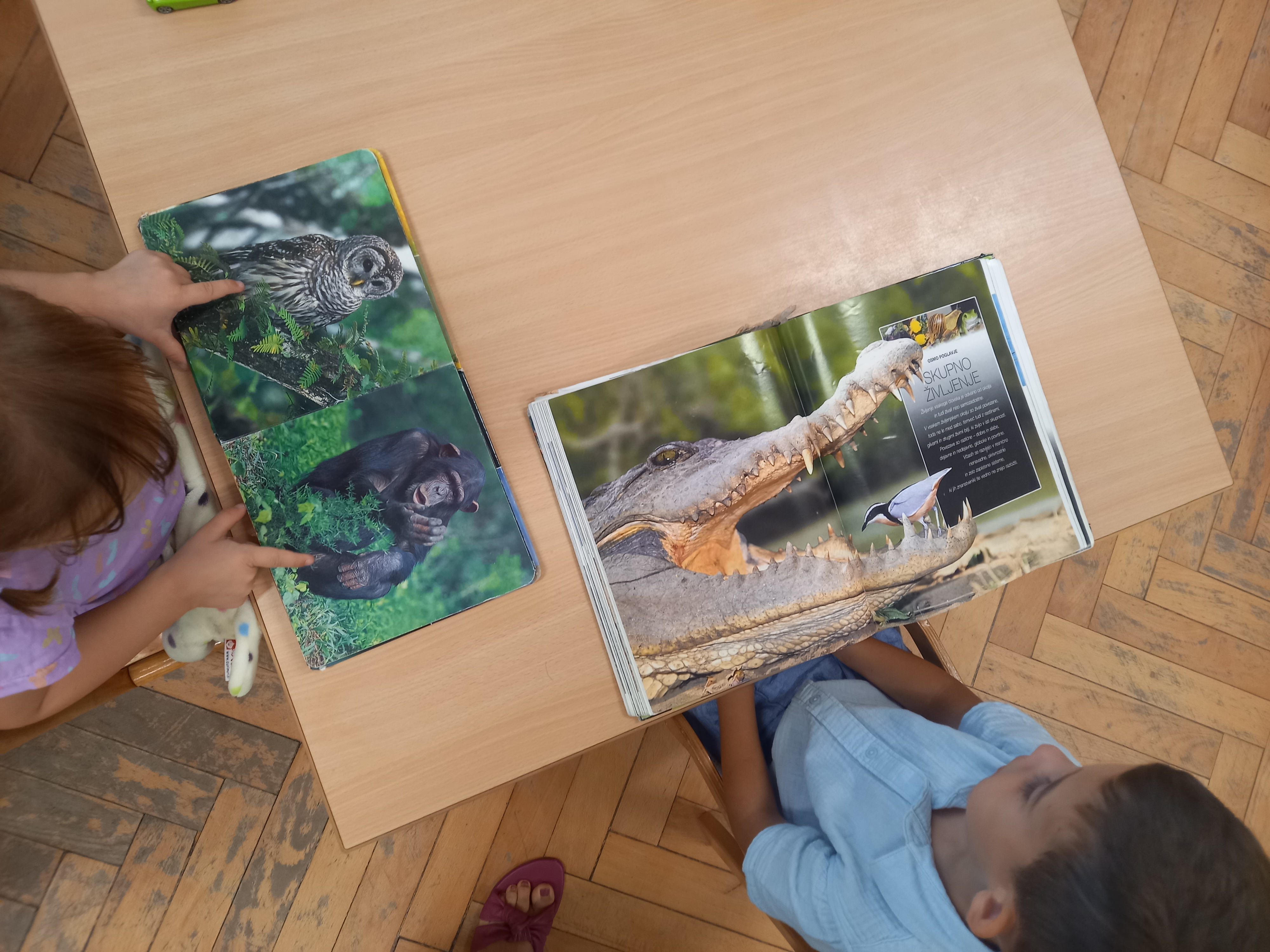
Children look at books with photographs of animals. They name individual animals and their body parts.
Implementare:
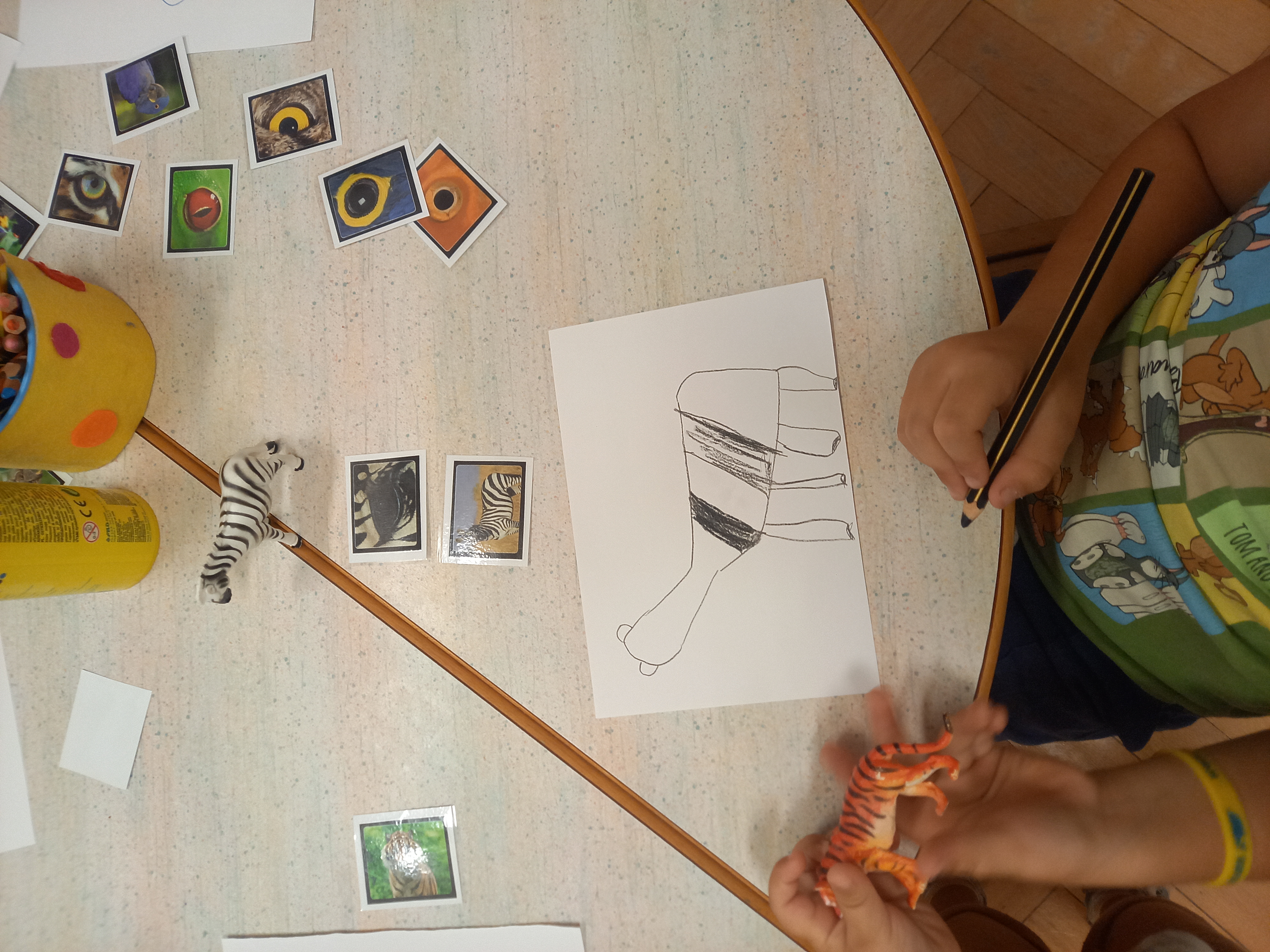
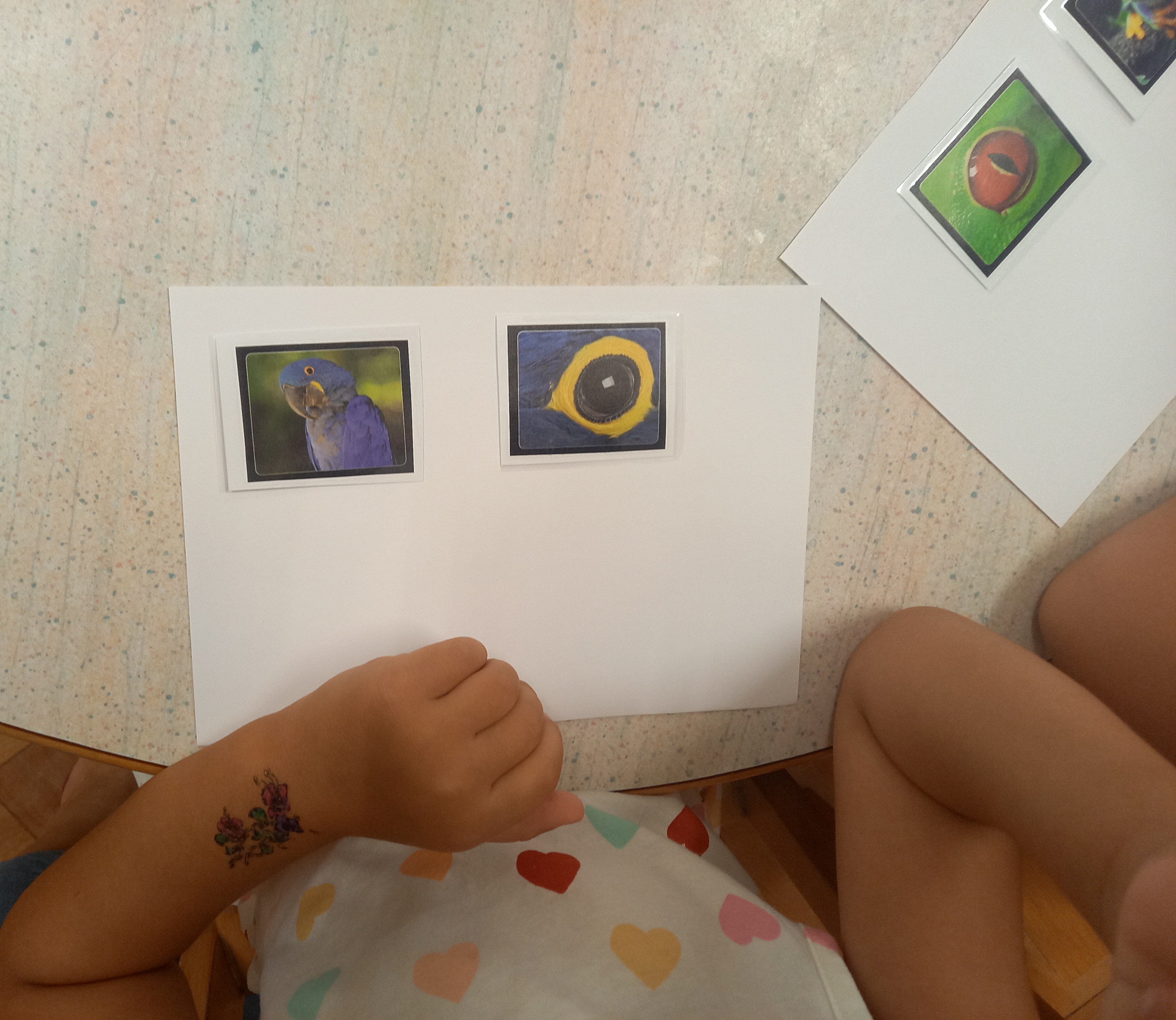
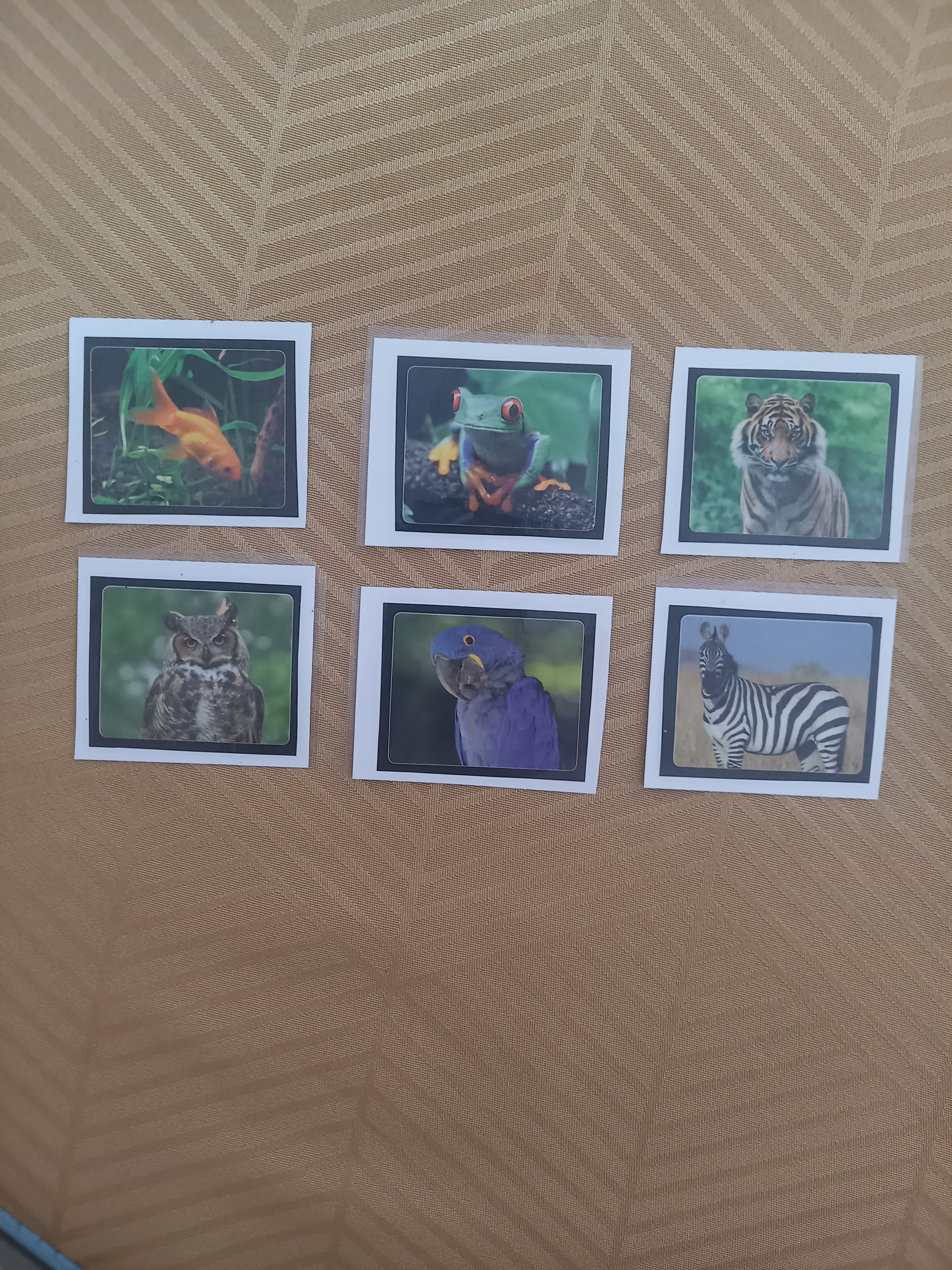
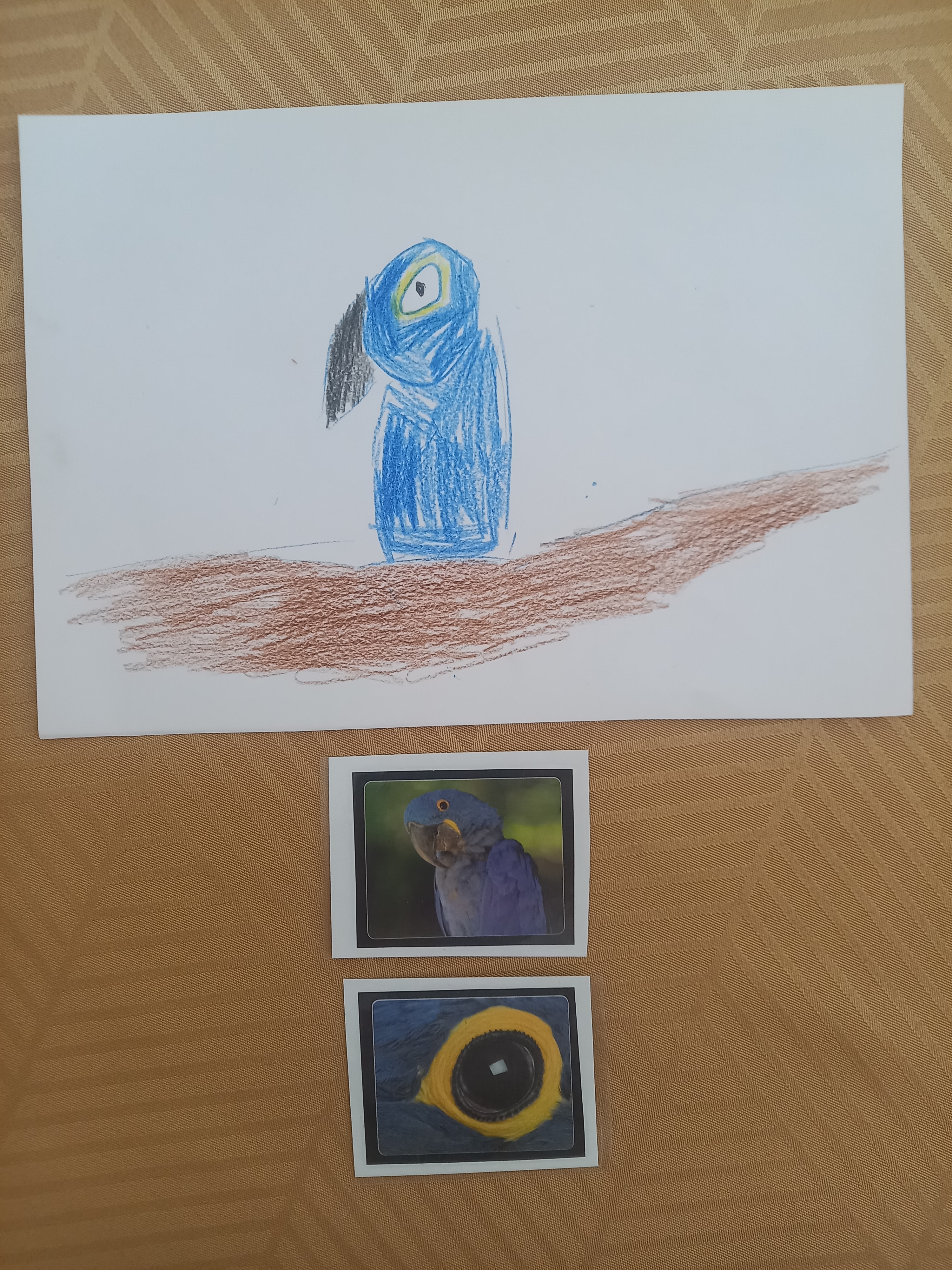
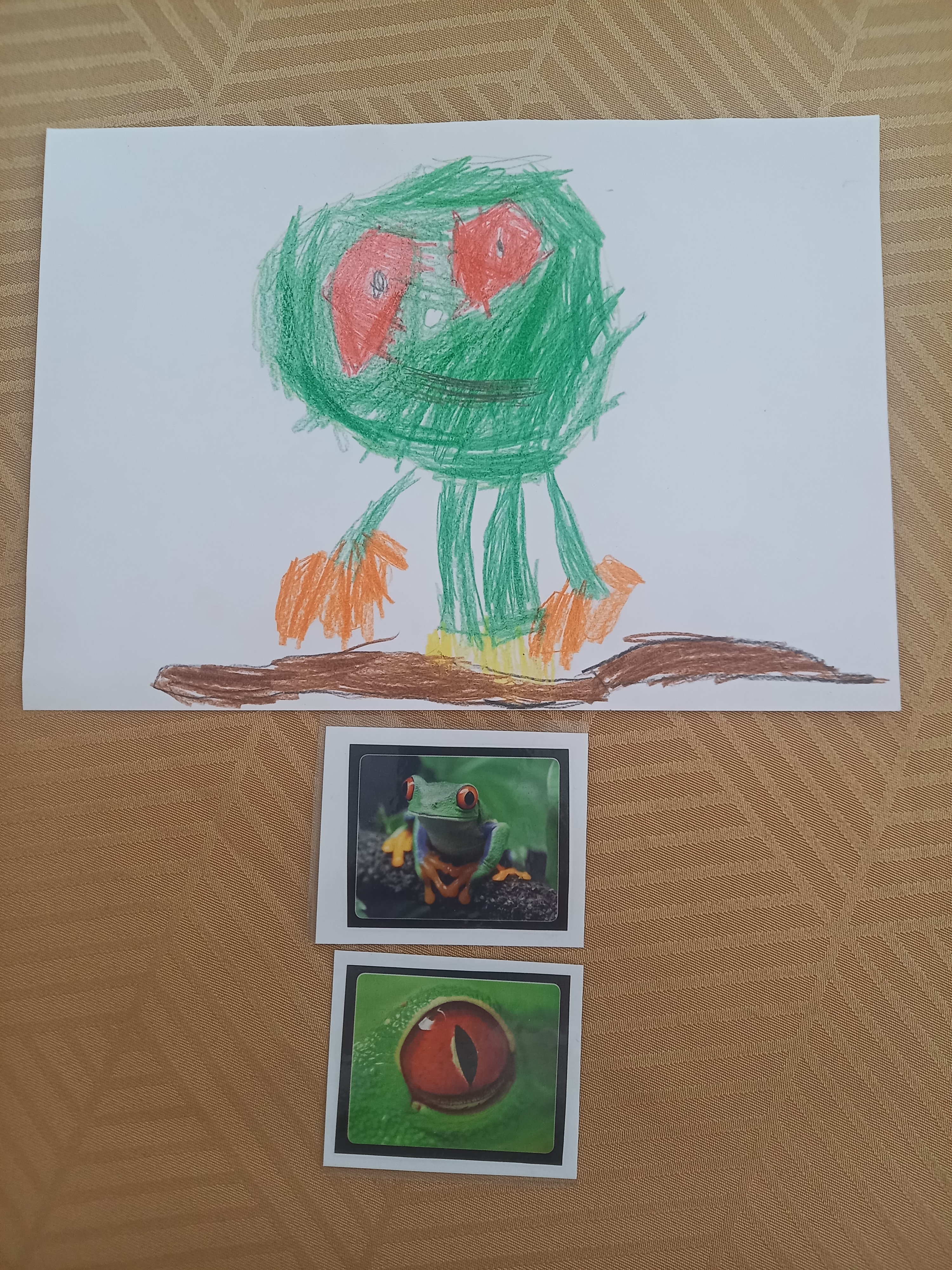
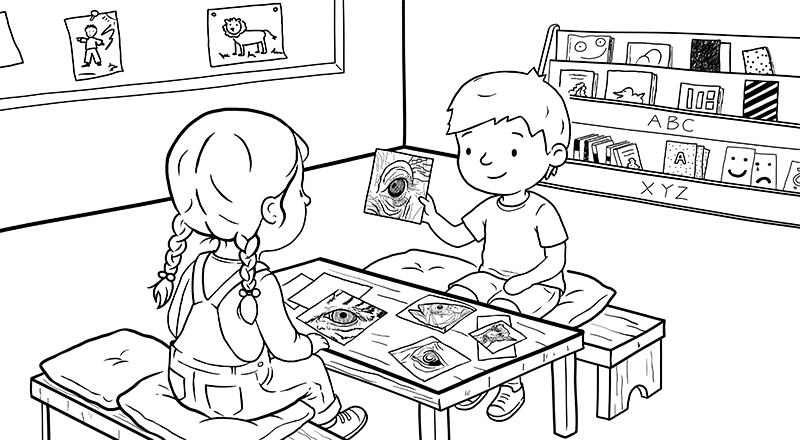
The teacher places photographs of different animals in front of the children, for example a tiger, frog, parrot, fish, owl, and zebra. Children are encouraged to choose one animal photograph.
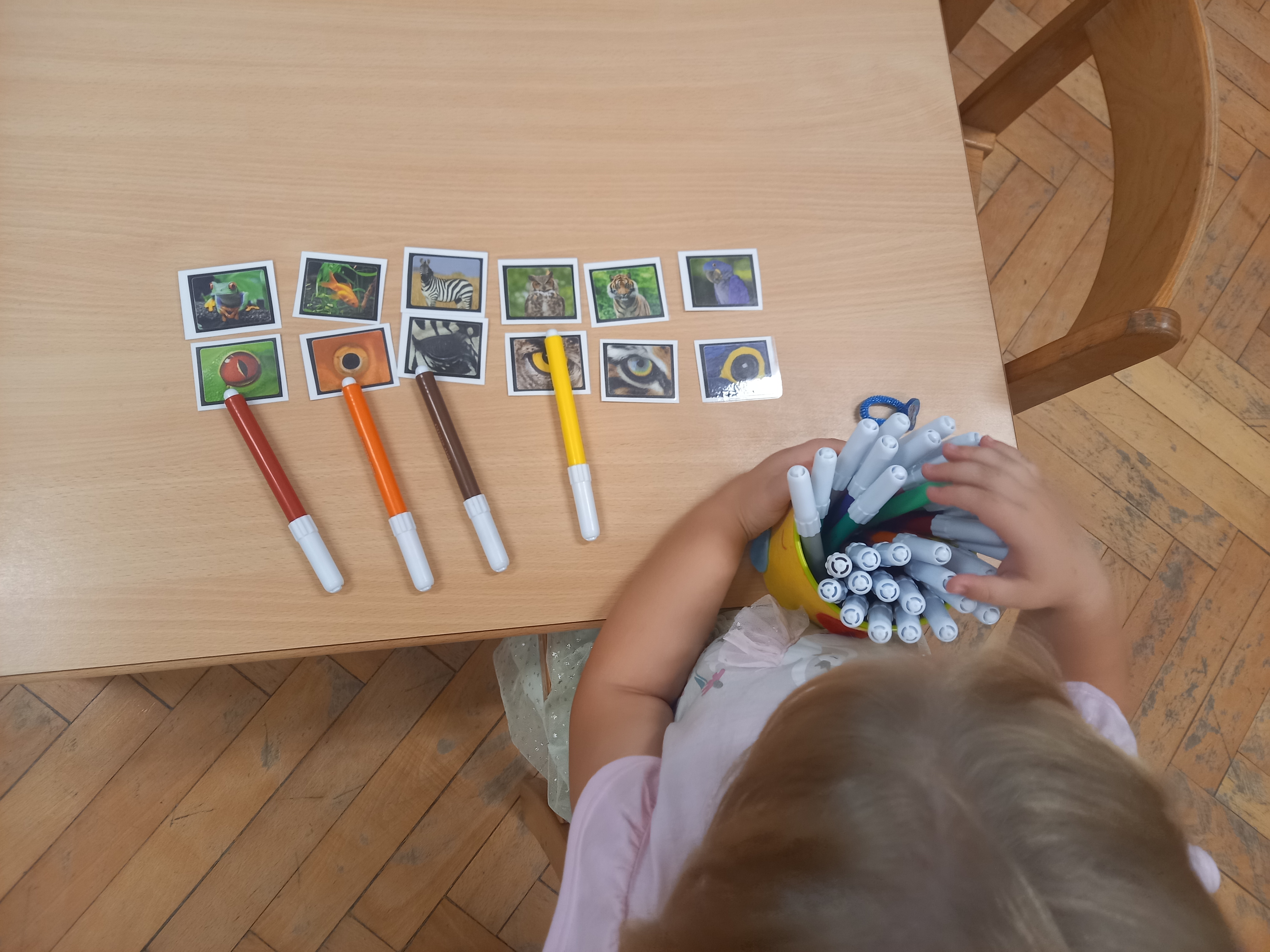
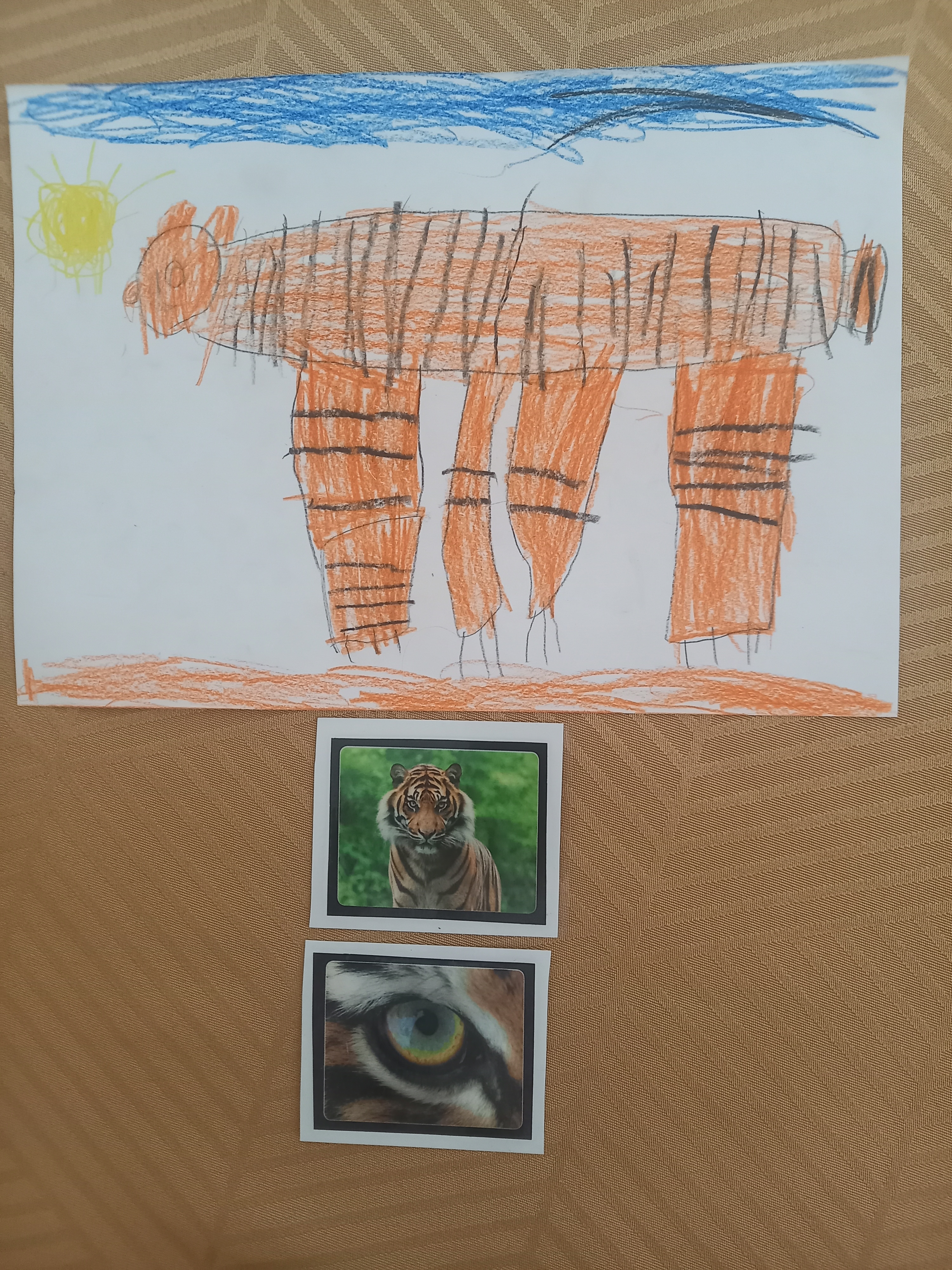
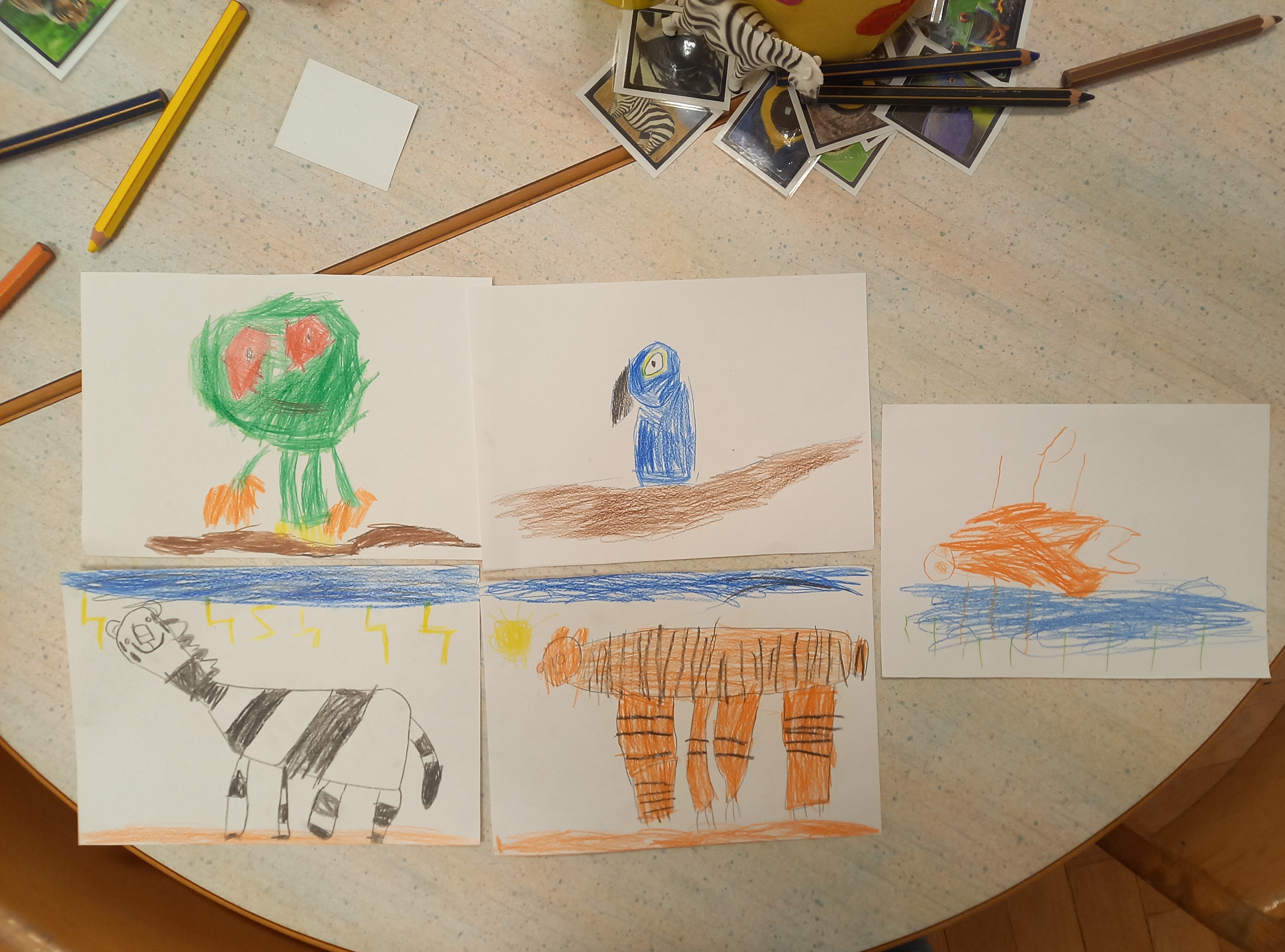
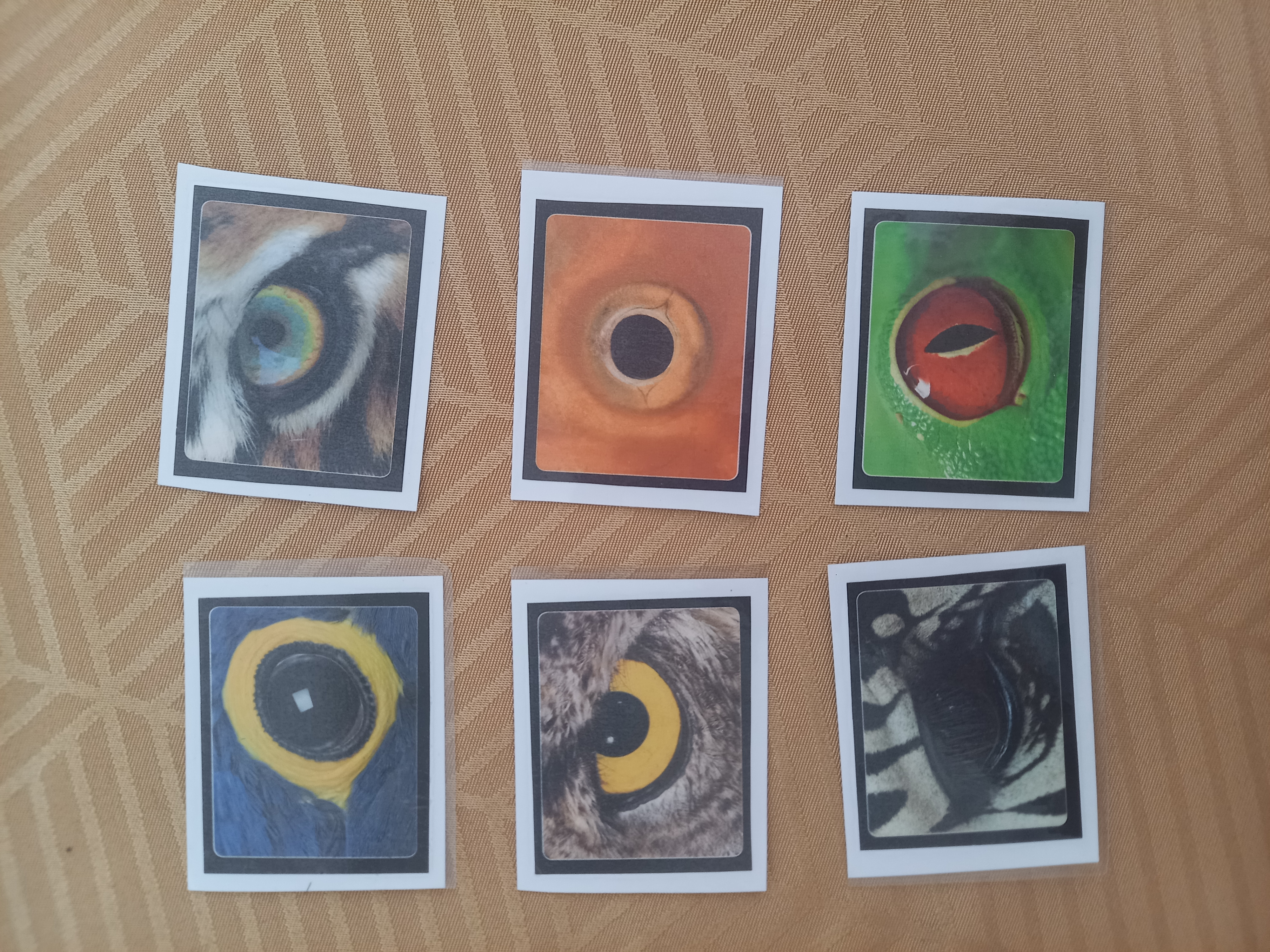
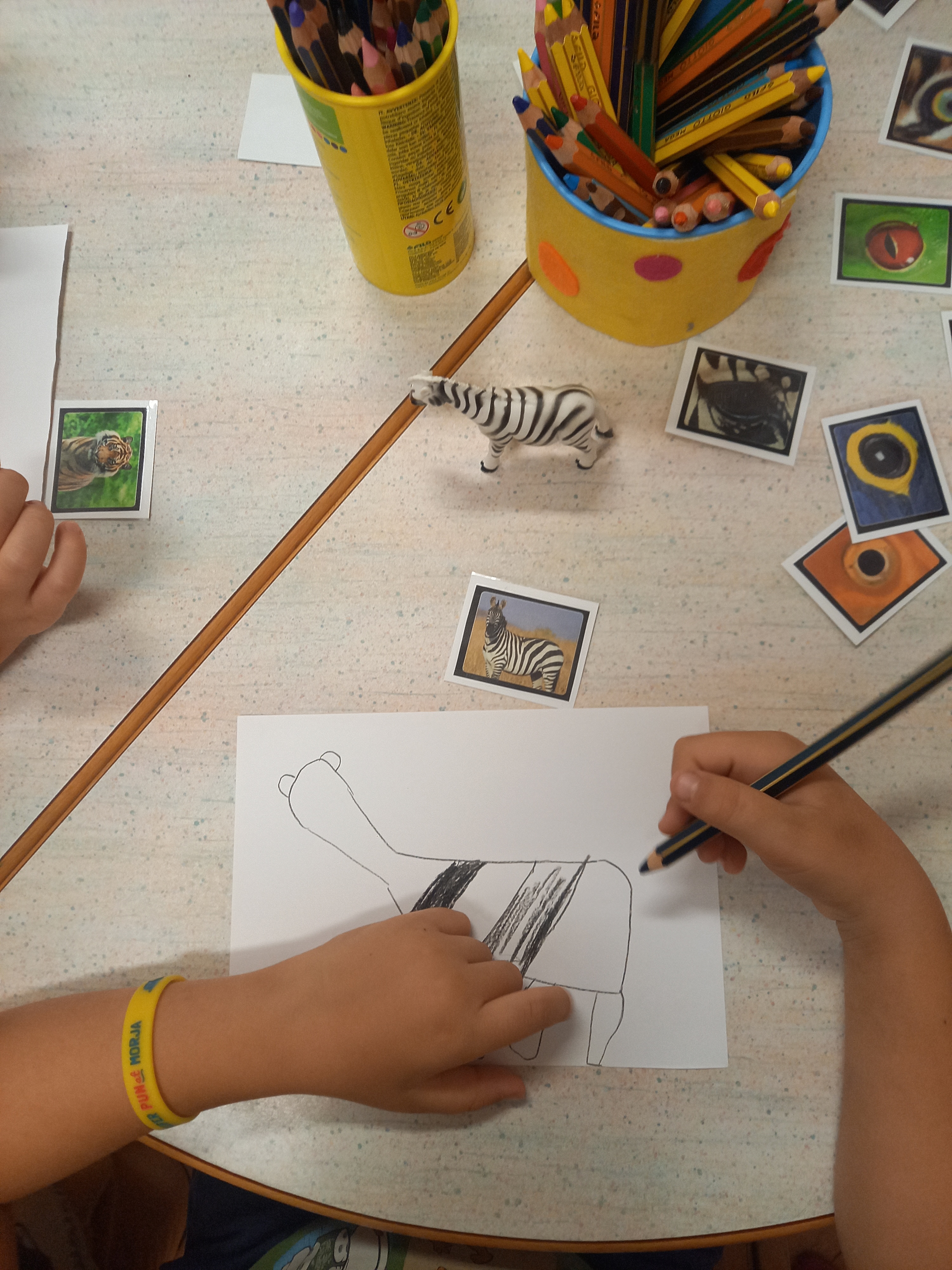
The teacher then places photographs of animal eyes in front of the children. The children try to find the correct eyes for the chosen animal. When a child finds the matching eyes, they draw the selected animal.
Reflecţie:
The teacher encourages the children to explain how they found the matching eyes and what helped them. Afterwards, children look for plush or plastic animal figures in the playroom and compare them with the animals in the photographs.
Variații și idei suplimentare
Using photographs, children can search for which peer the photographed eyes belong to.
Children can search for the whole using photographs of parts of objects, fruit, clothes, and similar items.
Using animal and eye photographs, a memory or matching game can be created (suitable for older children).
Informații generale și perspectivă didactică
This activity supports visual perception and observation skills by focusing on details and their relationship to the whole. By matching animal eyes to the correct animals, children practise comparison, attention to visual cues, and reasoning. The activity encourages verbal explanation and reflection, helping children articulate how they observe and recognise similarities. It also strengthens curiosity and interest in animals through playful visual exploration.
Experience from kindergartens
Children enjoy animals and often choose books that show them. Some children said they used colour and fur or skin patterns to help them guess. Others chose an animal at random.
Fotografiile activității