Strip
Priče o prometu
 Financirano sredstvima Europske unije. Izneseni stavovi i mišljenja su stavovi i mišljenja autora i ne moraju se podudarati sa stavovima i mišljenjima Europske unije ili Europske izvršne agencije za obrazovanje i kulturu (EACEA). Ni Europska unija ni EACEA ne mogu se smatrati odgovornima za njih. |
 Svi sadržaji, a posebno tekstovi, slike i grafikoni, su zaštićeni autorskim pravima. Vlasnik autorskih prava, ukoliko nije drugačije označeno, je media.eduskills.plus, a autorsko pravo je definirano licencom Creative Commons Imenovanje-Nekomercijalno-Dijeli pod istim uvjetima 4.0 Međunarodna. Autorska prava mogu biti definirana uvjetima licence. |
2026 media.eduskills.plus
Ishodi učenja
Kompetencije
|
|
|
Ciljna skupina 5 godina i više
|
|
Potrebni materijali
|
Opis aktivnosti (korak po korak)
Priprema:
Odgojitelj/ica pita djecu znaju li što je strip. Objašnjava što je strip i pokazuje različite primjere stripova.
Primjena:
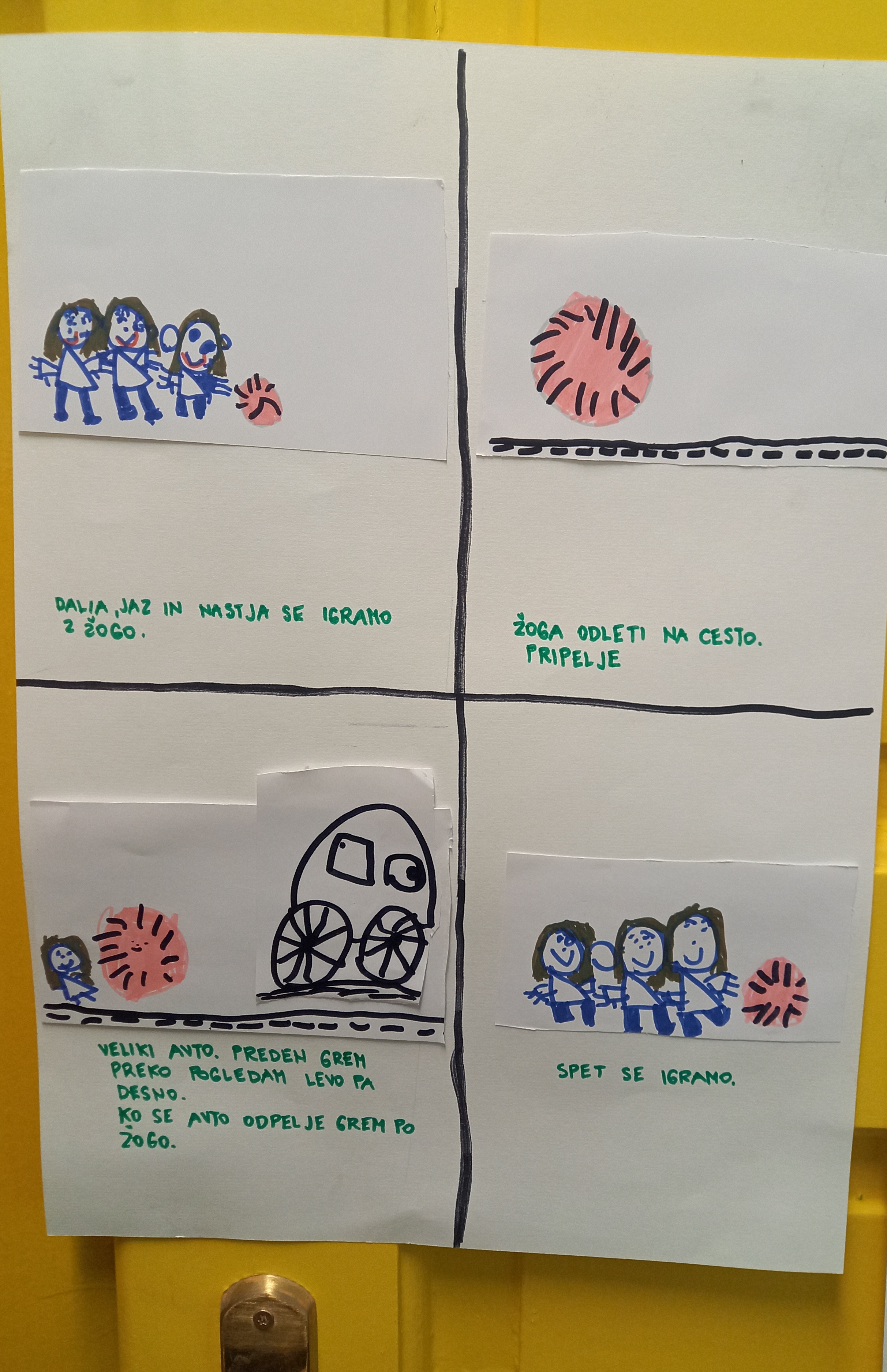
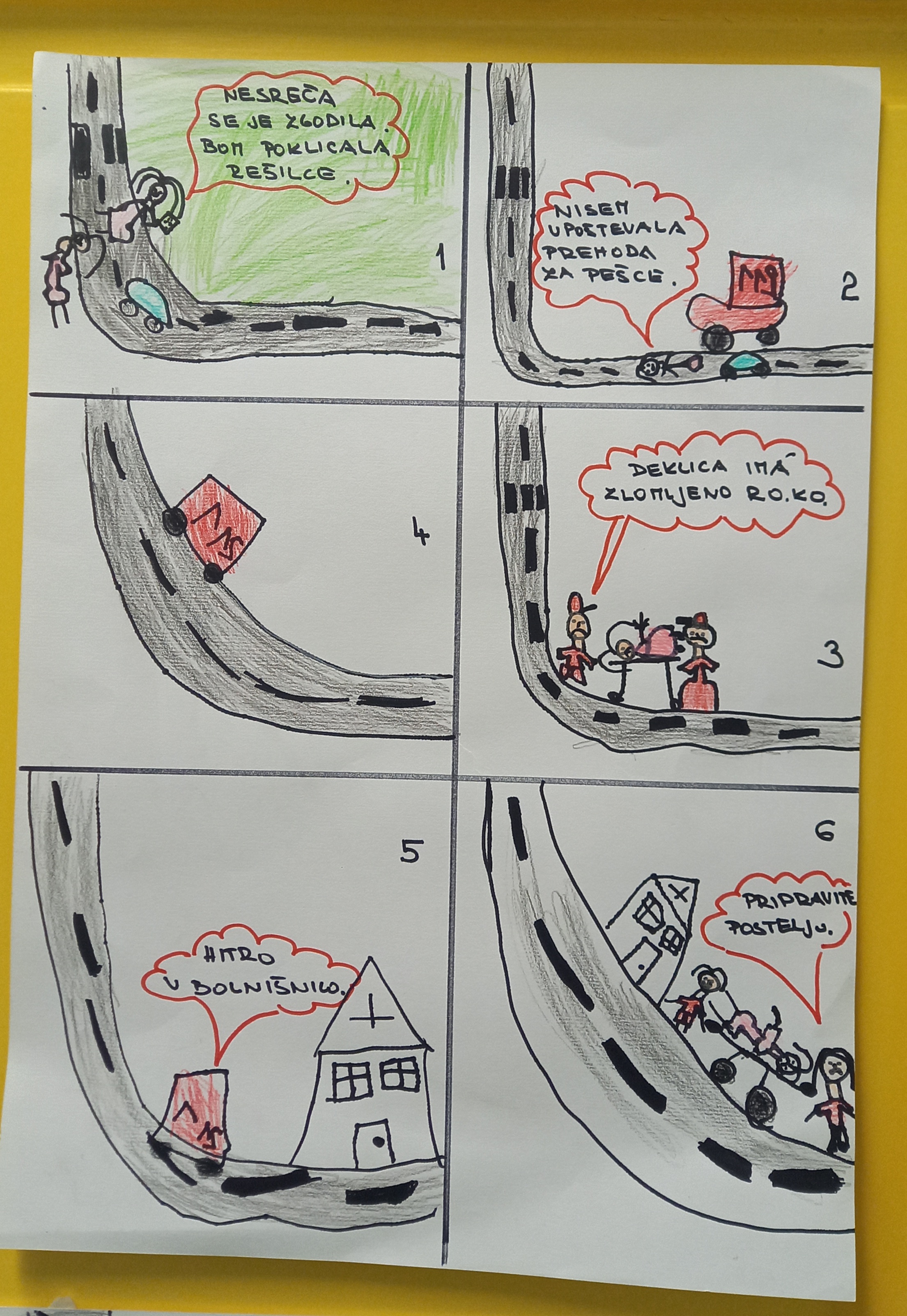
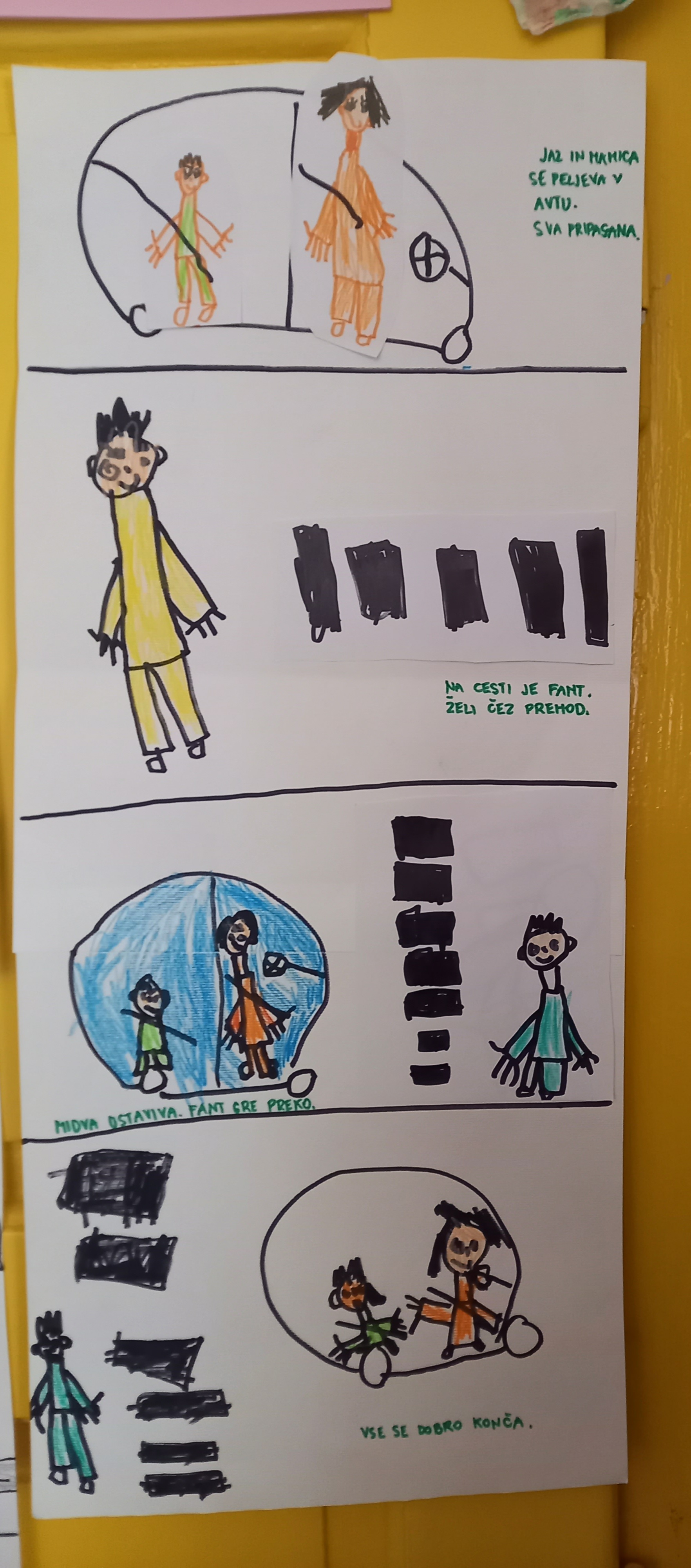
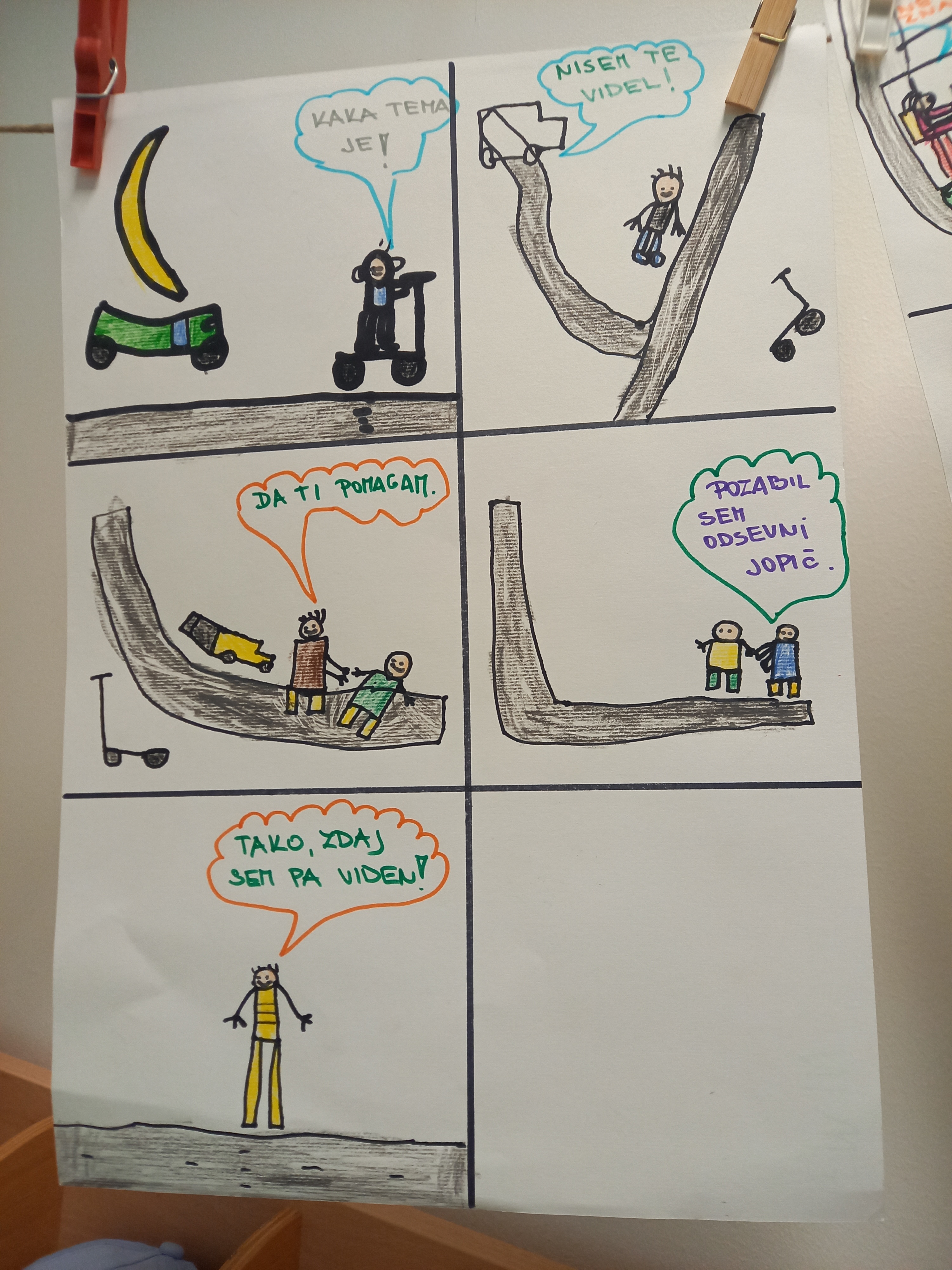
Odgojitelj/ica potiče djecu da izmisle priču koja se dogodila njima ili nekome drugome u prometu. Odgojitelj/ica pomaže djeci svojim sugestijama, potičući ih da razmišljaju o kršenju prometnih pravila i o posljedicama takvog ponašanja.
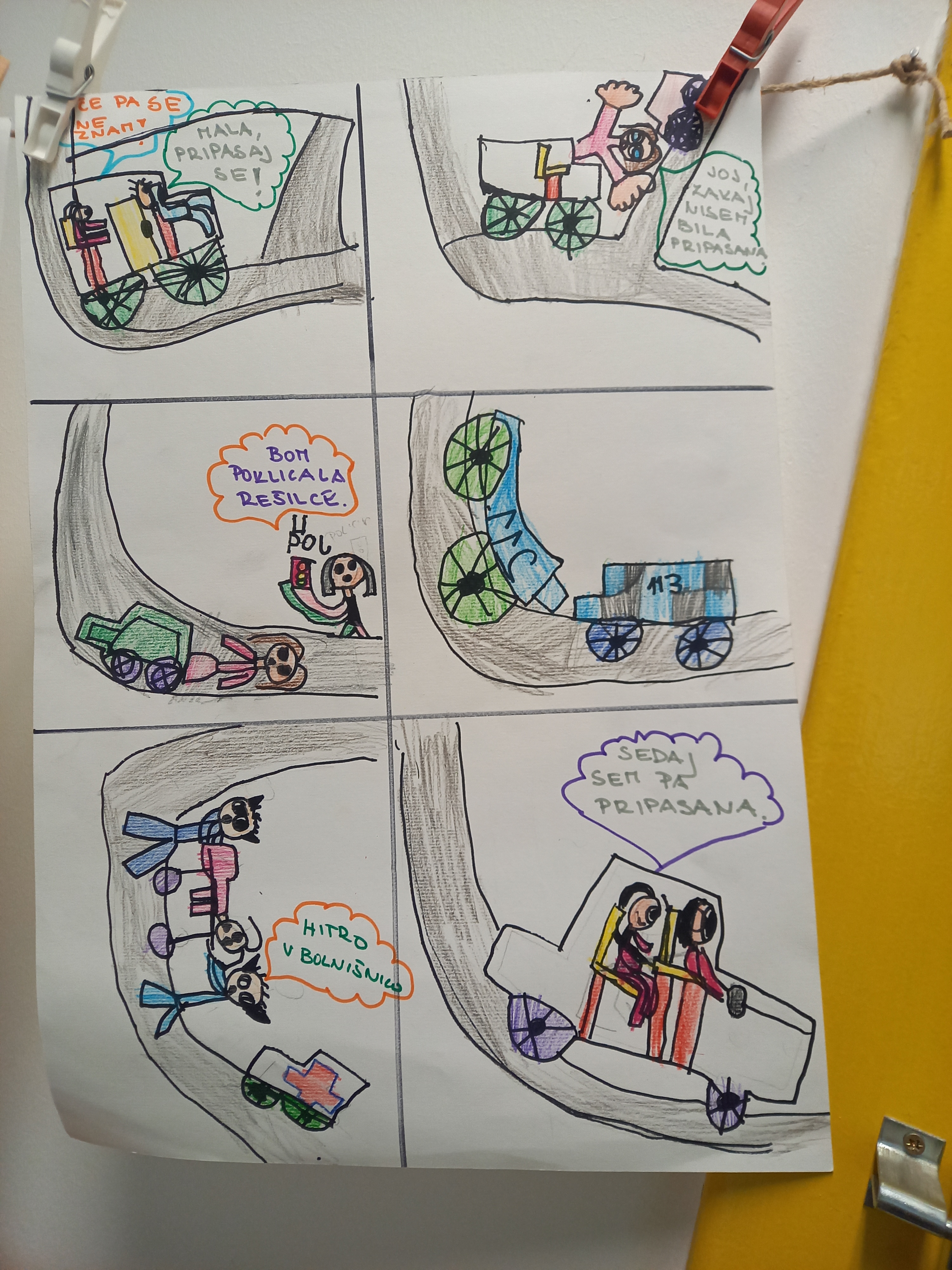
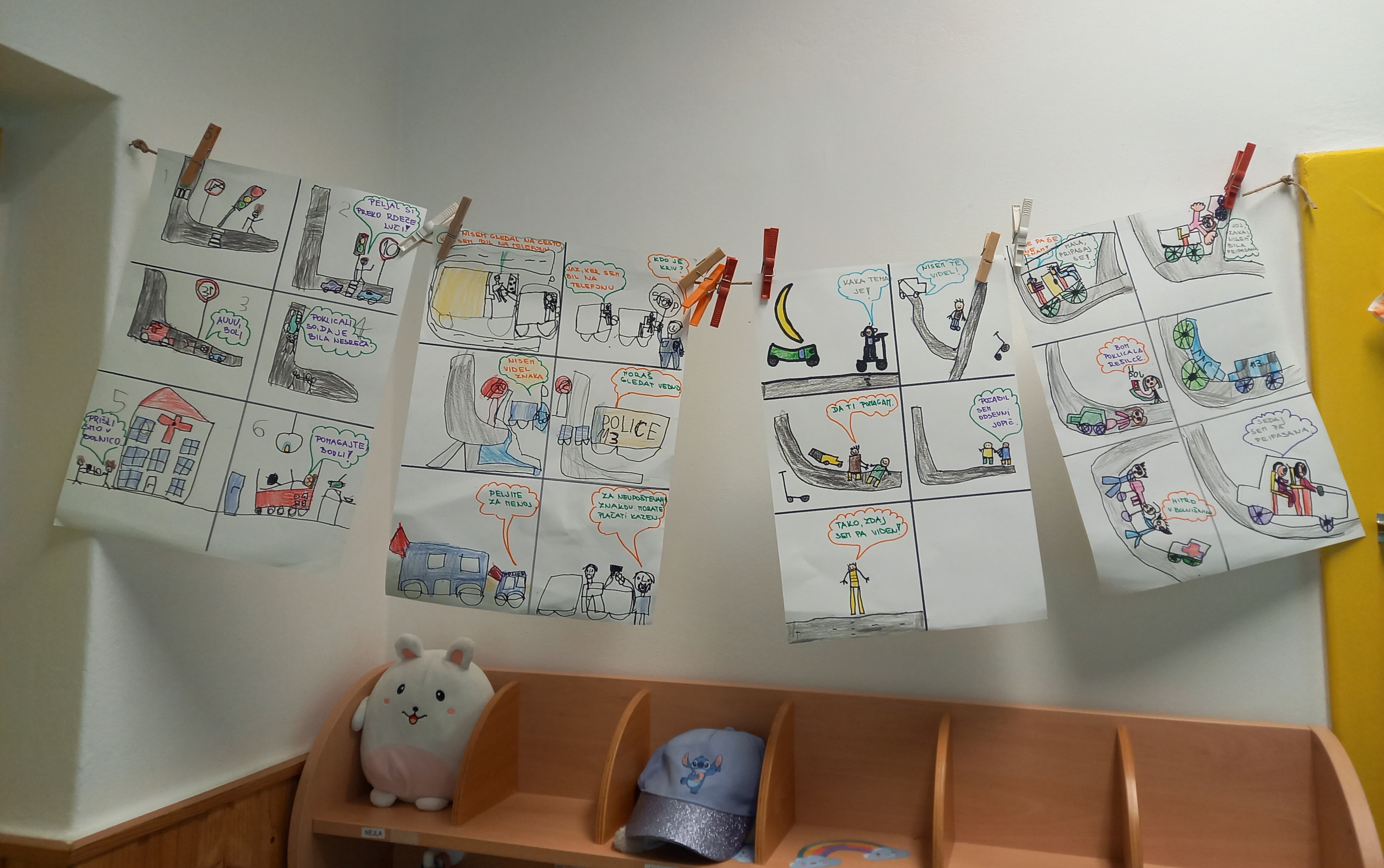
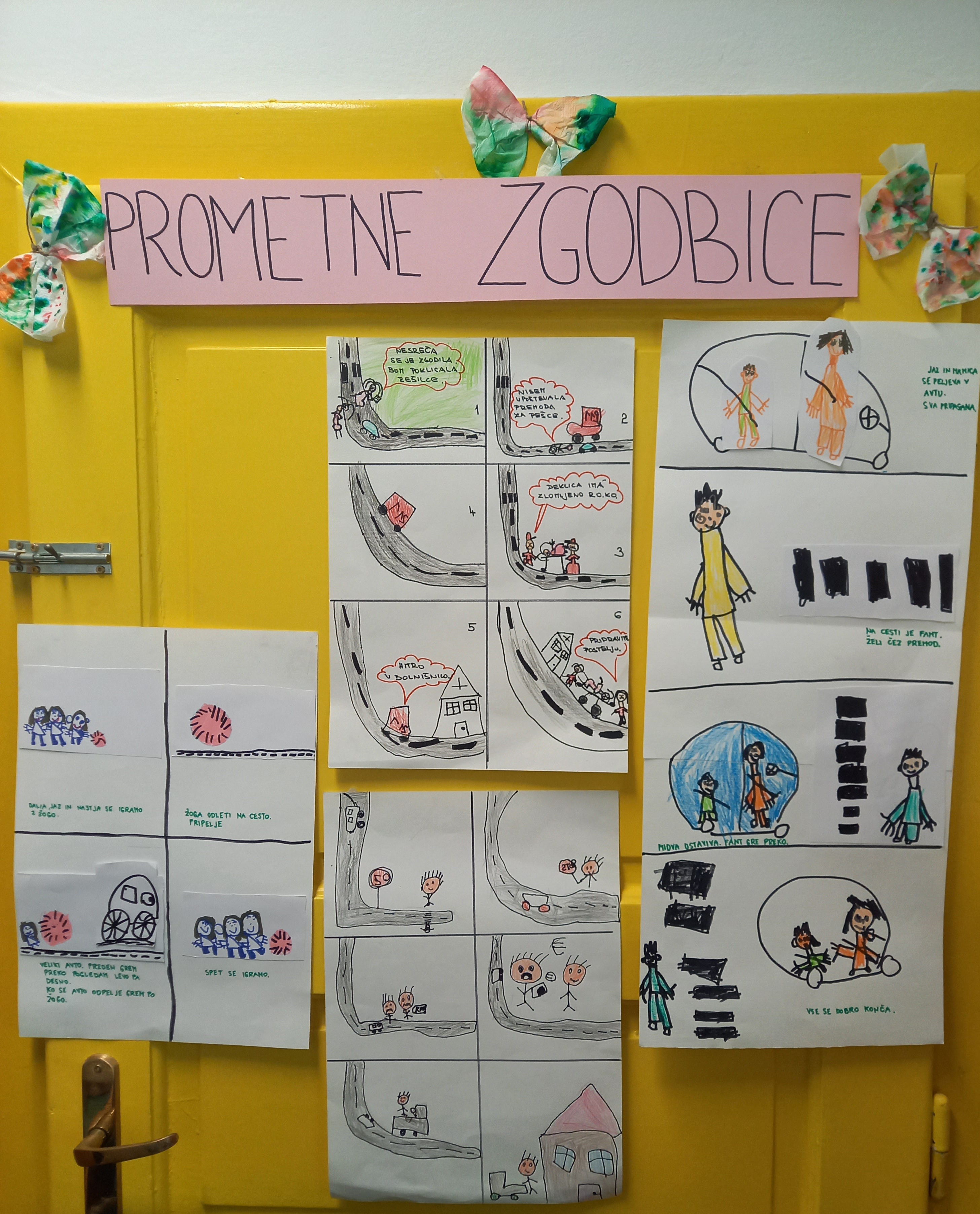
Kada djeca podijele svoje priče, odgojitelj/ica ih vodi prema ilustriranju sadržaja. Djeca se usredotočuju na glavne događaje priče i dijele ih na četiri ili šest slika.
Refleksija:
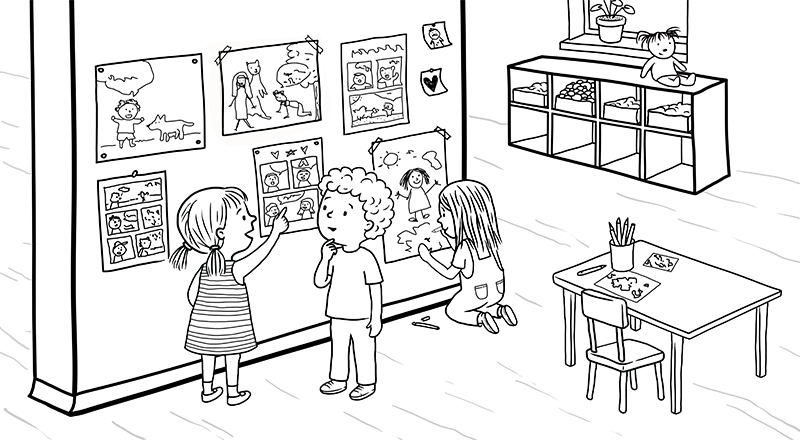
Djeca prezentiraju svoje stripove i pripremaju izložbu.
Varijacije i dodatne ideje
Tema stripa može se slobodno odabrati.
Crtač stripa mogao bi posjetiti djecu i predstaviti im svoje radove, na primjer stripove objavljene u dnevnim novinama ili na internetu.
Osnovne informacije i didaktička perspektiva
Ova aktivnost kombinira pripovijedanje, vizualno izražavanje i ranu medijsku pismenost. Pretvaranjem stvarnih ili zamišljenih prometnih situacija u stripove, djeca vježbaju slijed događaja, razumijevanje uzroka i posljedice te izražavanje ideja putem slika. Izrada i dijeljenje stripova podržava komunikacijske vještine i pomaže djeci da razmišljaju o svakodnevnim situacijama na kreativan i pristupačan način.
Iskustvo iz vrtića
Cijela aktivnost trajala je nekoliko dana jer je djeci trebalo određeno vrijeme za smišljanje priča i njihovo ilustriranje. Budući da djeca još ne mogu samostalno pisati, odgojitelj/ica je tekst napisao/la pokraj slika. Djeca su rekla da je najteži dio bio početi crtati, a zatim crtati slične predmete na isti način nekoliko puta.
Fotografije aktivnosti