
Media Collage
Creating a Picture Story from Different Media Images
 Rahastatud Euroopa Liidu poolt. Avaldatud seisukohad ja arvamused on ainult autori(te) omad ega pruugi kajastada Euroopa Liidu või Euroopa Hariduse ja Kultuuri Rakendusameti (EACEA) seisukohti ja arvamusi. Euroopa Liit ega EACEA nende eest ei vastuta. |
 Kogu sisu, eelkõige tekstid, pildid ja graafika, on kaitstud autoriõigusega. Kui ei ole sõnaselgelt teisiti märgitud, kuuluvad autoriõigused media.eduskills.plus ja on litsentseeritud Litsents: "Creative Commons Autorile viitamine – mittekaubanduslik - jagamine samadel tingimustel 4.0 Rahvusvaheline". Nende suhtes võivad kehtida litsentsitingimused. |
2026 media.eduskills.plus
Õpitulemused
tulemused
|
|
|
Sihtgrupp 4 aastat ja rohkem
|
|
Nõutavad materjalid
|
|
Materjalid
|
Tegevuse kirjeldus (samm-sammult)
Ettevalmistus:
Introduce the theme (e.g. "What makes me happy" or "My perfect day").
Show examples of collages and explain that they are made from pictures found in media.
Tegevuse läbiviimine:
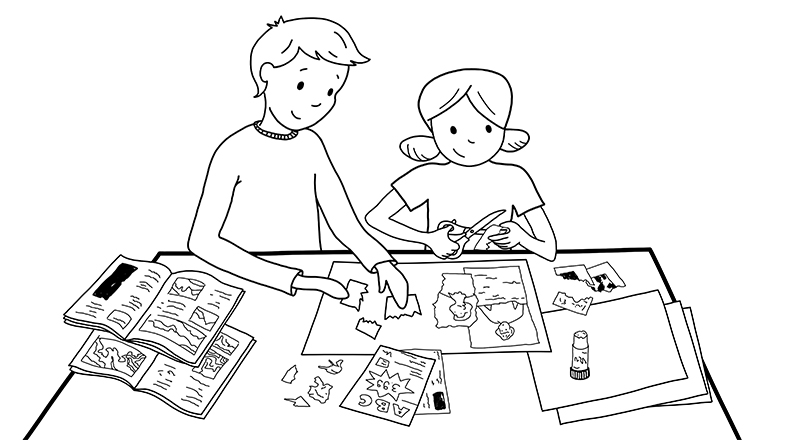
Provide magazines and newspapers. Let children cut out pictures they like or that fit the theme.
Help them arrange and glue the pictures onto a large sheet of paper to create a collage.
Encourage them to add drawings or words to complete their artwork.
Refleksioon
Invite each child to present their collage and explain their choices ("Why did you pick this picture?").
Variatsioonid ja lisaideed
Work together on a group collage around a shared theme (e.g. "Our kindergarten").
Try a digital version using photos taken by the children.
Taustteave ja didaktiline perspektiiv
This creative activity helps children understand that media images are made, selected, and combined to convey meaning. By choosing and arranging pictures themselves, they experience the process of media construction and develop visual literacy. Collage-making also enhances fine motor skills and creativity, allowing children to connect personal experiences with media representations. Discussing their choices strengthens vocabulary, emotional expression, and understanding that images can communicate ideas and feelings. The activity encourages curiosity and reflection about where media images come from and how they influence what we see.