
Družabna igra o medijih
Skozi igro do razumevanja medijev
 Financirano s strani Evropske unije. Izražena stališča in mnenja so zgolj stališča in mnenja avtorja(-ev) in ni nujno, da odražajo stališča in mnenja Evropske unije ali Evropske izvajalske agencije za izobraževanje in kulturo (EACEA). Zanje ne moreta biti odgovorna niti Evropska unija niti EACEA. |
 Vse vsebine, še posebej teksti, slike in grafikoni so avtorsko zaščiteni. V kolikor izrecno ni določeno drugače, so avtorske pravice last media.eduskills.plus pod licenco Priznanje avtorstva - nekomercialna raba - brez predelav 4.0 mednarodna (CC BY - NC - ND 4.0 ). Uporabijo se lahko le v okviru licenčnih pogojev. |
2026 media.eduskills.plus
Učni izidi
Kompetence
|
|
|
Ciljna skupina 4 let in več
|
|
Potrebni pripomočki
|
|
Pripomočki
|
Opis aktivnosti (po korakih)
Predpriprava
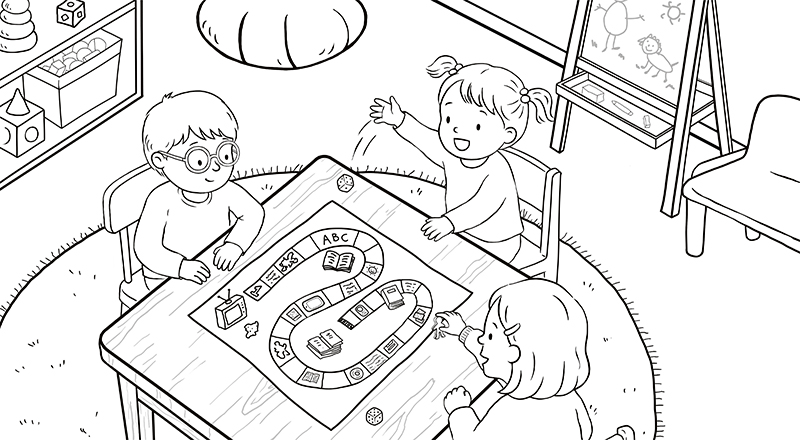
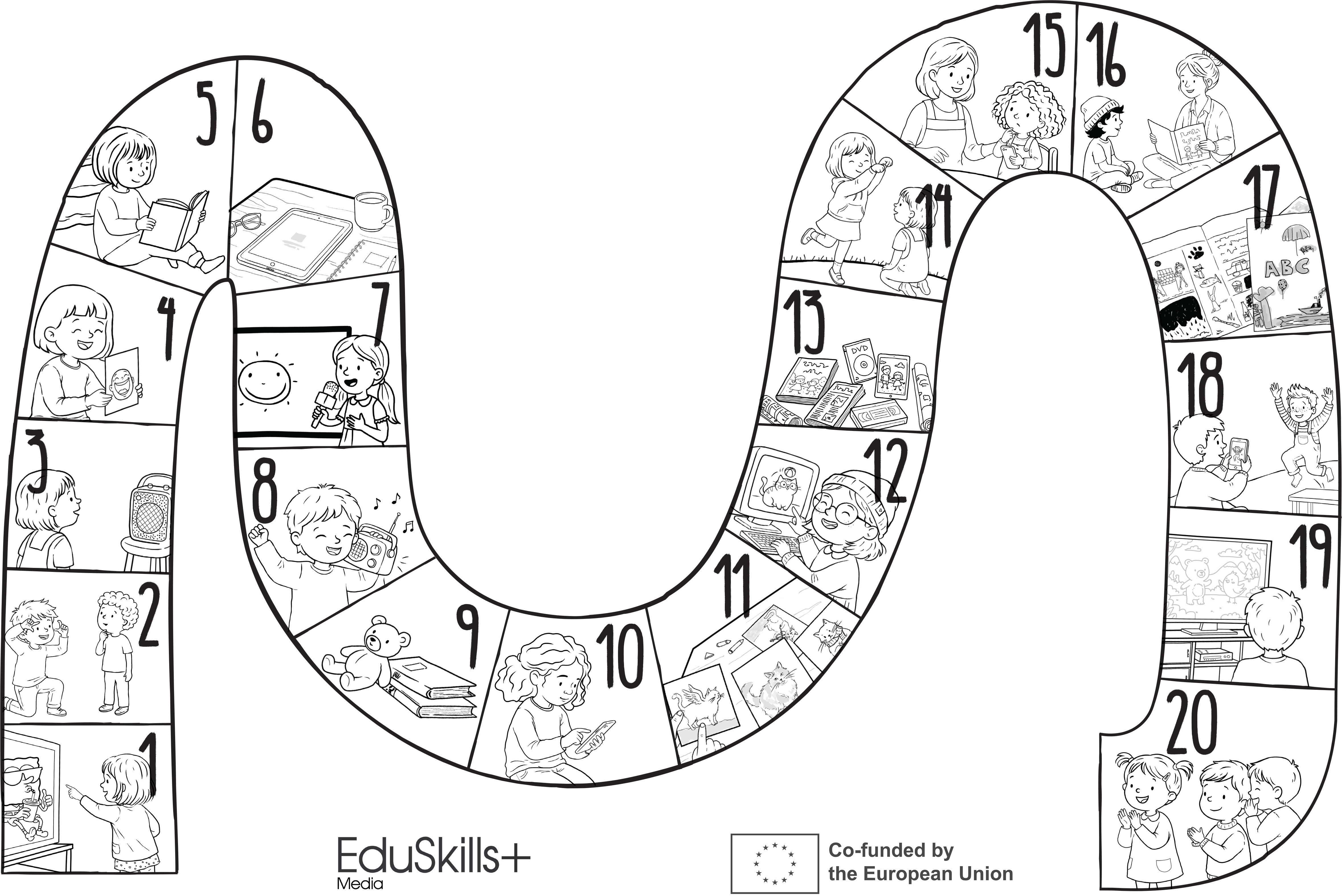
Otrokom predstavite družabno igro in razložite osnovna pravila (vržeš kocko, se premakneš naprej, opraviš nalogo na polju).
Pojasnite, da je igra namenjena raziskovanju in pogovoru o medijih – stvareh, ki jih beremo, gledamo, poslušamo ali ustvarjamo.
Implementacija
Otroci izmenično mečejo kocko, premikajo svojo figurico in odgovorijo na vprašanje ali opravijo nalogo na polju.
Spodbujajte sodelovanje in pogovor v skupini (Kaj rad gledaš? Kdo ti bere zgodbe? Katere zvoke slišiš na radiu?).
Igrajte, dokler vsi ne prispejo do cilja ali dokler skupaj ne zaključite enega kroga.
Refleksija
Aktivnost zaključite s kratkim pogovorom o tem, kaj so se otroci naučili o medijih.
Različice in dodatne ideje
Otroci lahko pomagajo ustvariti nova igralna polja ali nova vprašanja za naslednje kroge igre.
Osnovne informacije in didaktična perspektiva
Družabne igre so privlačen in družaben način za uvajanje osnov medijske pismenosti v zgodnjem otroštvu. Otroci skozi igro razvijajo besedišče in postopoma spoznavajo, da obstajajo različne vrste medijev, ki služijo različnim namenom. Igra spodbuja komunikacijo, sodelovanje in razmislek, kar so pomembni temelji za razvoj medijske pismenosti. Hkrati omogoča skupne učne izkušnje otrok in odraslih ter prispeva k ustvarjanju pozitivne medijske kulture doma in v vrtcu. S povezovanjem gibanja, domišljije in pogovora aktivnost abstraktne pojme približa otrokom na igriv in razumljiv način.
Game Board
Game Cards
Card 1
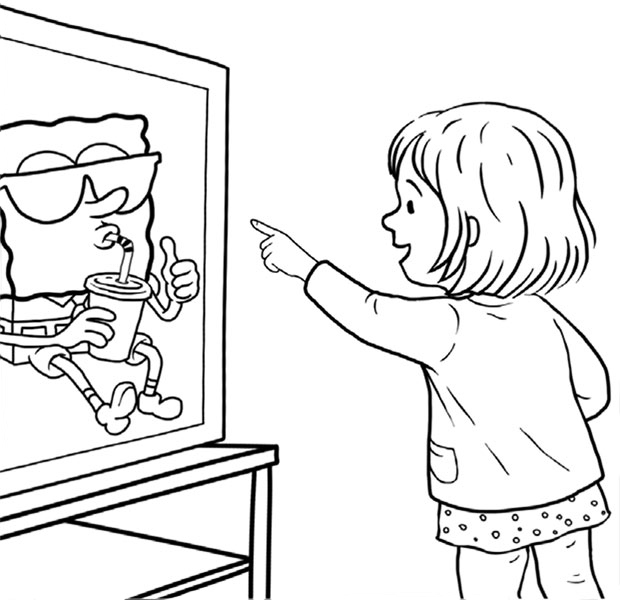
Kaj rad gledaš po televiziji?
Card 2
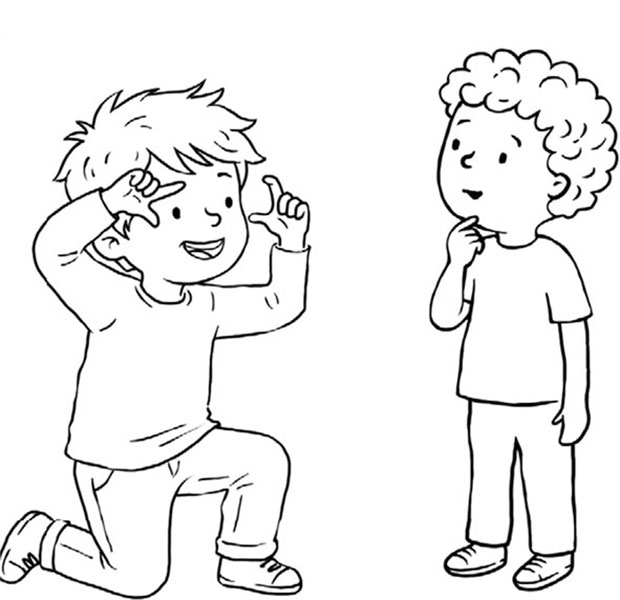
Kaj bi fotografiral v vrtcu?
Card 3
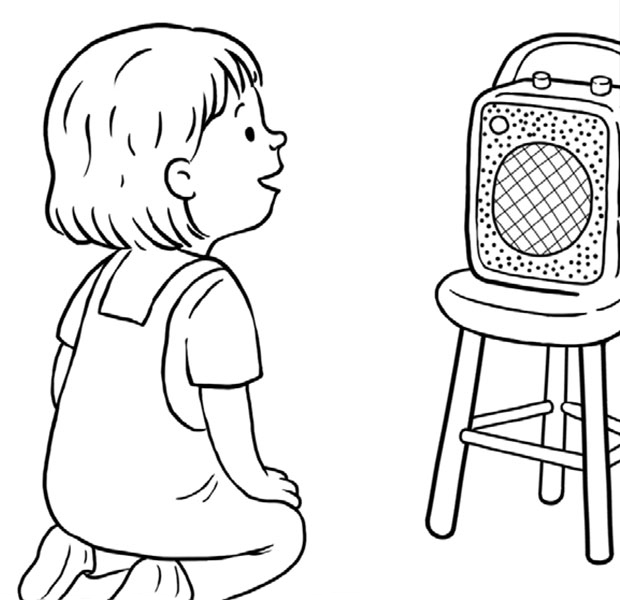
Kdaj rad poslušaš glasbo?
Card 4
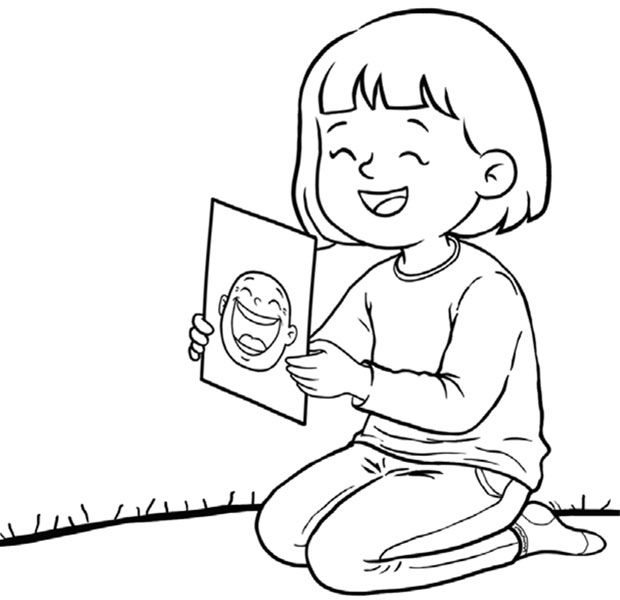
Kako se počuti otrok na sliki?
Card 5
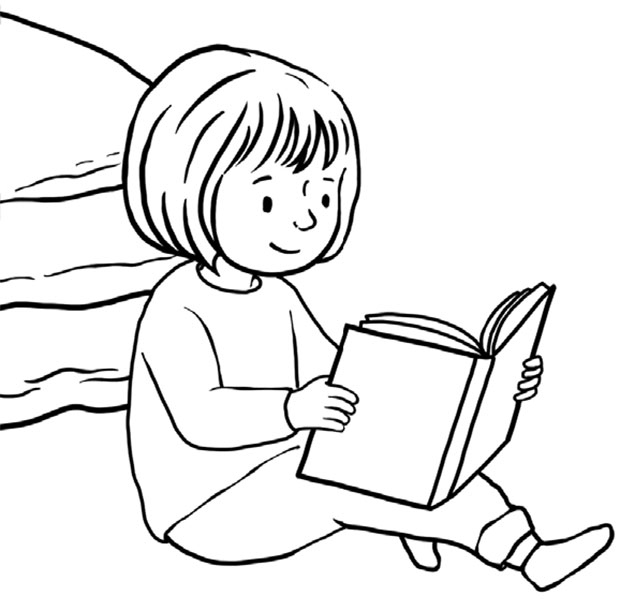
Kakšne knjige so ti všeč?
Card 6
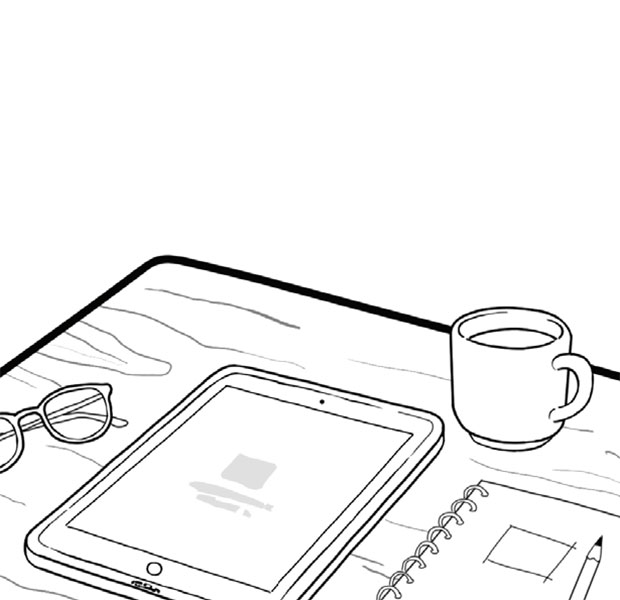
Predolgo si igral igrico na tablici. Potrebuješ počitek. 2x ne mečeš.
Card 7
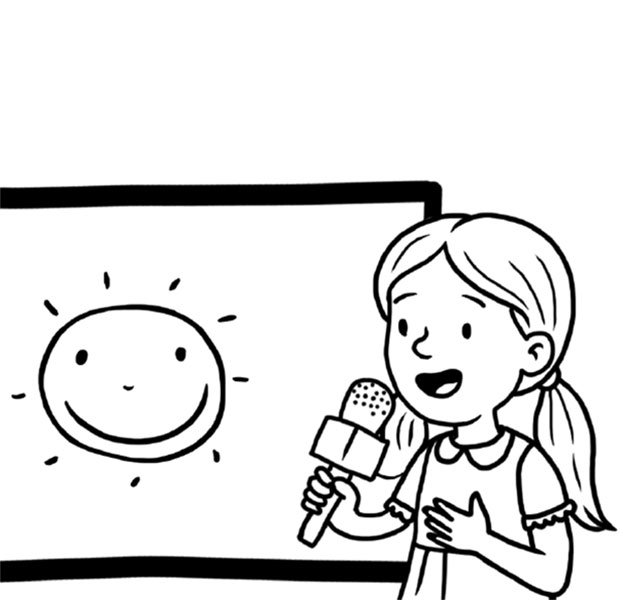
Poglej skozi okno in kot na televiziji povej kakšno je vreme.
Card 8
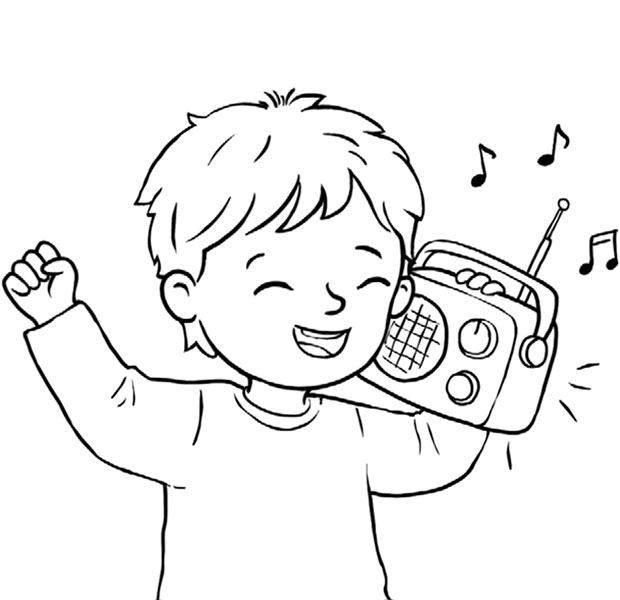
Prižgi radio. Zapleši ob predvajani pesmi.
Card 9
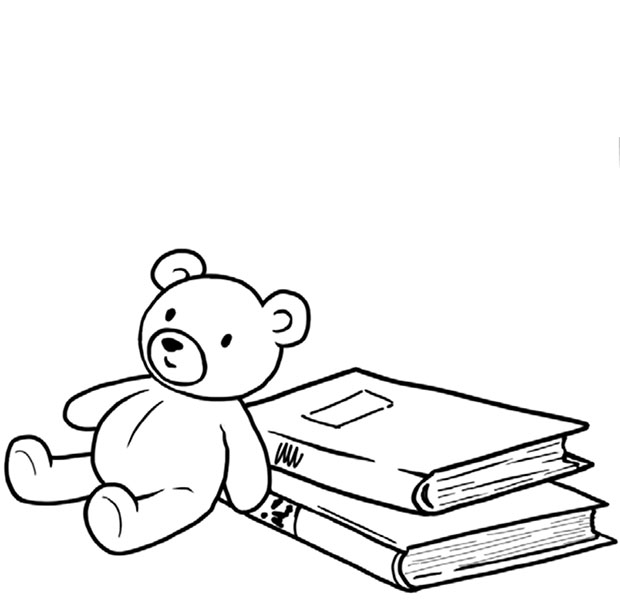
Katero pravljico najraje poslušaš?
Card 10
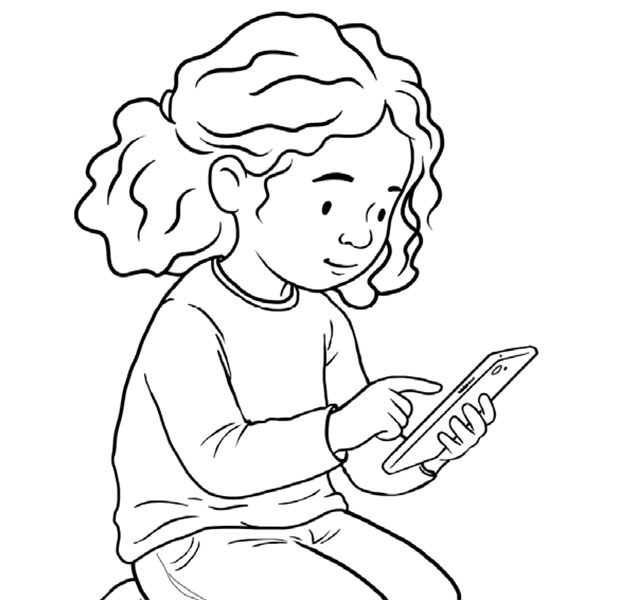
Pretvarjaj se, da se z mamo pogovarjaš po telefonu.
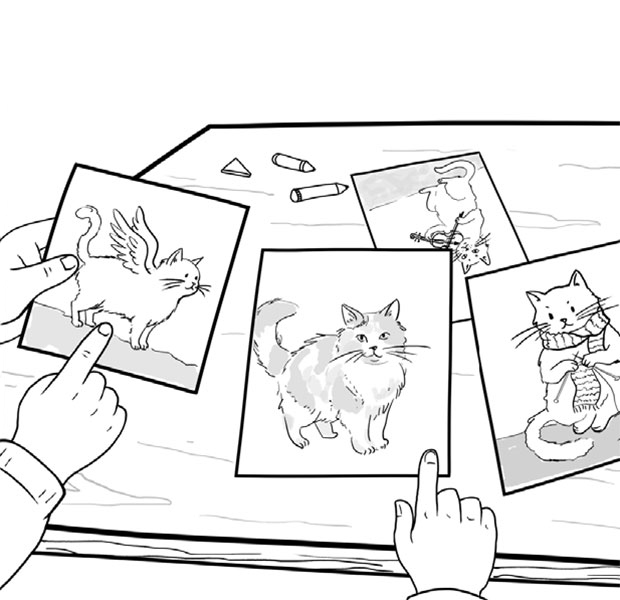
Card 11
Ali je vse kar vidimo po televiziji resnično?
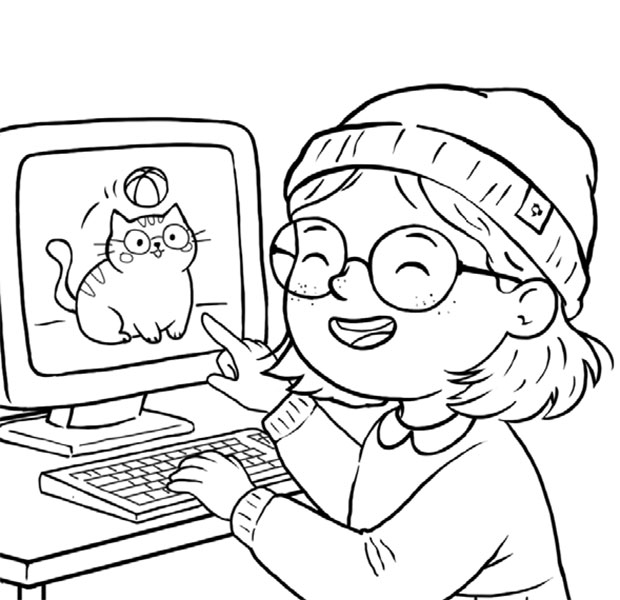
Card 12
Pokaži, kakšen je tvoj obraz, če si vesel ali žalosten.
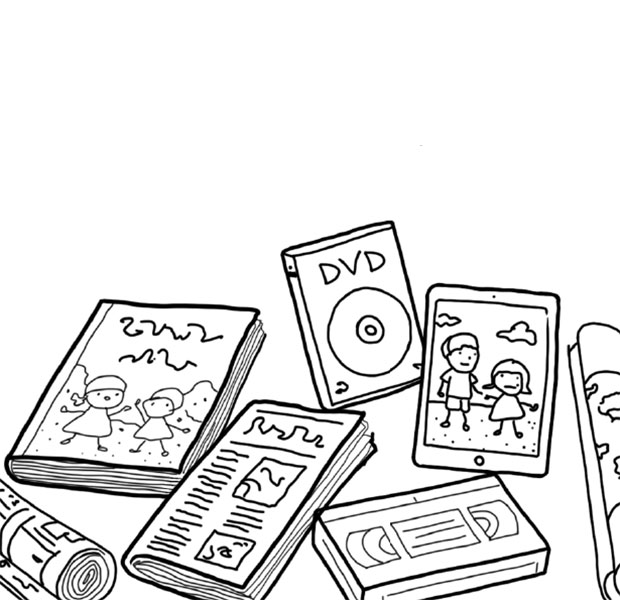
Card 13
Ce česa ne veš, koga prosiš za pomoč?
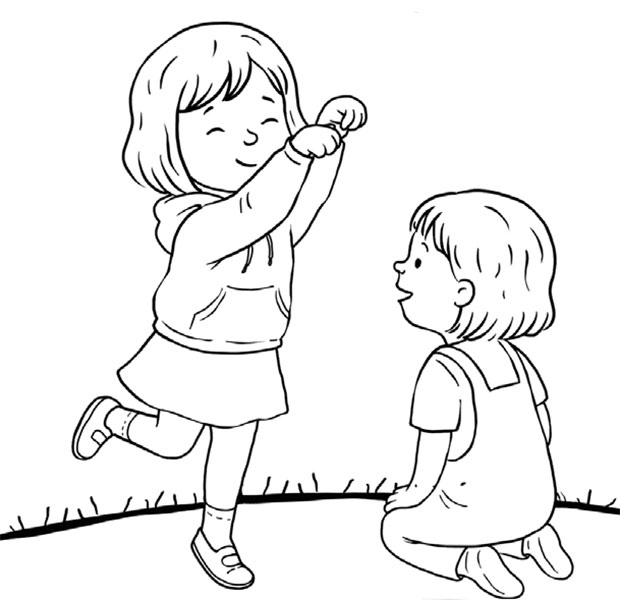
Card 14
Pokaži, kako superjunak uporabi svoje moči.
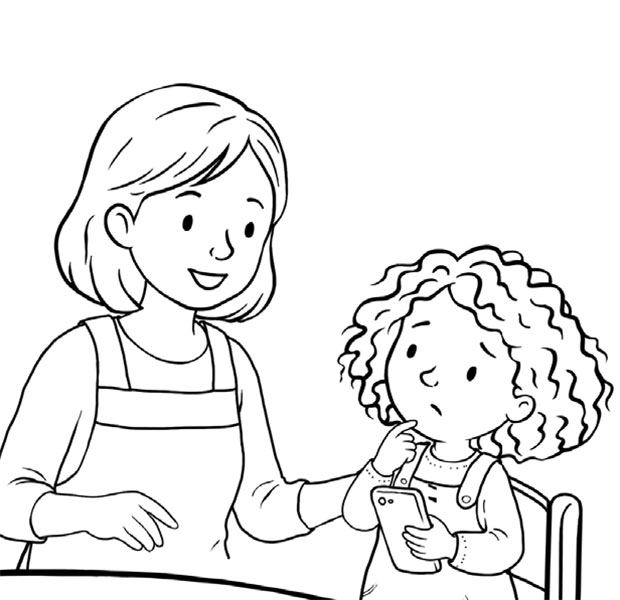
Card 15
Zakaj ni dobro, če predolgo gledamo v telefon ali tablico?
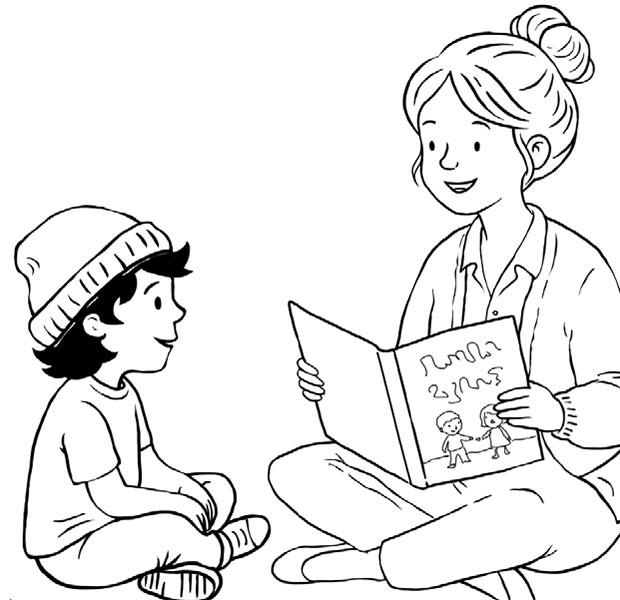
Card 16
Kako postaneš dober poslušalec?
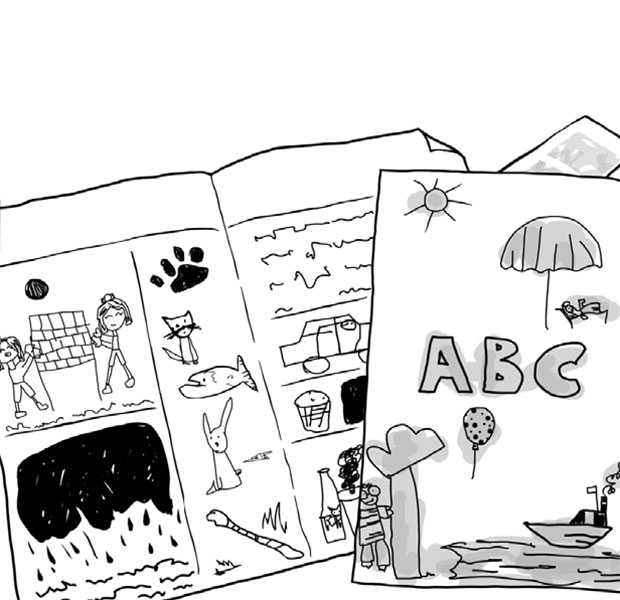
Card 17
Kje se lahko naučis nekaj novega?
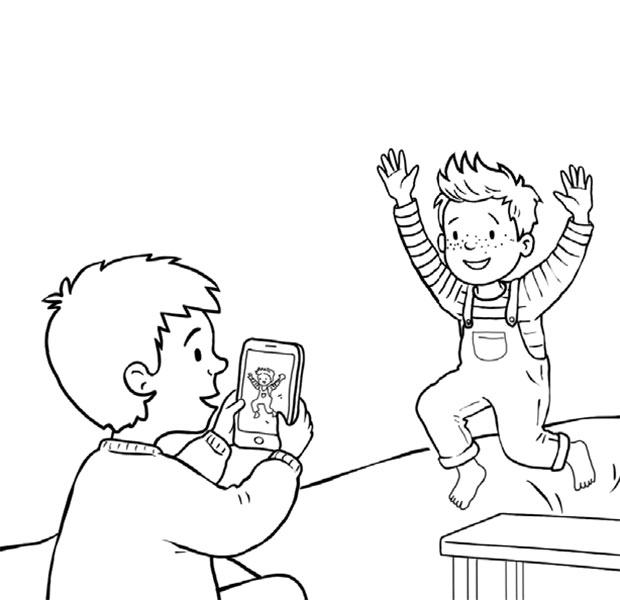
Card 18
Če bi imel v rokah kamero, kaj bi posnel doma ali v vrtcu?
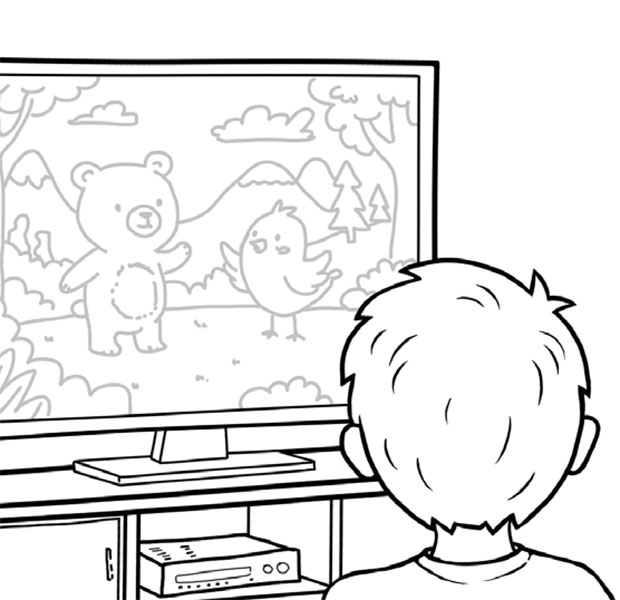
Card 19
Kaj najraje počneš s telefonom ali tablico?
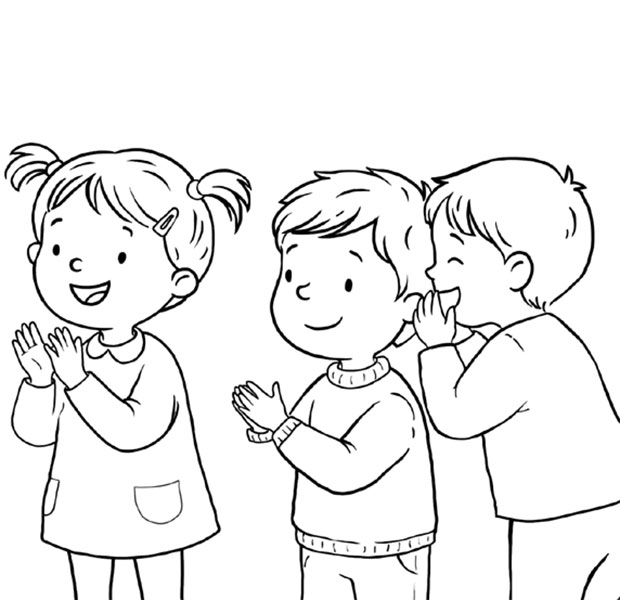
Card 20
Zaploskaj si. Veliko si se že naučil!