
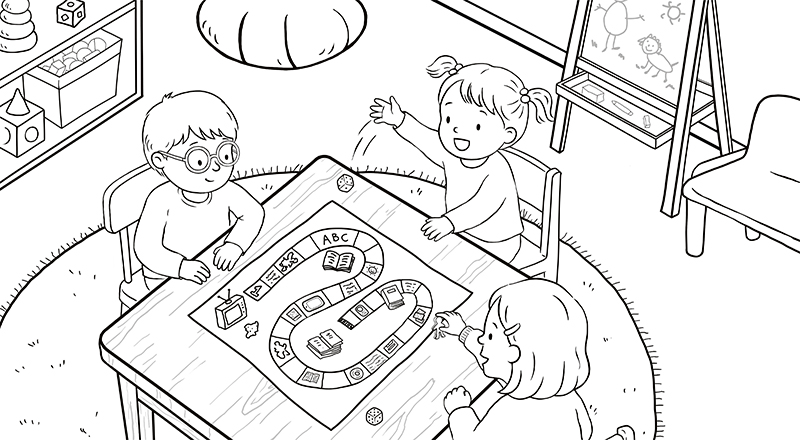
Media Literacy Board Game
Learning About Media Through Play
 Finanțat de Uniunea Europeană. Punctele de vedere și opiniile exprimate aparțin, însă, exclusiv autorului (autorilor) și nu reflectă neapărat punctele de vedere și opiniile Uniunii Europene sau ale Agenției Executive Europene pentru Educație și Cultură (EACEA). Nici Uniunea Europeană și nici EACEA nu pot fi considerate răspunzătoare pentru acestea. |
 Toate conținuturile, în special textele, imaginile și grafica, sunt protejate de drepturi de autor. Cu excepția cazului în care se specifică altfel, drepturile de autor sunt deținute de media.eduskills.plus și sunt licențiate în conformitate cu Creative Commons Attribution - Necomercial - Distribuție în aceleași condiții 4.0 Licență internațională. Acestea pot fi utilizate în condițiile licenței. |
2026 media.eduskills.plus
Rezultatele învățării
Competențe
|
|
|
Grupul țintă 4 an și peste4 ani și mai în vârstă
|
|
Materiale necesare
|
|
Materiale
|
Descrierea activității (pas cu pas)
Pregătire:
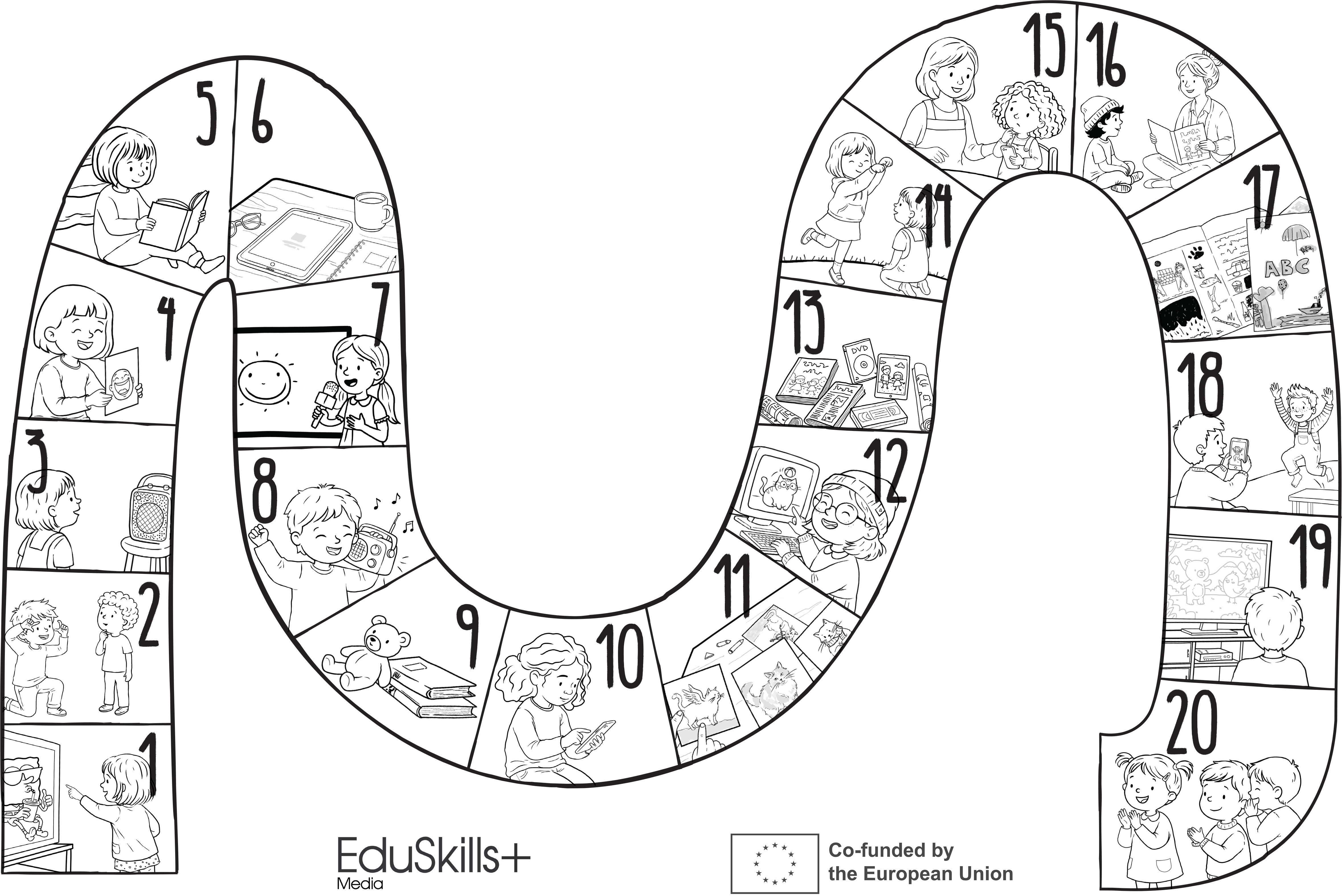
Introduce the board game and explain the basic rules (roll the dice, move forward, complete the task on the square).
Explain that the game is about learning and talking about media — things we read, watch, listen to, or create.
Implementare:
Children take turns rolling the dice, moving their token, and answering or acting out the task on the square.
Encourage group participation and discussion ("What do you watch?", "Who reads to you?", "What sounds do you hear on the radio?").
Continue until everyone reaches the end of the board or completes a round together.
Reflecţie:
End with a short reflection: "What did we learn about media today?"
Variații și idei suplimentare
Children can help design new squares or questions for future rounds.
Informații generale și perspectivă didactică
Board games offer an engaging, social way to introduce media literacy concepts in early childhood. Through play, children develop vocabulary and begin to understand that media come in different forms and serve various purposes. The game encourages communication, cooperation, and reflection - key foundations of lifelong media competence. It also promotes shared learning experiences between children and adults, helping to build a positive media culture at home and in kindergarten. By combining movement, imagination, and conversation, the activity turns abstract ideas into joyful exploration.
Game Board
Game Cards
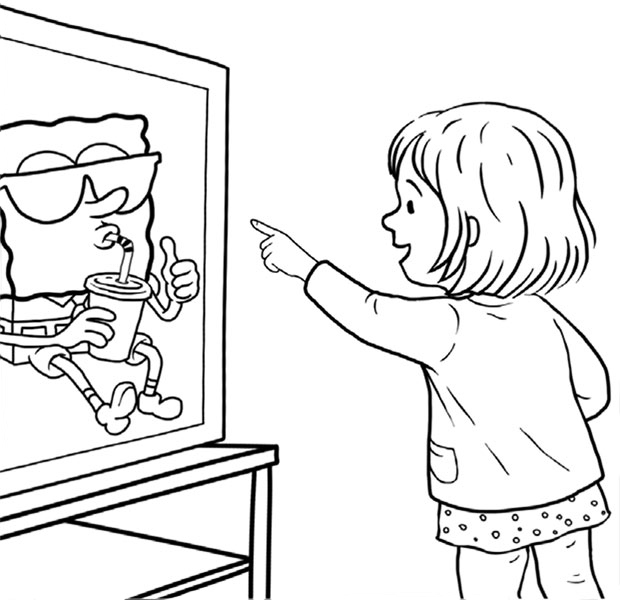
Card 1
What do you like to watch on TV?
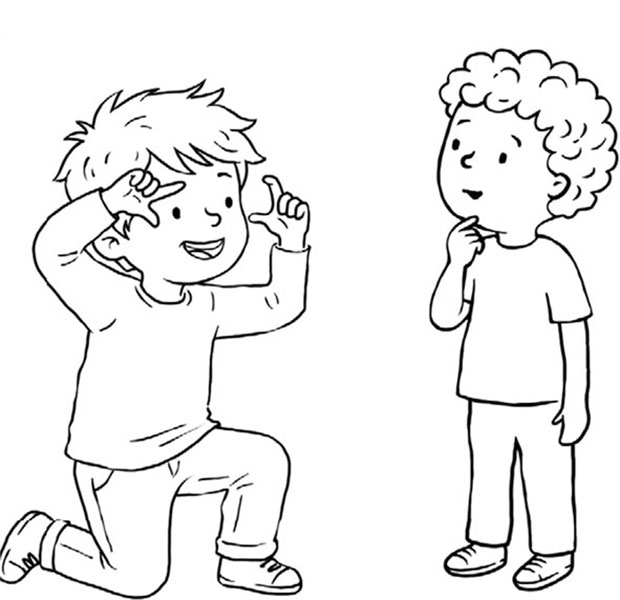
Card 2
What would you photograph in kindergarten?
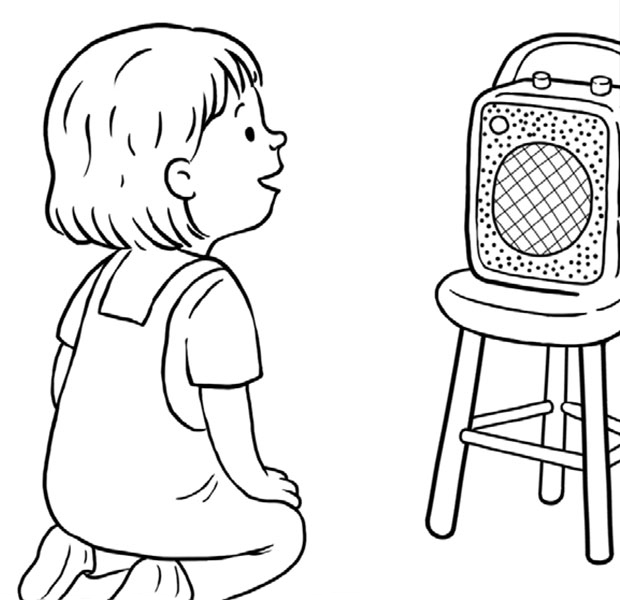
Card 3
When do you like to listen to music?
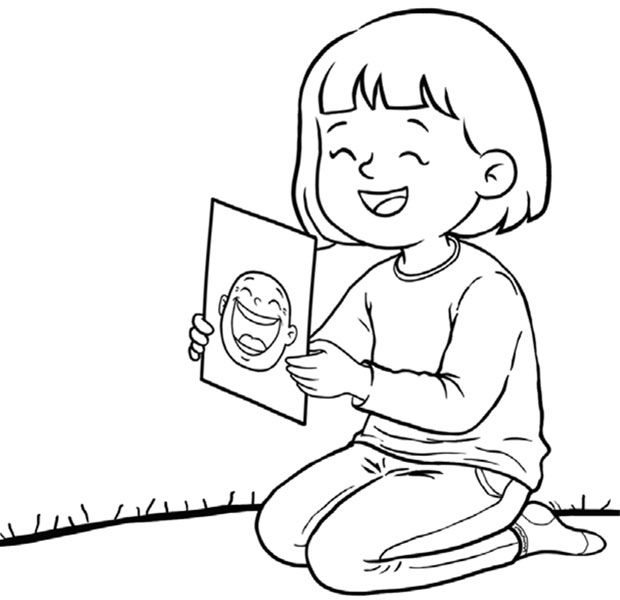
Card 4
How does the child in the picture feel?
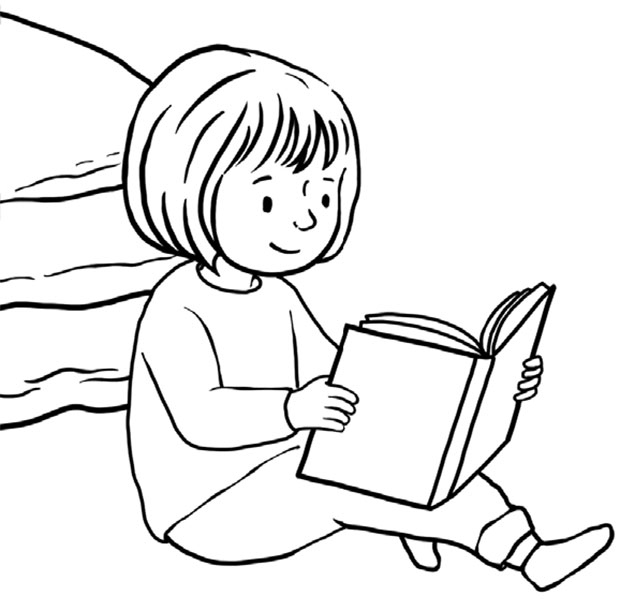
Card 5
What kind of books do you like?
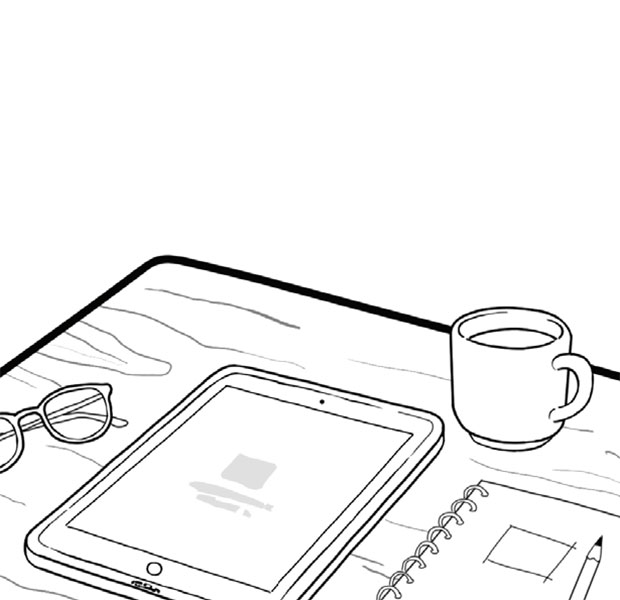
Card 6
You have played a game on the tablet for too long. You need a break. Miss two turns.
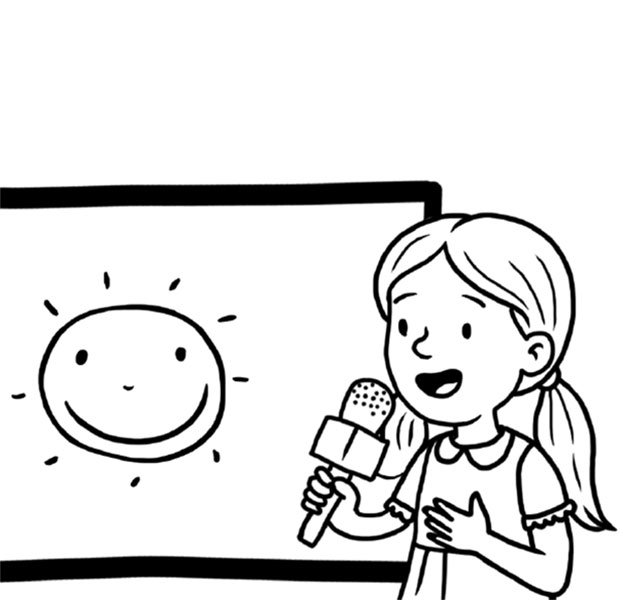
Card 7
Look out the window and, like on TV, tell us what the weather is like.
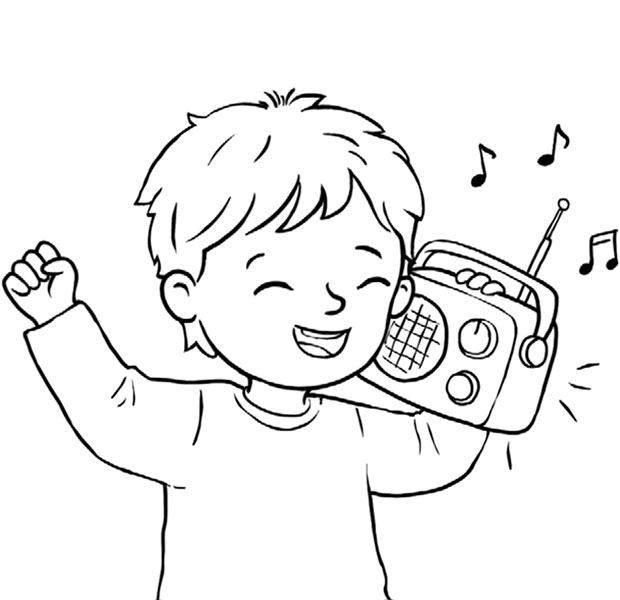
Card 8
Turn on the radio. Dance to the song that is playing.
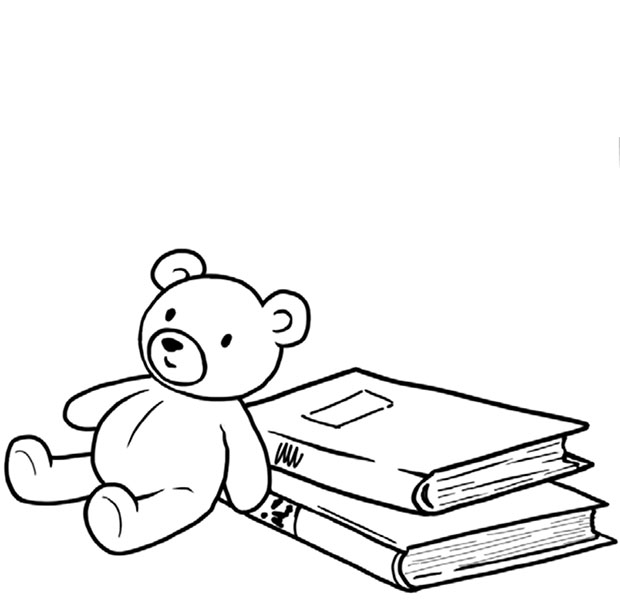
Card 9
Which story do you like listening to the most?
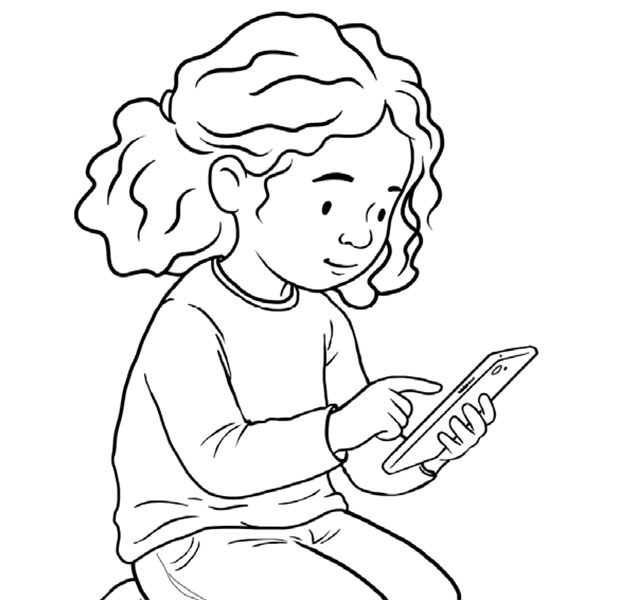
Card 10
Pretend you are talking to your mum on the phone.
Card 11
Is everything we see on TV real?
Card 12
Show what your face looks like when you are happy or sad.
Card 13
If you do not know something, who do you ask for help?
Card 14
Show how a superhero uses their powers.
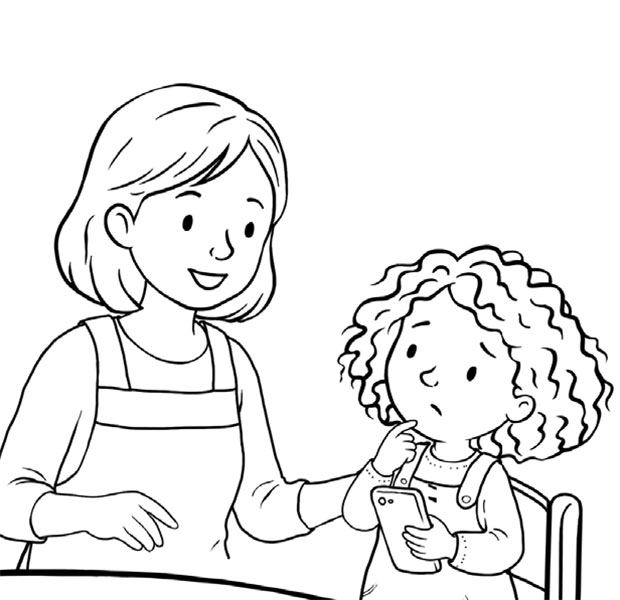
Card 15
Why is it not good to look at a phone or tablet for too long?
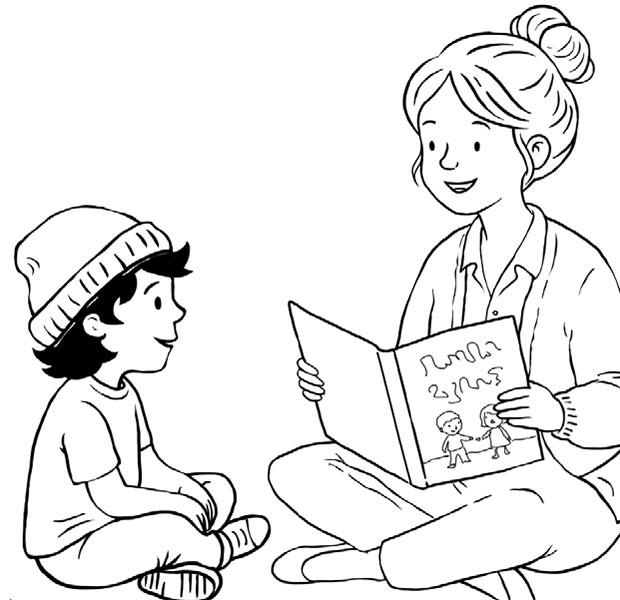
Card 16
How do you become a good listener?
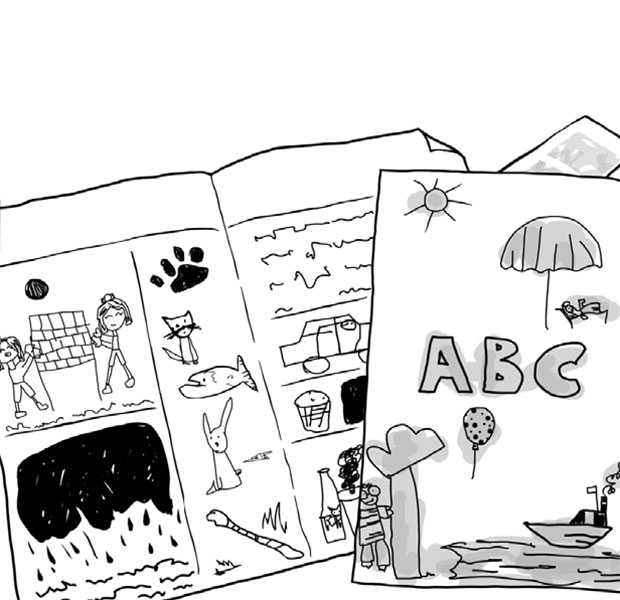
Card 17
Where can you learn something new?
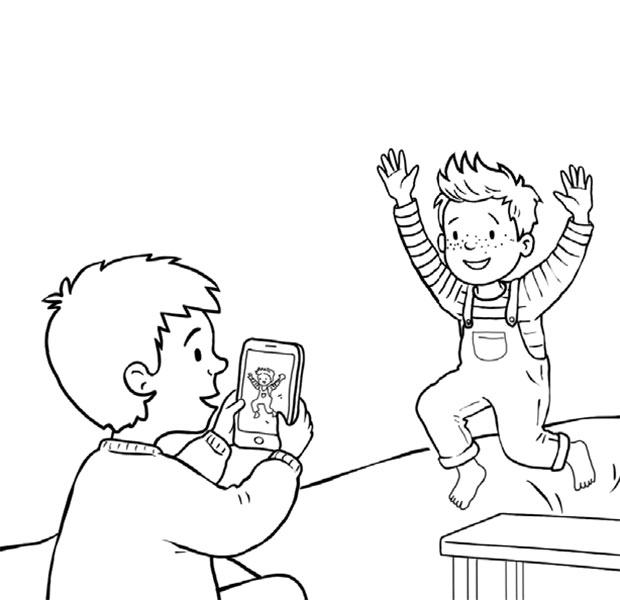
Card 18
If you had a camera in your hands, what would you film at home or in kindergarten?
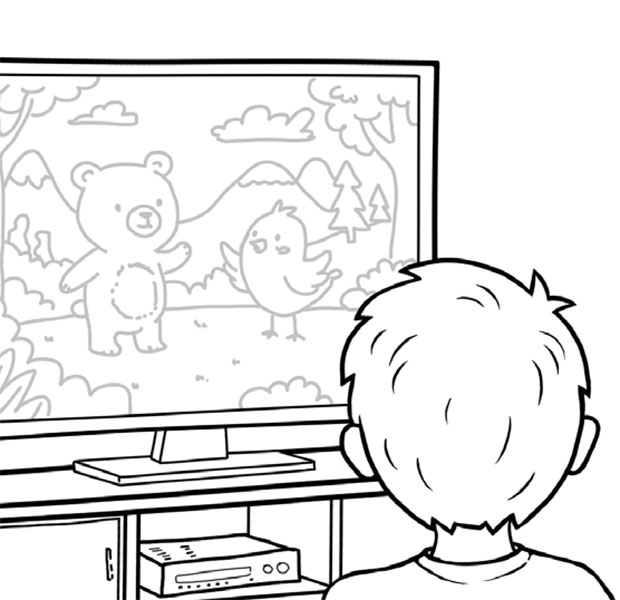
Card 19
What do you like to do most with a phone or tablet?
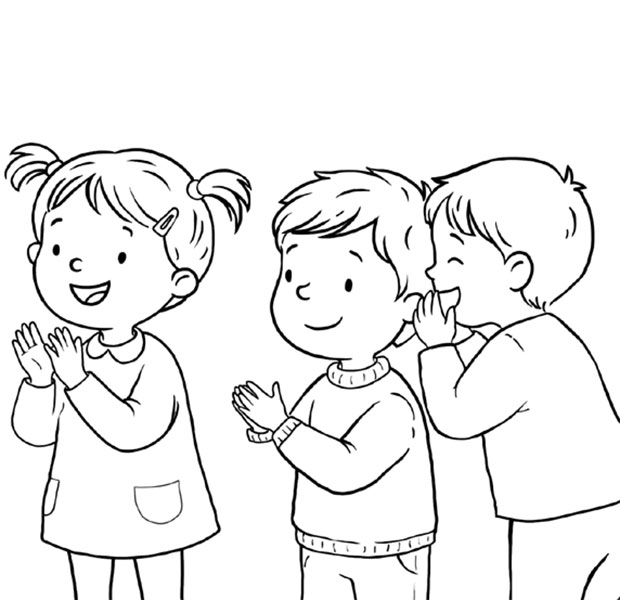
Card 20
Clap for yourself. You have already learned a lot!