Distorted reality
Exploring the properties of light
 Funded by the European Union. Views and opinions expressed are however those of the author(s) only and do not necessarily reflect those of the European Union or the European Education and Culture Executive Agency (EACEA). Neither the European Union nor EACEA can be held responsible for them. |
 All contents, in particular texts, pictures and graphics, are protected by copyright. Unless expressly stated otherwise, copyright is held by media.eduskills.plus and is licensed under Creative Commons Attribution - Non-commercial - Distribution under the same conditions 4.0 International license. They may be subject to the terms of the license. |
2026 media.eduskills.plus
Learning outcomes
Competencies
|
|
|
Target group 5 years and up
|
|
Required materials
|
|
Materials
|
Description of the activity (step by step)
Preparation:
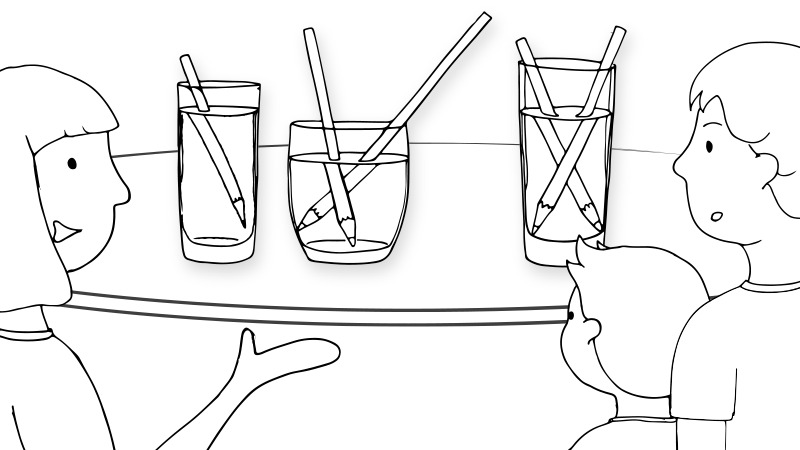
Start a conversation about the light. What is it? Where does it come from? Let the children express their ideas and knowledge. Explain to them that they can imagine the light as tiny packages of light that travel in a straight line from the light source to our eyes. When the light travels through water, however, its path gets bent and we see a distorted object.
You can demonstrate this by putting a pencil in a glass of water and move it around to find the best spot. The pencil will appear broken.
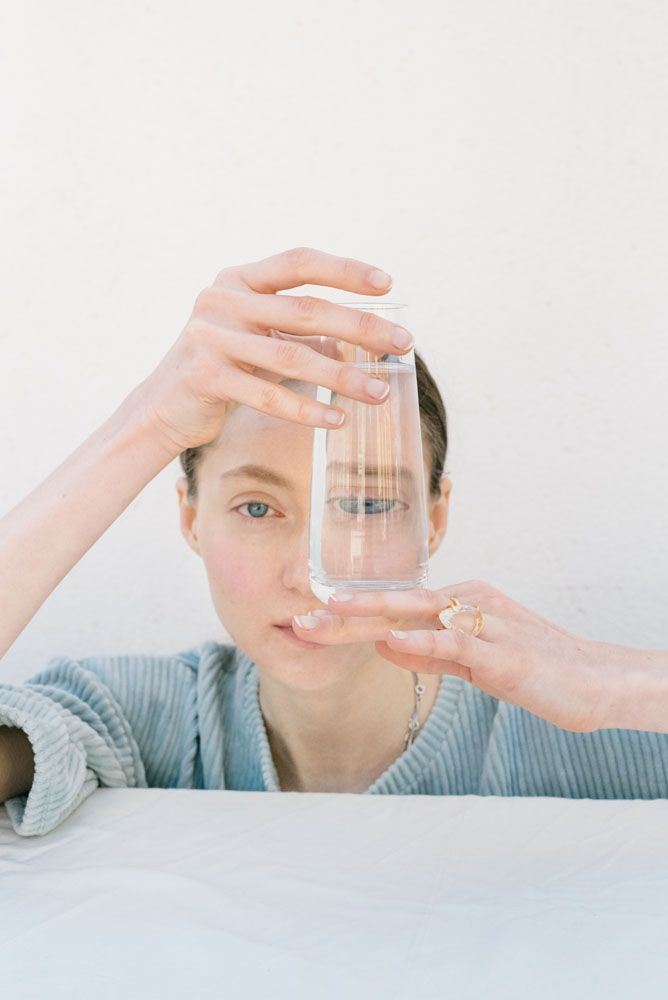
Now tell the children that you will use this property of light to create funny photographs. You can show them some examples of this kind of photography, for example by Suzanne Saroff.
Implementation:
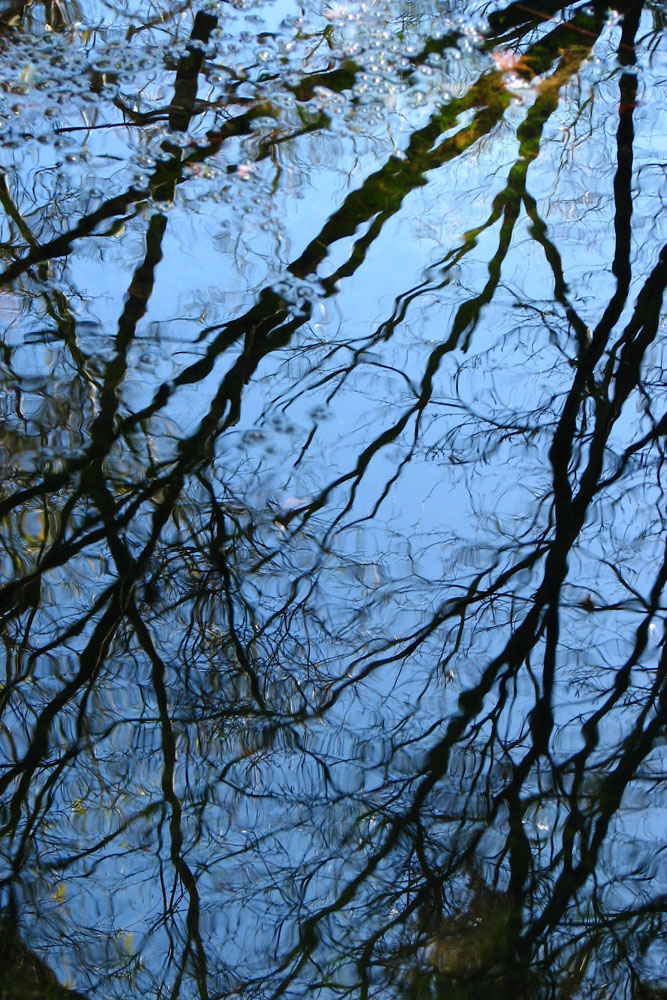
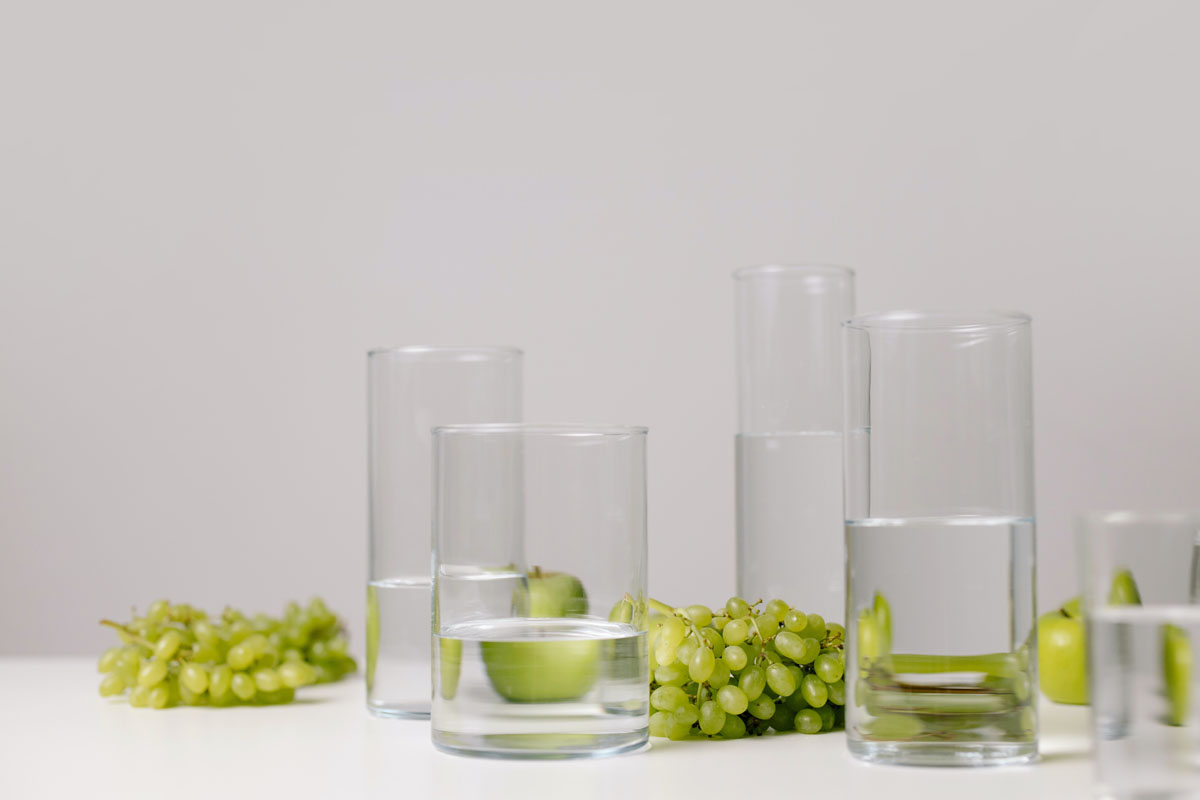
Children work in small groups. They place objects (fruits, toys, drawings, etc.) behind one or several glasses of water and photograph them. They can try out different perspectives, move around, move the object, and move the glasses. All this will change the appearance of objects, even make them disappear.
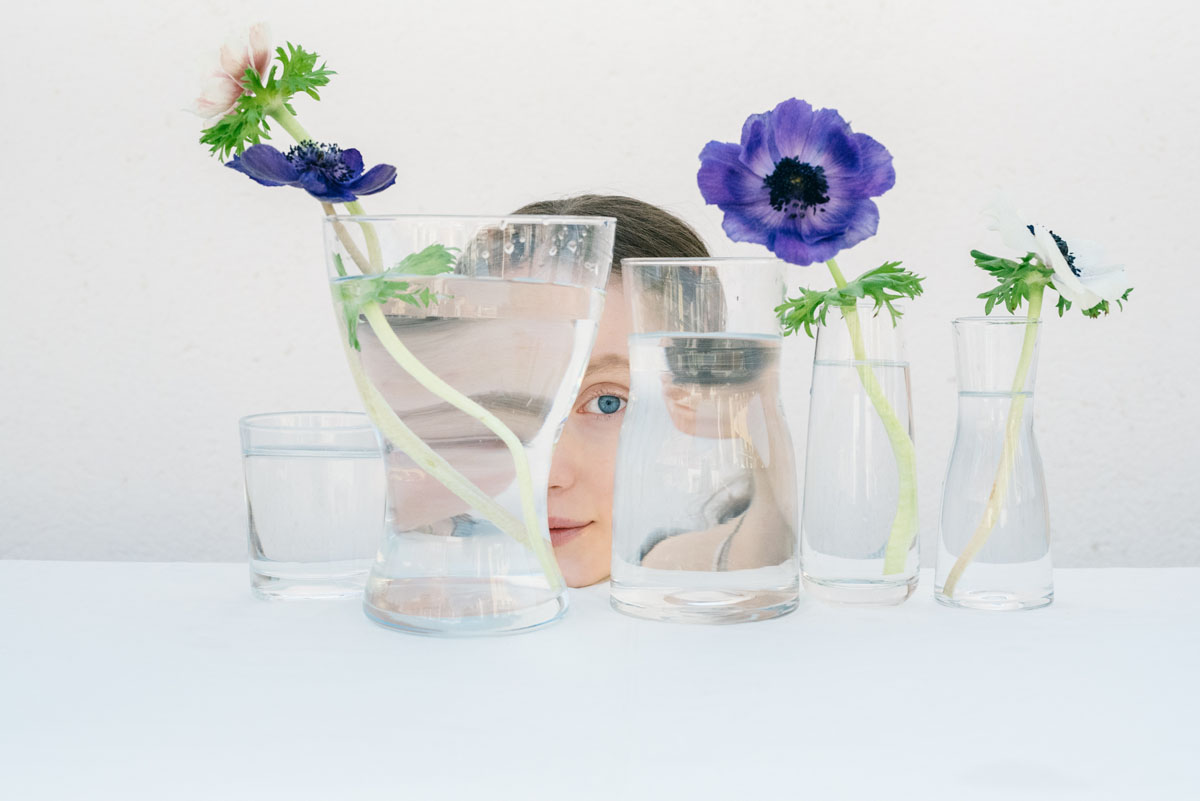
If the children like, they can make funny portraits of each other by placing a glass of water between the photographer and the portrayed child.
Reflection:
Look through the photos and let the children comment on their experience. What have they observed? How else could they make distorted pictures? Let them come up with ideas and, if possible, try them out.
Variations and additional ideas
Look through the photos and let the children comment on their experience. What have they observed? How else could they make distorted pictures? Let them come up with ideas and, if possible, try them out.
Try out further experiments with light and water:
https://www.youtube.com/watch?v=APCaTTowj8c
https://www.youtube.com/watch?time_continue=42&v=G303o8pJzls
You can add some drops of color to the water and make some colorful photographs.
Materials
The photos are downloadable at https://media.eduskills.plus/activities/art_reality.
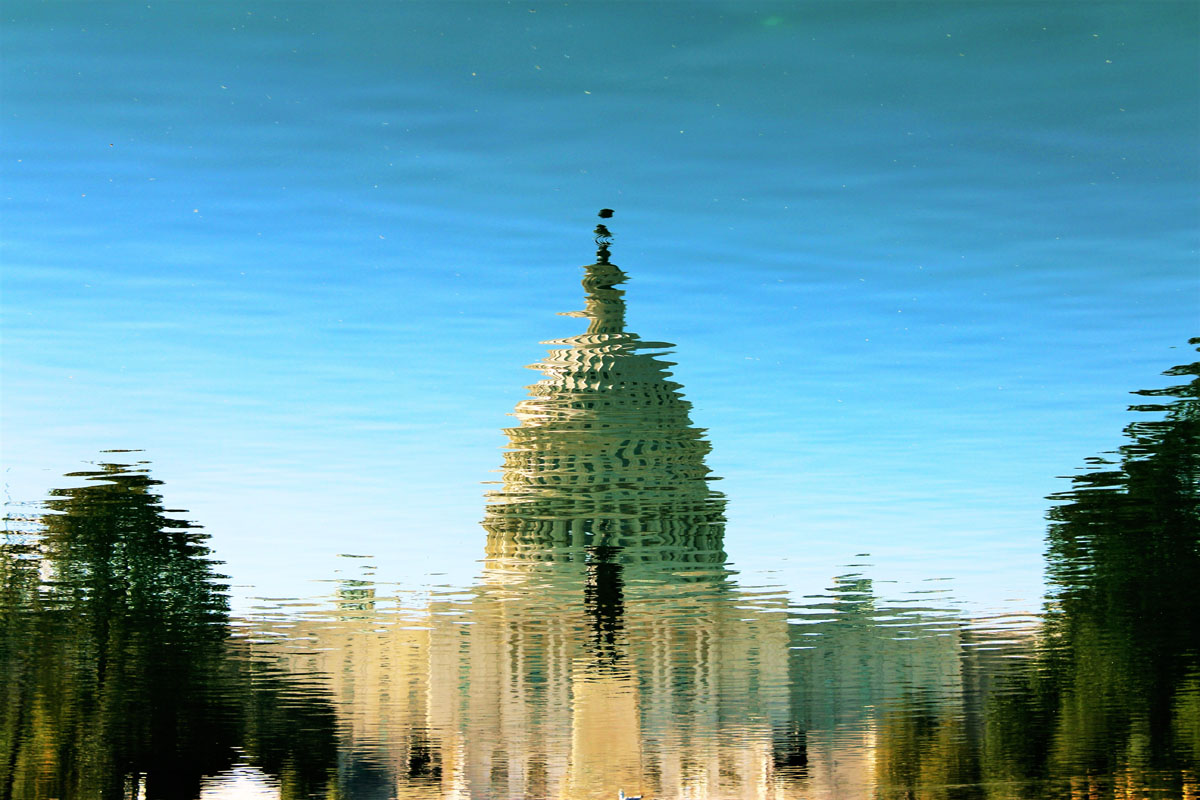
Examples of photographs of distorted objects through water