
Premišljevanje ob slikanici
Odkrivanje sporočila avtorja zgodbe
 Financirano s strani Evropske unije. Izražena stališča in mnenja so zgolj stališča in mnenja avtorja(-ev) in ni nujno, da odražajo stališča in mnenja Evropske unije ali Evropske izvajalske agencije za izobraževanje in kulturo (EACEA). Zanje ne moreta biti odgovorna niti Evropska unija niti EACEA. |
 Vse vsebine, še posebej teksti, slike in grafikoni so avtorsko zaščiteni. V kolikor izrecno ni določeno drugače, so avtorske pravice last media.eduskills.plus pod licenco Priznanje avtorstva - nekomercialna raba - brez predelav 4.0 mednarodna (CC BY - NC - ND 4.0 ). Uporabijo se lahko le v okviru licenčnih pogojev. |
2026 media.eduskills.plus
Učni izidi
Kompetence
|
|
|
Ciljna skupina 5 let in več
|
|
Potrebni pripomočki
|
Opis aktivnosti (po korakih)
Predpriprava
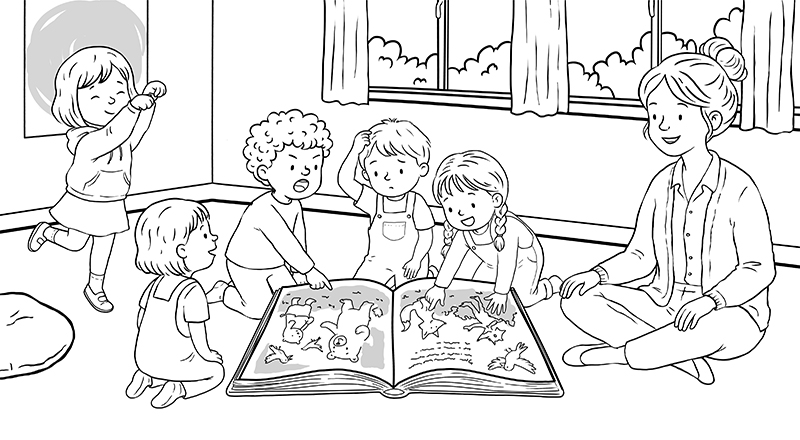
Otrokom preberite slikanico in jim pokažite ilustracije.
Implementacija
Po branju zastavite vprašanja, na primer:
- Kdo je ustvaril to zgodbo?
- Zakaj misliš, da jo je ustvaril?
- Kaj si glavni lik želi?
- Kaj se lahko iz te zgodbe naučimo?
Otroke spodbudite, da razmišljajo o avtorju in ilustratorju kot resničnih ljudeh, ki se odločajo, kaj se bo v zgodbi zgodilo.
Povabite jih, da delijo svoje misli in občutke o sporočilu zgodbe.
Refleksija
Kot nadaljevanje dejavnosti lahko otroci narišejo svoj najljubši del zgodbe ali pa pokažejo, kako bi sami spremenili njen konec.
Različice in dodatne ideje
Primerjajte dve slikanici z različnima sporočiloma (npr. družina, prijateljstvo).
Otroke povabite, da postanejo avtorji in si izmislijo kratko zgodbo.
Z lutkami ali figurami uprizorite prizore iz zgodbe.
Osnovne informacije in didaktična perspektiva
Dejavnost razvija zgodnje zavedanje, da so mediji in zgodbe ustvarjeni s strani ljudi, ki zavestno izbirajo ideje in sporočila. Z analizo slikanice, ki je otrokom znan in dostopen medij, otroci začnejo razumeti, da zgodbe odražajo namene, vrednote in poglede ustvarjalcev. Zastavljanje vprašanj o avtorstvu, motivih in pomenu spodbuja razmišljanje in kritičen odnos do medijskih vsebin. Dejavnost razvija empatijo, saj otroke usmerja k razumevanju različnih perspektiv, ter jih pripravlja na premišljeno srečevanje z drugimi mediji. Povezovanje poslušanja, pogovora in ustvarjalnega izražanja podpira tako kognitivni kot čustveni razvoj.