
Storybook Analysis
Discovering the Creator's Message Behind a Story
 Rahastatud Euroopa Liidu poolt. Avaldatud seisukohad ja arvamused on ainult autori(te) omad ega pruugi kajastada Euroopa Liidu või Euroopa Hariduse ja Kultuuri Rakendusameti (EACEA) seisukohti ja arvamusi. Euroopa Liit ega EACEA nende eest ei vastuta. |
 Kogu sisu, eelkõige tekstid, pildid ja graafika, on kaitstud autoriõigusega. Kui ei ole sõnaselgelt teisiti märgitud, kuuluvad autoriõigused media.eduskills.plus ja on litsentseeritud Litsents: "Creative Commons Autorile viitamine – mittekaubanduslik - jagamine samadel tingimustel 4.0 Rahvusvaheline". Nende suhtes võivad kehtida litsentsitingimused. |
2026 media.eduskills.plus
Õpitulemused
tulemused
|
|
|
Sihtgrupp 5 aastat ja rohkem
|
|
Nõutavad materjalid
|
Tegevuse kirjeldus (samm-sammult)
Ettevalmistus:
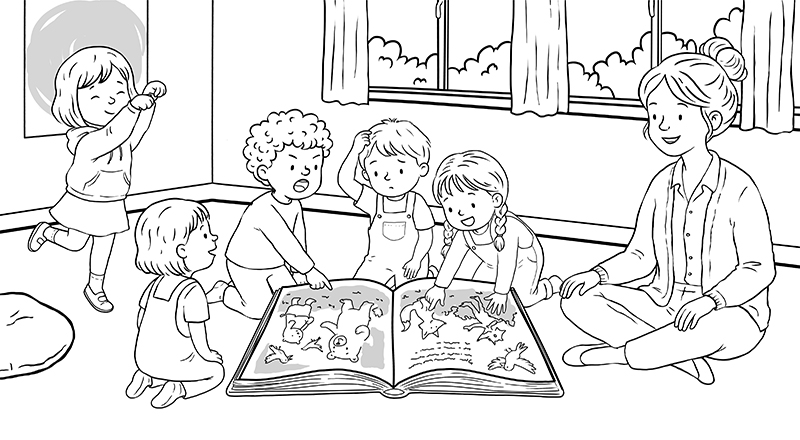
Read a picture book aloud to the group, showing the illustrations clearly.
Tegevuse läbiviimine:
After reading, ask questions such as:
- Who made this story?
- Why do you think they made it?
- What does the main character want?
- What can we learn from this story?
Encourage children to think about the author and illustrator as real people who decide what happens in the story.
Invite children to share their ideas and feelings about the story's message.
Refleksioon
As a follow-up, let them draw their favourite part or how they would change the ending.
Variatsioonid ja lisaideed
Compare two picture books with different messages (e.g. one about family, one about friendship).
Invite children to "be the author" and invent a short story of their own.
Use puppets to act out the story.
Taustteave ja didaktiline perspektiiv
This activity fosters early awareness that media and stories are created by people who choose how to present ideas and messages. By analyzing a familiar format — a storybook — children begin to understand that stories reflect intentions and values. Asking questions about authorship, motivation, and meaning encourages reflection and critical engagement with media content. It develops empathy by prompting children to consider different perspectives and prepares them to question other media they encounter. The combination of listening, discussion, and creative expression supports both cognitive and emotional learning.