Agamograf
Slika koja se mijenja
 Financirano sredstvima Europske unije. Izneseni stavovi i mišljenja su stavovi i mišljenja autora i ne moraju se podudarati sa stavovima i mišljenjima Europske unije ili Europske izvršne agencije za obrazovanje i kulturu (EACEA). Ni Europska unija ni EACEA ne mogu se smatrati odgovornima za njih. |
 Svi sadržaji, a posebno tekstovi, slike i grafikoni, su zaštićeni autorskim pravima. Vlasnik autorskih prava, ukoliko nije drugačije označeno, je media.eduskills.plus, a autorsko pravo je definirano licencom Creative Commons Imenovanje-Nekomercijalno-Dijeli pod istim uvjetima 4.0 Međunarodna. Autorska prava mogu biti definirana uvjetima licence. |
2026 media.eduskills.plus
Ishodi učenja
Kompetencije
|
|
|
Ciljna skupina 4 godina i više
|
|
Potrebni materijali
|
|
| Materijali |
Opis aktivnosti (korak po korak)
Priprema:
Unaprijed pripremite isprintane fotografije dječjih portreta, kao i ostale likovne materijale.
Primjena:
Pokažite djeci gotov agamograf i objasnite kako je napravljen. Postavite pitanja:
- Što vidiš kada staneš na lijevu/desnu stranu?
- Kako se slika promijenila?
- Zašto misliš da se to događa?
Djeca istražuju, dijele ideje i predlažu koje materijale bi mogli koristiti za izradu vlastitog agamografa. Nude se različiti zadaci, a odgojitelj/ica pomaže djeci tijekom procesa.
Odgojitelj/ica pokazuje kako se karton savija u lepezu. Djeca naizmjence lijepe unaprijed označene trake odabranih fotografija na podlogu. Kada završe, okreću svoj agamograf i promatraju kako se slika mijenja.
Refleksija:
Sjednite u krug is djecom razgovarajte:
- Je li vam se svidjela ova aktivnost?
- Je li bilo teško napraviti agamograf?
- Što vam se najviše svidjelo?
Gotovi agamografi se izlažu. Djeca ih promatraju i komentiraju što vide i kako se slike mijenjaju. Aktivnost završava izložbom agamografija u vrtiću za drugu djecu i roditelje.
Osnovne informacije i didaktička perspektiva
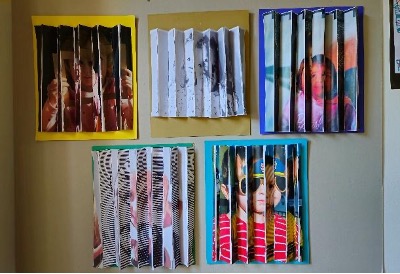
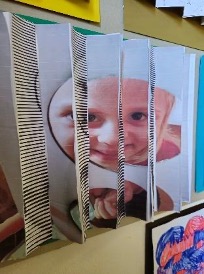
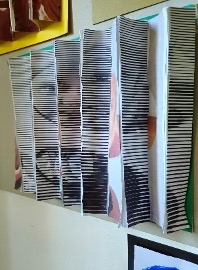
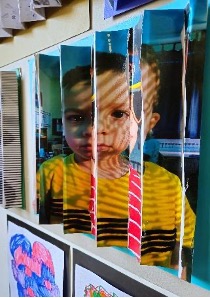
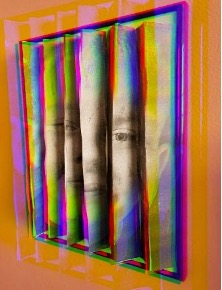
Što je agamograf? Agamograf je oblik umjetničkog izražavanja koji koristi optičku iluziju za stvaranje umjetničkog djela koje se mijenja kada se gleda iz različitih kutova. Ovaj umjetnički oblik nazvan je po izraelskom umjetniku Yaacovu Agamu, koji je stvorio kinetičku umjetnost koja se kreće sama od sebe ili zahtijeva od gledatelja da se kreće kako bi postigao željeni učinak.
Aktivnost povezuje vizualno izražavanje s istraživanjem vizualnih efekata kroz stvaranje optičkih iluzija. Djeca istražuju kako se slike i fotografije mijenjaju ovisno o kutu gledanja, upoznajući ih s osnovnim konceptima percepcije i optičke iluzije. Uloga učitelja je pružiti podršku u sastavljanju lepezaste strukture, određivanju širine trake, označavanju i numeriranju trake te demonstraciji tehnike savijanja.
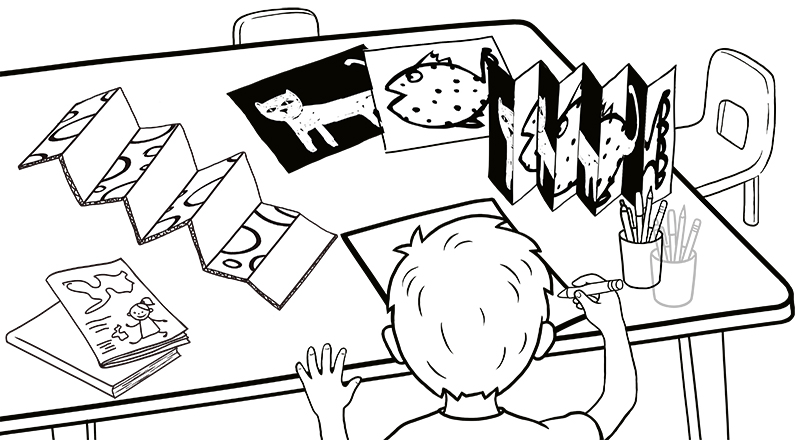
Kako napraviti agamograf?
- Odaberite dvije različite fotografije ili dva dječja likovna rada.
- Izrežite obje slike na jednake okomite trake iste širine.
- Presavijte list kartona u oblik lepeze (harmonike).
- Zalijepi trake prve slike na svaki drugi pregib.
- Zalijepite trake druge slike na preostale nabore.
- Pustite da se ljepilo osuši, zatim okrenite agamograf i promatrajte kako se slika mijenja kada se gleda iz različitih kutova.
Iskustvo iz vrtića
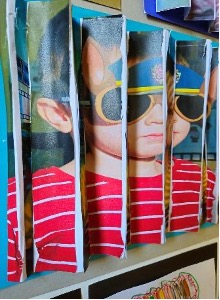
Odgojitelji su isprintali portrete djece koji prikazuju različite emocije. Djeca su odabrala dvije fotografije kako bi izradila svoj agamograf.
E. P.: „Ovo mi je bilo zaista zanimljivo jer sam surađivala s K. J. Jednom sam vidjela fotografiju u knjizi o parfemima. Žena na njoj imala je ružičastu kosu i, kako god da sam je gledala, uvijek je izgledala isto. No, sebe mogu zamisliti u crno-bijelom izdanju. U bijelom sam tužna, a u crnom ljuta.”
M. D.: „Ovo je bilo stvarno odlično! Odabrao sam fotografiju na kojoj sam policajac i drugu na kojoj to nisam.”
M. J.: "Ovo mi je stvarno čudno. Moja sestra je pomalo crno-bijela, a kad gledam s druge strane, žuta je."
units.agamograph.32

Radni list

Fotografije aktivnosti