Agamograph
A Picture That Changes
 Rahastatud Euroopa Liidu poolt. Avaldatud seisukohad ja arvamused on ainult autori(te) omad ega pruugi kajastada Euroopa Liidu või Euroopa Hariduse ja Kultuuri Rakendusameti (EACEA) seisukohti ja arvamusi. Euroopa Liit ega EACEA nende eest ei vastuta. |
 Kogu sisu, eelkõige tekstid, pildid ja graafika, on kaitstud autoriõigusega. Kui ei ole sõnaselgelt teisiti märgitud, kuuluvad autoriõigused media.eduskills.plus ja on litsentseeritud Litsents: "Creative Commons Autorile viitamine – mittekaubanduslik - jagamine samadel tingimustel 4.0 Rahvusvaheline". Nende suhtes võivad kehtida litsentsitingimused. |
2026 media.eduskills.plus
Õpitulemused
tulemused
|
|
|
Sihtgrupp 4 aastat ja rohkem
|
|
Nõutavad materjalid
|
|
| Materjalid |
Tegevuse kirjeldus (samm-sammult)
Ettevalmistus:
Prepare printed photographs of children's portraits in advance, as well as other art materials.
Tegevuse läbiviimine:
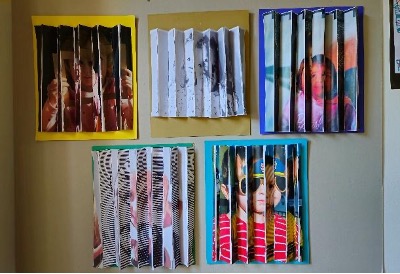
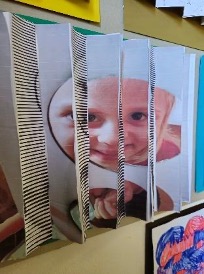
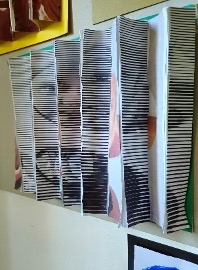
Show the children a finished agamograph and explain how it is made. Ask guiding questions:
- What do you see when you stand on the left/right side?
- How has the image changed?
- Why do you think this happens?
Children explore, share ideas, and suggest what materials they could use to create their own agamograph. Different prompts are offered, and the teacher supports the children during the process.
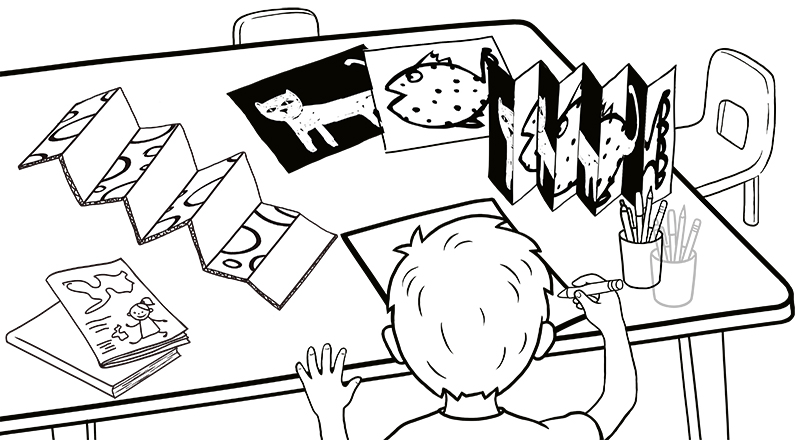
The teacher demonstrates how to fold cardboard into a fan shape. Children take turns gluing pre-marked strips of selected photographs onto the base. When finished, they turn their agamograph and observe how the image changes.
Refleksioon
Sit down in a circle and talk:
- Did you like this activity?
- Was it difficult to make?
- What did you like the most?
The finished agamographs are displayed. Children observe them and comment on what they see and how the images change. The activity ends with an exhibition of the agamographs in the kindergarten for other children and parents.
Taustteave ja didaktiline perspektiiv
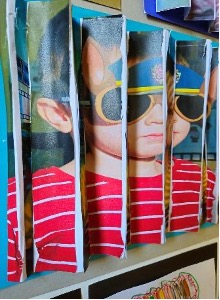
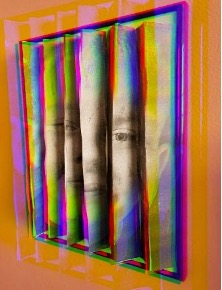
What is an agamograph? An agamograph is a form of artistic expression that uses optical illusion to create an artwork that changes when viewed from different angles. This art form is named after the Israeli artist Yaacov Agam, who created kinetic art that moves on its own or requires the viewer to move to achieve the desired effect.
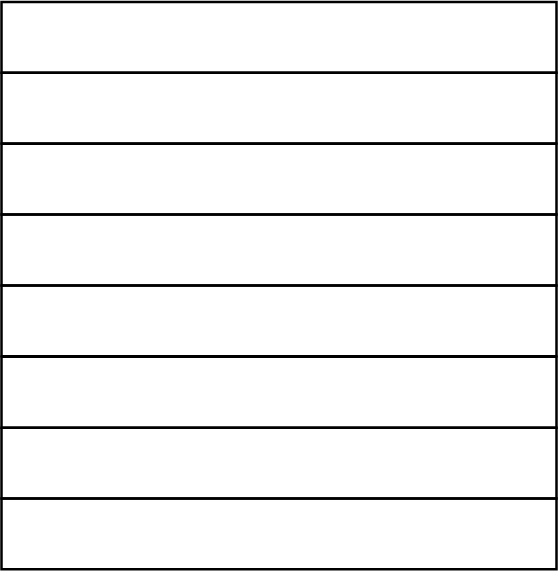
The activity connects visual art expression with the exploration of visual effects through the creation of optical illusions. Children explore how images and photographs change depending on the viewing angle, introducing them to basic concepts of perception and optical illusion. The role of the teacher is to provide support in assembling the fan structure, determining strip width, marking and numbering strips, and demonstrating the folding technique.
How to create an agamograph?
- Choose two different photographs or artworks.
- Cut both images into equal vertical strips of the same width.
- Fold a sheet of cardboard into a fan (accordion) shape.
- Glue the strips of the first image onto every second fold.
- Glue the strips of the second image onto the remaining folds.
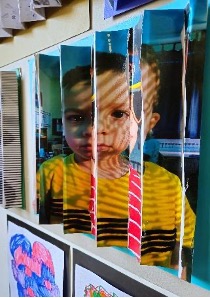
- Let the glue dry, then turn the agamograph and observe how the image changes when viewed from different angles.
lasteaedade kogemused
Teachers printed portraits of children showing different emotions. Children chose two photographs to create their agamograph.
E. P.: "I found this really interesting because I worked with K. J. I once saw a photo in a perfume book. The lady had pink hair, and no matter how I looked at it, it always looked the same. But I can see myself in black and white. In white I am sad, and in black I am angry."
M. D.: "This was really great! I chose a photo where I am a police officer, and another where I am not."
M. J.: "This is really strange to me. My sister is a bit black and white, and when I look from the other side, she is yellow."
units.agamograph.32
Tööleht
Tegevuste pildid